Quick answer
Treat your Letter ? Morale Patch like any PVC rubber patch: wipe it clean, keep the hook side free of lint, and store it on its loop sheet so the edges stay flat. Reattach it by pressing firmly from the center outward, not by stretching the corners.
Why the hook side needs more attention than the face
The front of a PVC rubber patch is easy to wipe down, but the hook backing is where most problems start. Lint, dust, and pet hair pack into the hooks and reduce grip, so the patch starts peeling at one corner. A quick brush-out after each removal prevents that slow decline.
The Letter ? Morale Patch also ships with an additional loop field lined sheet. That sheet protects the hook back when the patch is off your gear, and it can be sewn onto clothing if you want a dedicated spot for the patch.
When to skip the deep clean
You do not need to wash a morale patch every week. Spot-clean the face when you see visible dirt, and brush the hook side only when it stops gripping firmly. Over-cleaning the hook side with water can loosen debris further into the hooks, so dry-brush first and use a damp cloth only on the rubber face.
Step-by-step patch care routine
- Remove the patch without peeling from one corner: Slide a fingernail under the edge and lift evenly around the perimeter. Pulling hard from one corner can stretch the PVC rubber and curl the edge. Common mistake: ripping the patch off quickly after a range day. Check the hook side for packed lint before you set the patch down.
- Dry-brush the hook backing: Use a soft toothbrush or stiff-bristle brush to sweep lint and debris out of the hooks. Work in one direction, then tap the patch face-down on a hard surface to knock loose particles free. Do not use water on the hook side first. If the hooks still feel matted, repeat with a slightly firmer brush before considering a damp clean.
- Wipe the PVC face with a damp cloth: Dampen a microfiber cloth with plain water and wipe the rubber face. Avoid solvents, alcohol, or abrasive cleaners because they can dull the surface. Dry immediately with a clean towel. Inspect the edges while the patch is dry to catch any curling early.
- Flatten curled edges under a light weight: If an edge has lifted, place the patch face-up on a flat surface and set a book or similar flat object on top for a few hours. Do not apply heat. Common mistake: bending the patch back and forth to straighten it, which weakens the rubber. Store the patch on its loop sheet after flattening so the edge stays down.
- Store on the included loop field sheet: Press the hook side onto the loop sheet when the patch is not on your gear. This keeps dust out of the hooks and prevents the edges from curling in a drawer. If you plan to sew the sheet onto clothing, position it before sewing so the patch sits flat. Keep the loop sheet with the patch at all times; a loose patch in a pocket collects lint fast.
- Reattach by pressing from the center outward: Align the patch on the loop field, press the center down first, then work your fingers toward the edges. This avoids trapped air and keeps the edges flat. Common mistake: pressing only the corners, which leaves the middle loose. After reattaching, tug gently at each edge to confirm the hook and loop are fully engaged.
Product facts
-
Letter ? Morale Patch: Made from PVC rubber with an overall size of 0.84"(L) x 1.18"(H). The compact size means a small amount of lint or a curled corner is more noticeable, so check the edges after each reattachment.
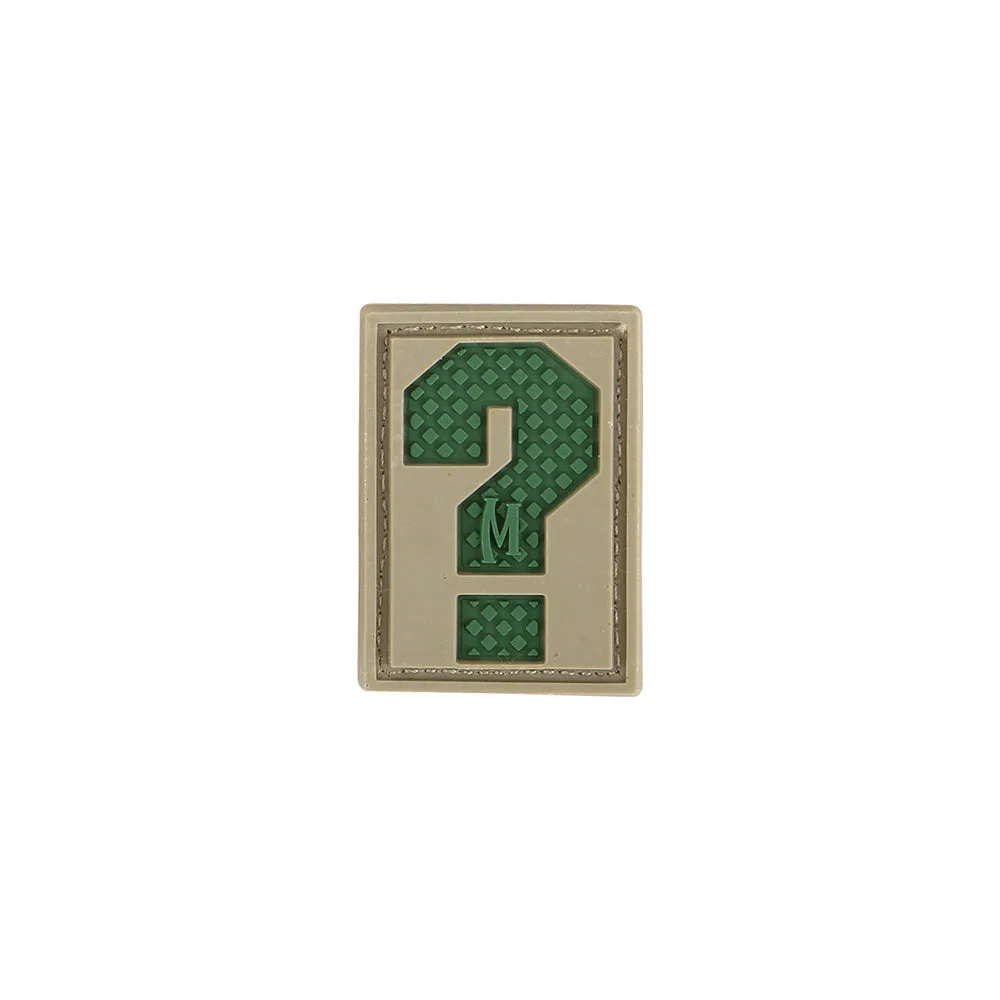
Letter ? Morale Patch
-
Letter ? Morale Patch: Includes an additional loop field lined sheet for sewing onto clothes or protecting the hook back when not in use. Use the sheet as a dedicated storage spot or sew it onto a garment to give the patch a stable, flat home.