Quick answer
When you keep replaying a past mistake, grudge, or relationship, use Letting Go Cards as a short, structured release ritual: pick one prompt that matches the stuck feeling, answer it in writing for five minutes, then stop. The deck is a tool for beginning the quiet work of letting go, not for forcing a feeling to disappear.
Why overthinking resists a simple instruction to let go
Telling yourself to let go rarely works because the mind treats an unresolved memory as an open loop. The more you suppress it, the more it returns. A prompt works differently: it gives the loop a specific question to answer, which lowers the pressure to keep rehearsing the same story.
This is also why a card deck can help where a blank journal page stalls. The prompt takes over the job of deciding what to think about, so you spend your energy on the response rather than on choosing a topic.
When a card prompt is the wrong tool
If the memory involves ongoing danger, active grief, or a situation that needs professional support, a prompt deck is not a substitute for that help. The same applies when you want to confront someone or make a decision that requires facts you do not yet have. In those cases, use the deck only after the practical or safety issue is addressed.
The deck is also not designed to make you forgive before you are ready. If a prompt asks you to release a grudge and you feel only anger, note the anger and stop. Forcing a calm response too early can make the memory feel more entrenched.
Diagnose what is stuck, then choose the corrective action
- Symptom: you replay the same conversation or mistake: Likely cause: an unresolved regret or a lesson you have not named. Corrective action: draw one Letting Go Cards prompt about mistakes or self-forgiveness. Set a five-minute timer, write the answer, and close the deck. Stop when the timer ends even if you feel unfinished; the goal is to name the lesson, not to solve the whole memory in one sitting. If the same memory returns with the same intensity after three sessions, choose a different prompt or a different kind of support.
- Symptom: you feel tightness or resentment toward a specific person: Likely cause: a grudge that is protecting you from a hurt you have not acknowledged. Corrective action: choose a prompt about grudges or release. Write one sentence about what the grudge has been doing for you, then one sentence about what it costs. Do not contact the person as part of this exercise. Stop after those two sentences if the anger rises rather than settles. If writing about the person makes you want to confront them immediately, wait 24 hours before deciding whether any conversation is actually needed.
- Symptom: you keep comparing your current self to an older version of yourself: Likely cause: an identity you are afraid to lose, even if it no longer fits. Corrective action: draw a prompt about past selves or change. Write down one habit or label you are ready to retire, and one small action that would signal the new version. Stop when you have one action; do not try to redesign your whole identity in one session. If the prompt brings up a loss you have not grieved, treat that as a signal to pause the deck and seek support rather than pushing through.
Product facts
-
Letting Go Cards: The set contains 52 prompts for releasing past relationships, mistakes, grudges, and versions of yourself. The variety lets you match one prompt to the specific memory that is looping today, rather than working through the deck in order.
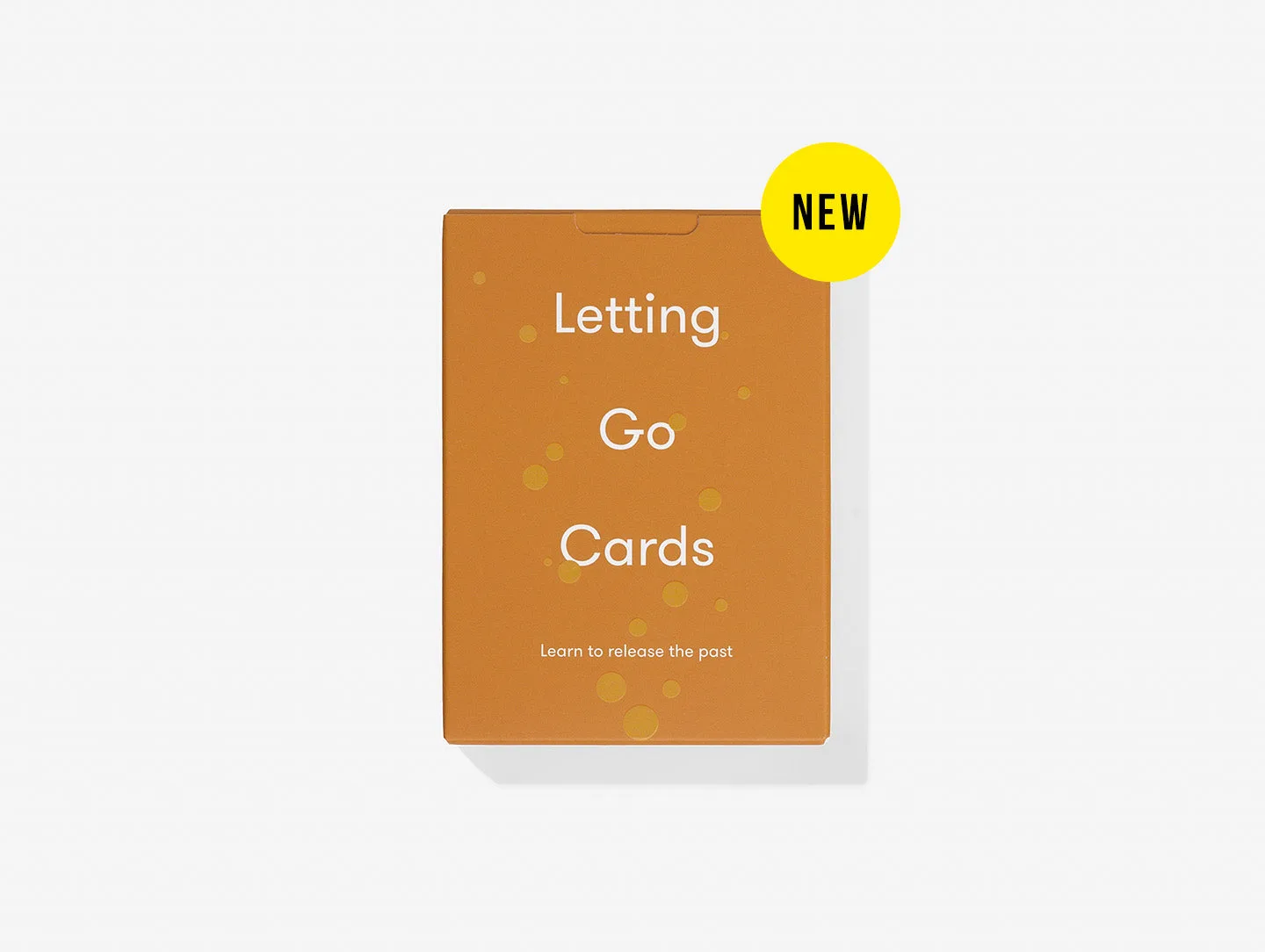
Letting Go Cards