When you need safe drinking water on the go, LifeStraw offers two popular portable solutions: the classic filter straw and the Go Series bottles. Both remove bacteria, parasites, and microplastics, but they serve different daily routines. Choosing between them depends on how you drink water throughout the day and where you take it.
In this comparison, we break down the key differences between the LifeStraw Go Series bottle and the filter straw, so you can pick the option that fits your commute, gym bag, or hiking pack. We will cover hydration style, convenience, flow rate, and real-world tradeoffs.
How Each Model Works: Built-In vs. Straw-Style Filtration
The LifeStraw filter straw is a standalone device you sip directly from a water source. It uses a hollow-fiber membrane that removes 99.9999% of bacteria and 99.9% of protozoan parasites. You simply dip the straw into a stream, lake, or bottle and drink. There is no reservoir, so you take one mouthful at a time. This design is ultralight and simple, but it requires you to bend down or use a separate container.
The LifeStraw Go Series bottles, such as the Go Series Stainless Steel 1L or the Go Series 22 oz, integrate the filter into the bottle cap or straw. You fill the bottle with untreated water, screw on the lid, and drink through the filtered straw. The bottle acts as both a reservoir and a drinking vessel. This means you can carry treated water with you and sip whenever you want, without needing to find a fresh source each time.
- Filter straw: best for emergency use or when you always have a water source nearby.
- Go Series bottle: better for daily hydration where you fill up once and drink throughout the day.
Hydration Style: Sip-and-Go vs. Fill-and-Carry
If your routine involves stopping at water fountains, streams, or public taps, the filter straw works well. You can carry it in your pocket or a LifeStraw Personal Straw Filter Carry Case and drink directly from any source. The tradeoff is that you cannot store filtered water—each sip requires a fresh source. This can be inconvenient during a long workday or a road trip.
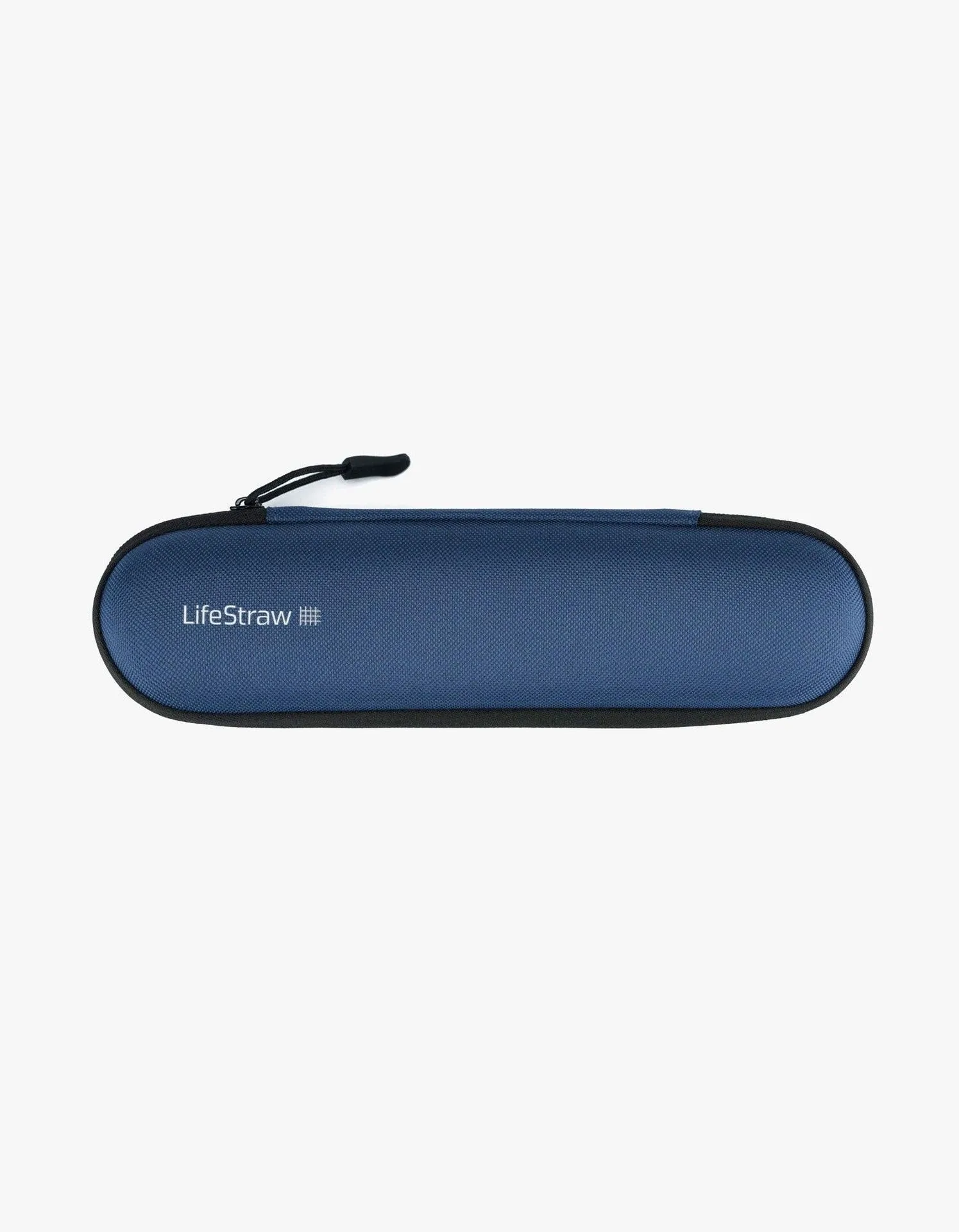
LifeStraw Personal Straw Filter Carry Case
The Go Series bottles let you fill up once and then drink filtered water for hours. The LifeStraw Go Series Stainless Steel 1L, for instance, holds a liter of water, which is enough for a morning hike or a full work shift. You can also pre-filter water at home and take it with you. The main downside is that the bottle is bulkier than a straw, so it takes up more space in a bag.
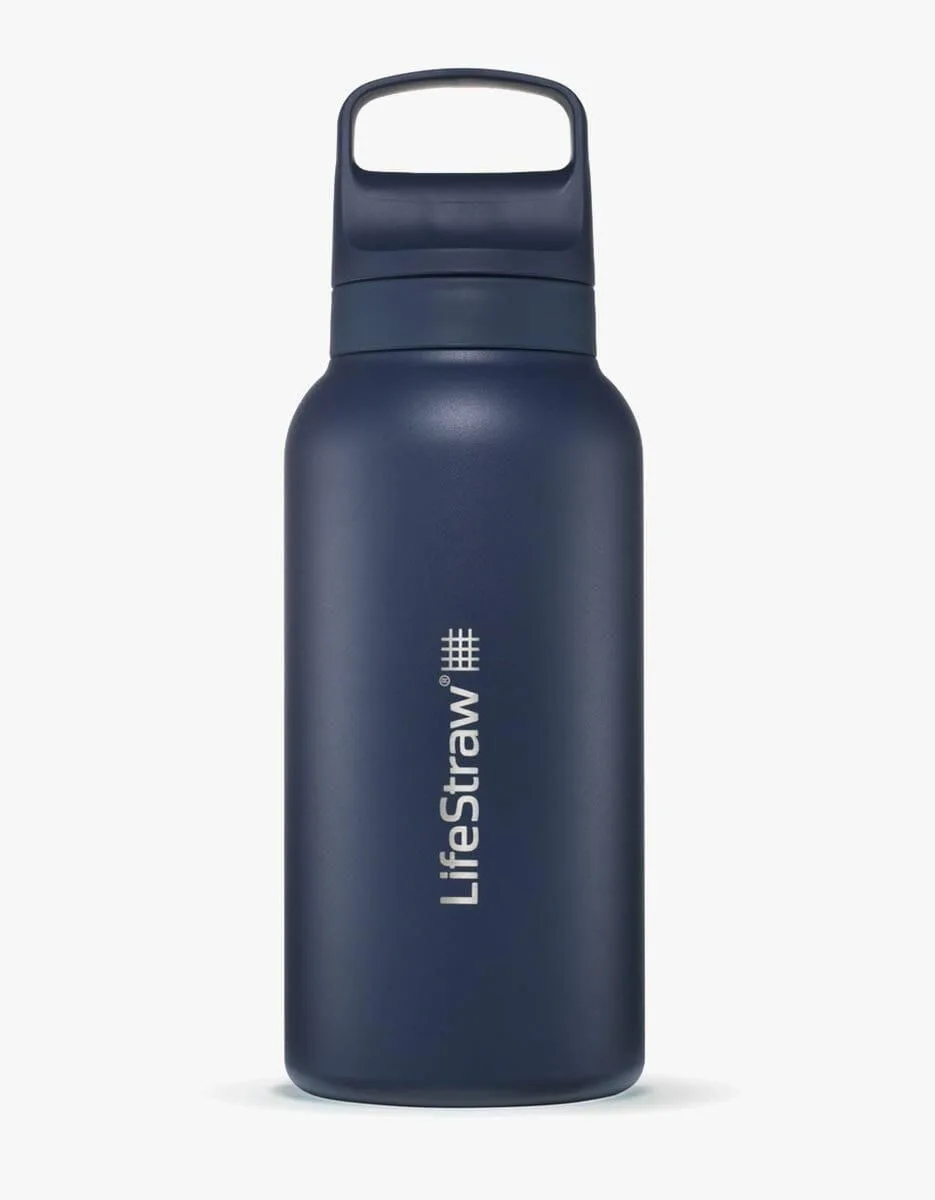
LifeStraw Go Series Stainless Steel 1L
- Filter straw: minimal weight (about 2 oz), no storage capacity.
- Go Series bottle: heavier but carries 22 oz to 1 L of filtered water.
Flow Rate and Drinking Experience
The filter straw delivers water directly to your mouth with a moderate flow rate—slow enough to require steady suction but fast enough for a few gulps. Because you are drinking straight from the source, there is no waiting. However, if you want to share water or fill a pot, the straw is not practical.
The Go Series bottles have a similar filter membrane but include a bite valve or straw mechanism that can feel more natural for sipping. The LifeStraw Go Series 22 oz, for example, lets you drink hands-free once the bottle is tilted. The flow rate is comparable to the straw, but the convenience of having water ready in your hand makes it easier to stay hydrated during a commute or at a desk.
- Filter straw: good for quick drinks from a stream or bottle.
- Go Series bottle: better for continuous sipping without needing to find a new source.
Durability and Maintenance
Both products use the same membrane technology, but their housings differ. The filter straw is a simple plastic tube with no moving parts, making it nearly indestructible. It can be backflushed or blown out to clear clogs, and it lasts for up to 1,000 gallons (4,000 liters) before needing replacement. The https://outdoorvault.store/products/lifestraw-escape-membrane-ultrafilter-replacement-63371LifeStraw Escape Membrane Ultrafilter Replacement is an example of a similar membrane used in larger systems.
The Go Series bottles add a reusable bottle body, which can be made of stainless steel or Tritan plastic. The bottle itself is durable, but the cap and straw assembly have more parts that could wear over time. Replacement filters for the Go Series are available separately. If you drop the bottle, the filter inside is protected, but the bottle may dent or scratch. The straw is simpler and less prone to breakage.
- Filter straw: fewer parts, easier to maintain in the field.
- Go Series bottle: more convenient but requires care of the bottle and cap.
Which One Should You Choose for Daily Use?
For everyday hydration—commuting, office, gym, school—the Go Series bottle is the clear winner. It allows you to fill up at a tap or fountain and sip filtered water all day. The LifeStraw Go Series Stainless Steel 1L is especially good for people who want a durable, reusable bottle that also purifies water. You get the convenience of a standard water bottle plus the safety of a filter.
The filter straw shines in scenarios where you want the lightest possible kit: ultralight backpacking, emergency kits, or travel where you will always be near a water source. It is also great as a backup or for sharing with a group (each person needs their own straw). If you rarely carry a bottle and prefer to drink directly from streams or taps, the straw is the more minimalist choice.
- Choose the Go Series bottle if you want a complete hydration system for daily carry.
- Choose the filter straw if weight and simplicity are your top priorities.
Both the LifeStraw Go Series bottle and the classic filter straw deliver reliable portable filtration, but they suit different habits. The bottle is ideal for everyday hydration where you fill once and drink all day, while the straw is best for ultralight trips or emergency backup. Consider your daily routine and whether you prefer carrying a bottle or just a straw, and you will find the right fit.