When you're covering 15+ miles a day on a multi-day backpacking trip, carrying enough water from the trailhead is impossible. You need a reliable way to filter water from streams, lakes, and springs along the way. Pairing a LifeStraw with a water bladder creates a lightweight, hands-free hydration system that lets you drink safely without stopping to pump or squeeze.
In this guide, we'll walk you through practical ways to combine LifeStraw filters with a reservoir setup, covering everything from inline filtration to gravity-fed solutions. You'll learn which LifeStraw products work best with bladders, how to avoid common mistakes, and how to keep your system flowing on long hikes.
Why Pair a LifeStraw with a Water Bladder?
A hydration bladder (like a CamelBak or Platypus) holds 2–3 liters of water and fits neatly in your backpack, with a hose that lets you drink on the move. The challenge is that most bladders don't filter water—you have to fill them from a clean source or treat the water separately. By adding a LifeStraw filter to the mix, you can scoop directly from a stream and drink safely without carrying extra weight or waiting for purification tablets to work.
This setup is ideal for long hikes where you pass multiple water sources. Instead of stopping to pump or squeeze, you can filter as you go. It also reduces the risk of dehydration because you're more likely to drink frequently when the hose is right there. Plus, LifeStraw filters remove 99.9999% of bacteria and 99.9% of protozoa, so even murky mountain streams become safe.
- Hands-free hydration: drink without stopping or removing your pack
- Lightweight: no heavy bottles or bulky pump systems
- Fast refills: scoop water directly from streams and filter inline
- Proven protection: LifeStraw filters meet EPA standards for bacteria and protozoa removal
Option 1: Use a LifeStraw Straw Directly from the Bladder
The simplest way to pair a LifeStraw with a water bladder is to use the https://outdoorvault.store/products/lifestraw-peak-series-straw-and-carry-case-bundle-63353LifeStraw Peak Series Straw and Carry Case Bundle. This bundle includes a durable straw filter that you can attach to the drinking tube of your bladder via a quick-connect adapter (not included, but widely available at outdoor stores). The straw filters water as you sip, so you can fill your bladder with untreated water and drink safely.
To set this up, you'll need a bladder with a standard 1/4-inch hose. Remove the bite valve, attach the LifeStraw straw to the hose end using a barbed connector or inline adapter, and then secure the carry case to your shoulder strap for easy access. The straw's hollow fiber membrane filters down to 0.2 microns, removing bacteria and protozoa. For added protection against viruses, consider pre-treating with chlorine dioxide or using a UV pen.
- Best for: hikers who want a simple, no-fuss inline filter
- Flow rate: about 1 liter per minute, similar to a bite valve
- Tip: backflush the straw after each trip to maintain flow
Option 2: Gravity-Fed Filtration with a Bladder and LifeStraw Gravity System
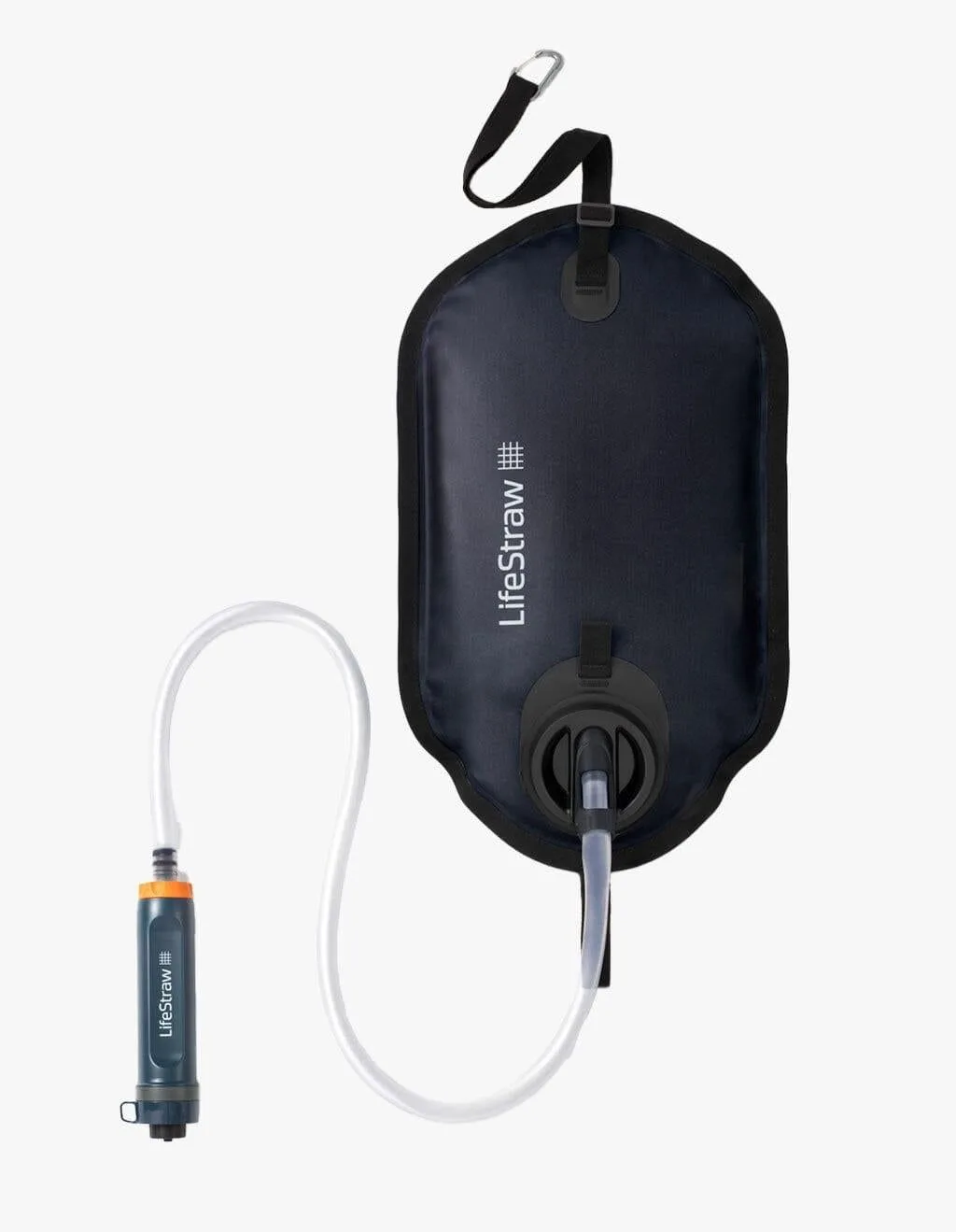
For group hikes or base camp setups, a gravity filter is more efficient. The LifeStraw Peak Series Gravity Purifier Replacement Filter can be used with a dirty water bladder suspended from a tree or trekking pole. Fill the dirty bladder with untreated water, hang it above your clean reservoir, and let gravity pull water through the filter. This method filters up to 12 liters per hour and doesn't require pumping.
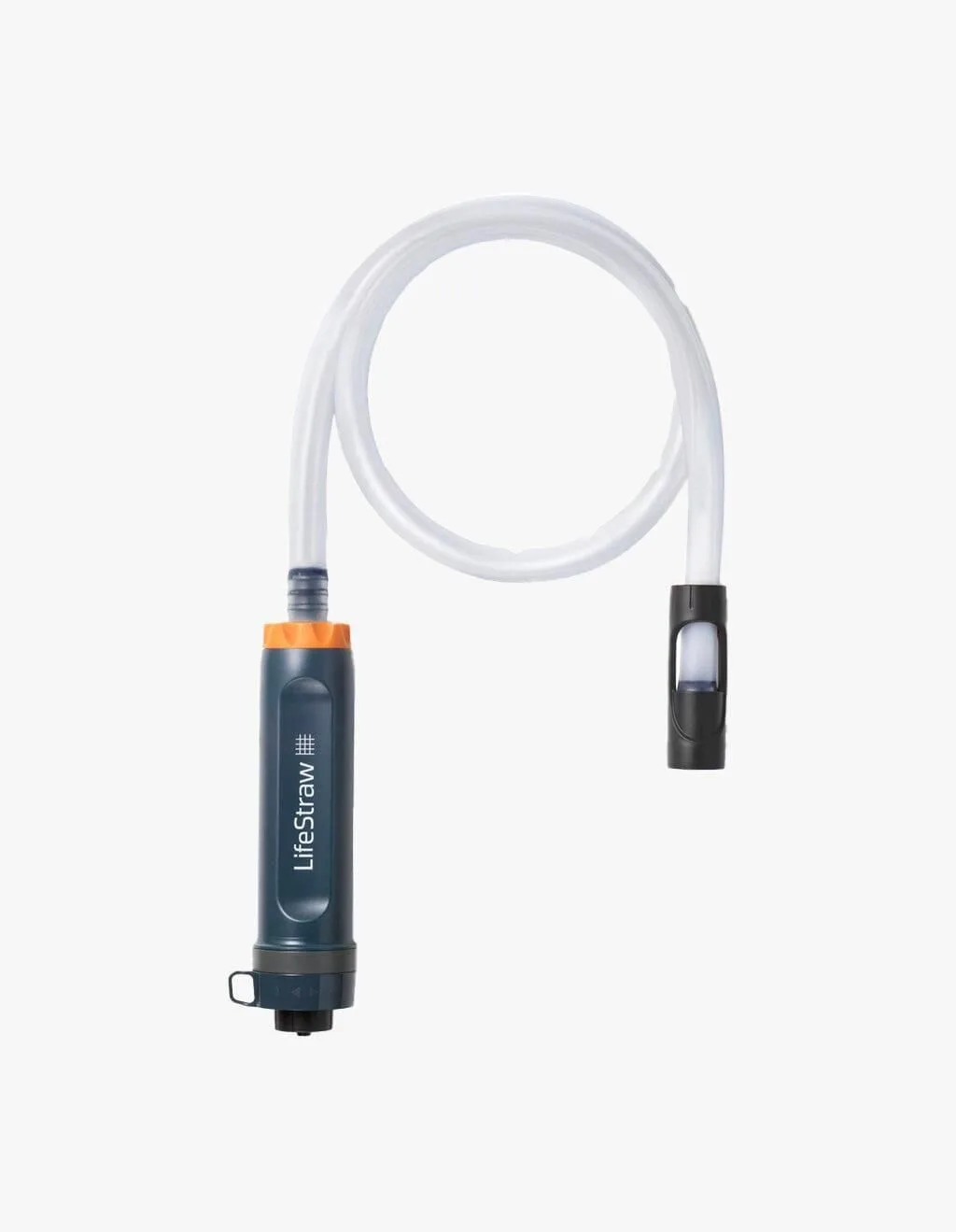
LifeStraw Peak Series Gravity Purifier Replacement Filter
To adapt this for a personal bladder, use the gravity filter as an inline component between two bladders—one dirty, one clean. The clean bladder becomes your drinking reservoir. This setup is excellent for long hikes where you want to filter large volumes at camp and then carry clean water the next day. The hollow fiber membrane lasts for 1,000 gallons, so you won't need to replace it often.
- Best for: groups or hikers who want to filter water at camp
- Flow rate: up to 12 liters per hour
- Tip: use a carabiner to hang the dirty bladder from a high point
Option 3: Squeeze-and-Bladder Hybrid System
If you prefer a squeeze filter for its portability, you can combine the LifeStraw Peak Series Collapsible Squeeze 1L Bottle with Filter with a standard water bladder. Fill the squeeze bottle from a stream, filter the water by squeezing it through the integrated filter, and then pour the clean water into your bladder. This method gives you the best of both worlds: a lightweight filter for on-the-go use and a large reservoir for carrying water.
This approach is especially useful when water sources are far apart. You can filter a liter in under 30 seconds and then refill your bladder multiple times without needing to stop for long. The collapsible bottle packs flat when empty, saving space in your pack. It's a great backup filter if your inline setup fails, and it pairs perfectly with the LifeStraw Personal Straw Filter Carry Case for storing the filter when not in use.
- Best for: ultralight hikers who want a versatile system
- Flow rate: 1 liter per minute when squeezing
- Tip: pre-filter murky water through a bandana to extend filter life
Common Mistakes to Avoid
One common mistake is attaching a LifeStraw straw directly to a bladder hose without an adapter. Most bladders use proprietary connectors, so you'll need a universal inline adapter or a quick-connect fitting. Another mistake is forgetting to backflush the filter after a trip. Sediment buildup can drastically reduce flow rate, so use the included syringe to push clean water backward through the membrane.
Also, never let the filter freeze while wet. Ice crystals can damage the hollow fibers, rendering the filter useless. In cold weather, store the filter in your sleeping bag or use a insulated sleeve. Finally, don't assume any filter removes viruses. LifeStraw straw and squeeze filters remove bacteria and protozoa but not viruses. For areas with viral contamination, combine with chemical treatment or a UV purifier.
- Always use an adapter to connect straw to bladder hose
- Backflush after every trip to maintain flow
- Protect filter from freezing—store in sleeping bag at night
- Know your water source: add virus protection if needed
Maintenance Tips for Long-Term Use
To keep your LifeStraw water bladder system working for years, follow a simple maintenance routine. After each hike, disassemble the filter and rinse it with clean water. Use the backflush syringe to push water through the membrane until the outflow runs clear. Let the filter air-dry completely before storing it in a cool, dry place. Avoid storing it in direct sunlight, as UV rays can degrade the plastic.
Replace the filter when you notice a significant drop in flow rate or after the recommended lifespan. For the LifeStraw Peak Series Collapsible Squeeze 1L Bottle with Filter, the filter lasts about 1,000 liters. For the LifeStraw Peak Series Gravity Purifier Replacement Filter, it's about 1,000 gallons. Keep a spare filter in your emergency kit, especially on long hikes where water sources may be unpredictable.
- Rinse and backflush after each trip
- Air-dry completely before storage
- Replace filter after 1,000 liters (squeeze) or 1,000 gallons (gravity)
- Carry a spare filter for extended trips
Pairing a LifeStraw with a water bladder gives you a lightweight, reliable hydration system that keeps you drinking safely on long hikes. Whether you use an inline straw, a gravity setup, or a squeeze-and-bladder hybrid, the key is choosing the right filter for your style and maintaining it properly. For a versatile, packable option that works with any bladder, check out the LifeStraw Peak Series Collapsible Squeeze 1L Bottle with Filter. It's a perfect companion for your next extended adventure.