Quick answer
The Lifetime Ball is the more durable choice for most fetch-obsessed dogs because its 100% natural rubber construction and AirRidge design address the two main failure points of standard fetch toys: material breakdown and airway blockage. Standard tennis-style balls remain a reasonable low-cost option for gentle fetchers, but they wear out faster and carry a known swallowing risk.
Material and design differences that affect lifespan
Standard fetch toys are often made from a mix of rubber and felt or synthetic fuzz. That outer layer breaks down with repeated mouth contact and abrasion, and the core can compress or crack over time. The Lifetime Ball uses 100% natural rubber with no fuzzy cover, so there is no outer layer to shred or ingest.
The AirRidge design adds contoured ridges that allow airflow if the ball becomes lodged in a dog's throat, and the center channel doubles as a rope port. These are safety and play-flexibility features, not just durability claims. Standard balls have no comparable airflow path, which is why swallowed tennis balls are a recognized veterinary hazard.
Where standard fetch toys still make sense
If your dog is a gentle fetcher who carries rather than chews, a standard tennis-style ball can last through many sessions and costs less upfront. The trade-off is that you will likely replace it more often, and you should supervise play to reduce swallowing risk.
For dogs that destroy fuzz-covered balls quickly, the Lifetime Ball's higher upfront price is offset by fewer replacements. The catalog comparison price of USD 15.00 against a USD 7.50 sale price makes the value gap narrower than it first appears.
What the Lifetime Ball does not solve
No ball is indestructible. The Lifetime Ball is designed to resist breakdown and reduce airway risk, but it is still a rubber toy that can be punctured by determined chewers. The catalog does not list a chew-resistance rating or warranty terms for this toy, so treat it as a durable fetch ball rather than a chew toy.
Size selection matters. The Lifetime Ball comes in multiple sizes, and a ball that is too small for your dog's mouth increases choking risk. Choose the largest size your dog can comfortably carry.
Trade-offs at a glance
- Upfront cost: The Lifetime Ball lists at USD 7.50 (catalog comparison price USD 15.00), while standard fetch balls are typically cheaper per ball. You pay less per ball for standard toys but replace them more often. Calculate cost per month of active fetch, not cost per ball.
- Durability under mouth contact: Natural rubber with no outer fuzz resists the shredding and compression that end most standard fetch balls. Standard fuzz-covered balls break down faster, especially with dogs that chew while retrieving. If your dog shreds fuzz, the Lifetime Ball is the lower-replacement option.
- Safety during fetch: The AirRidge design provides an airflow path if the ball lodges, and the center channel accepts a rope. Standard balls lack both features, so they carry a higher swallowing risk and cannot be used with a rope. Supervise all ball play, and size the ball to your dog's mouth.
- Play flexibility: The Lifetime Ball works for fetch and, with a rope threaded through the center channel, for tug and retrieval. Standard balls are fetch-only. One toy can cover more games if you add a rope.
Product facts
-
Lifetime Ball: Made from 100% natural rubber in Golden, Colorado, with no fuzzy outer cover. There is no felt or fuzz layer to shred, so the ball holds its shape longer and reduces the risk of ingested material.
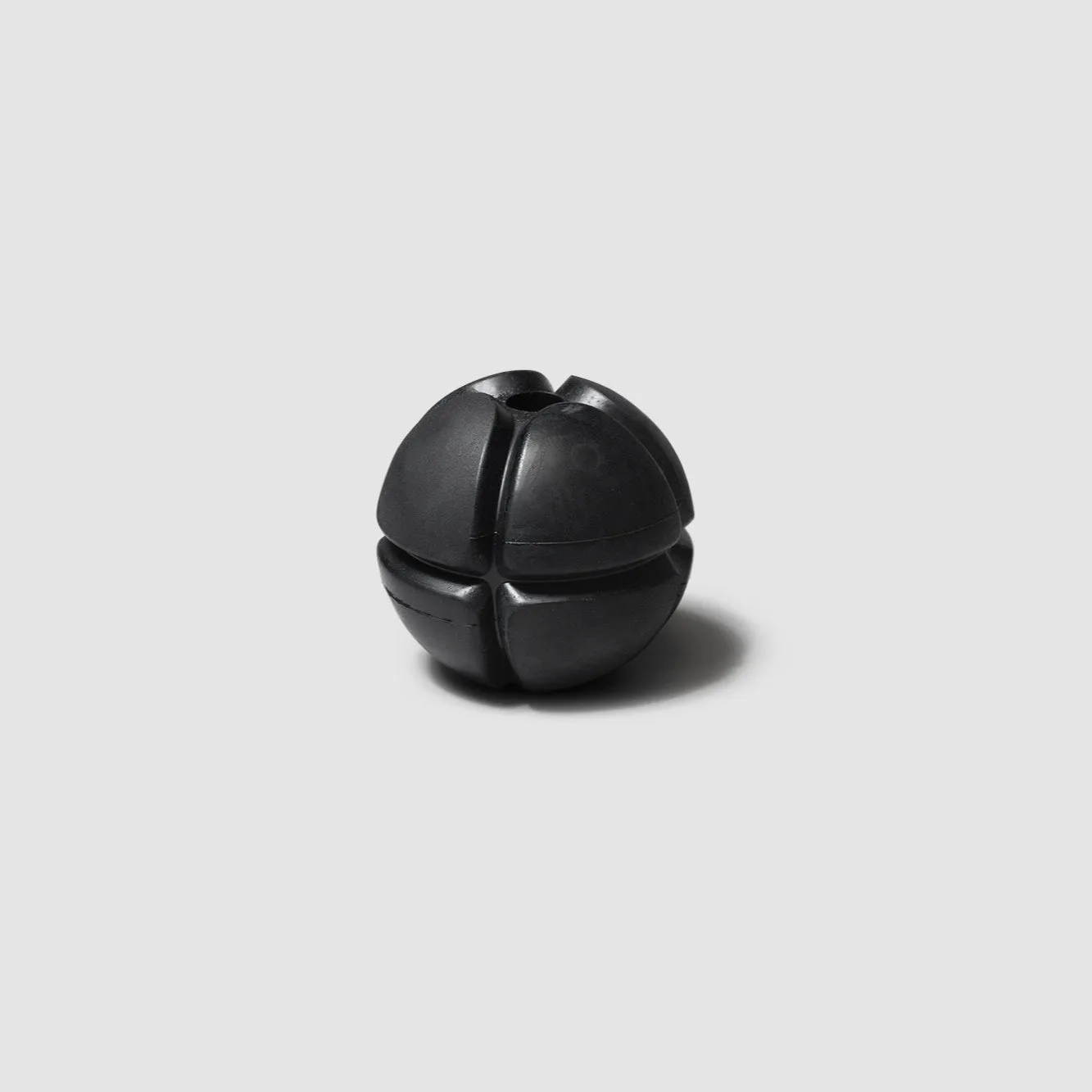
Lifetime Ball
-
Lifetime Ball: Features AirRidge contoured ridges that allow airflow if the ball gets stuck, plus a center channel that works as a rope port. This adds a safety margin during vigorous fetch and lets you attach a rope for tug or retrieval games.
Which ball fits your dog?
Choose the Lifetime Ball if
- Your dog fetches daily and destroys fuzz-covered balls quickly.
- You want a fetch ball with an airflow safety feature and rope-port versatility.
- You prefer fewer replacements over the lowest upfront price.
Choose a standard fetch ball if
- Your dog is a gentle carrier and a basic ball lasts many sessions.
- You need the lowest possible cost per ball and will supervise closely.
- Your dog is a determined chewer who punctures solid rubber; no fetch ball is a chew toy.