Quick answer
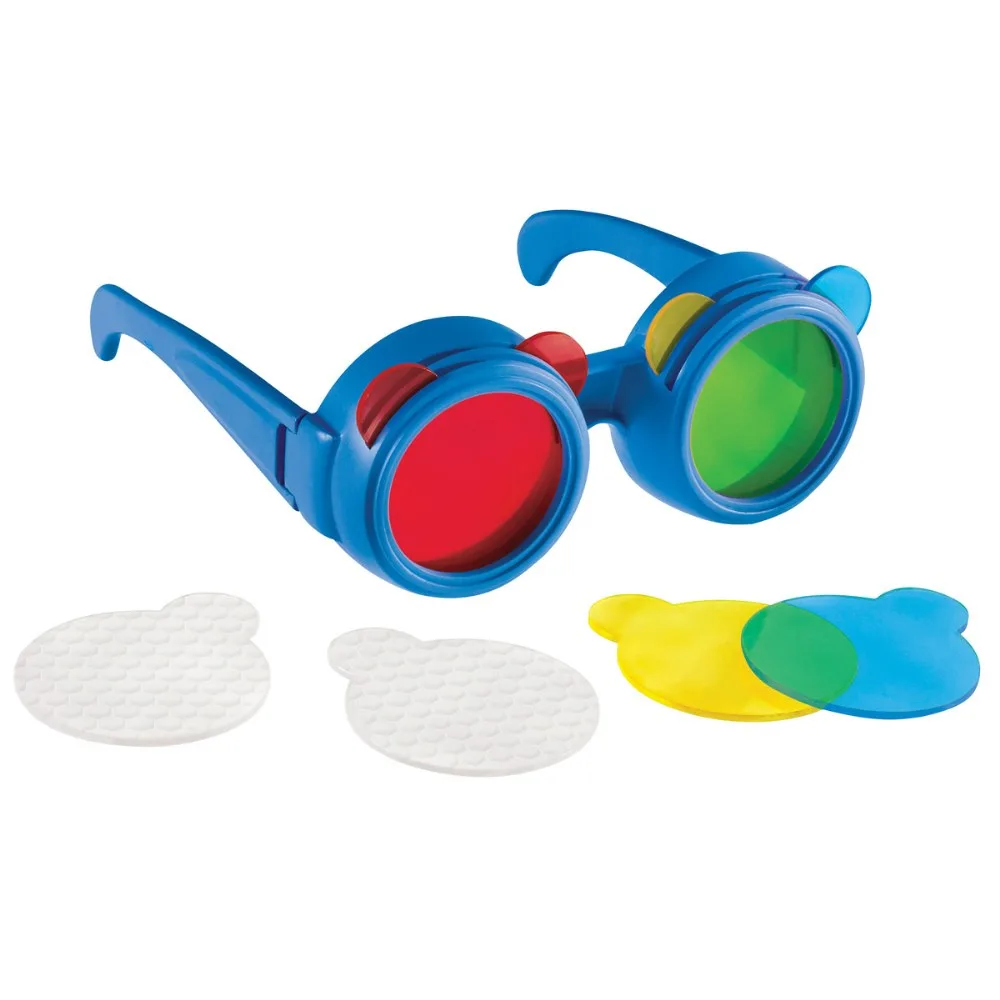
Start with one tool at a time: color lenses for free exploration, then translucent cubes for stacking and sorting, and finally color mixing glasses for predicting secondary colors. Introduce each material only after children have had time to notice what happens on their own.
Why one material at a time beats a full tray
A light table can quickly become a pile of plastic. When you offer lenses, cubes, and glasses all at once, most children flit between them and never test an idea. Introduce one material per session so children can repeat an action and see the same result. The next session, add a second material and invite comparisons.
This pacing also protects your budget. You do not need every item on day one. A single set of color lenses or a small group of cubes can carry several weeks of exploration before you introduce the next tool.
When to skip the light table entirely
Light tables are not required for color learning. If you have children who are sensitive to bright light or who prefer to move while they explore, use the same materials on a plain white tray near a window. The color lenses and cubes still work; you simply lose the glow.
Also consider age. The color mixing glasses are rated for ages 4 and up, while the color lenses and translucent cubes start at 2 and 3 respectively. For a mixed-age group, set out the lenses first and keep the glasses for older children who can handle the smaller lenses without frustration.
How to run a light table color mixing session
- Set up the light table with one material: Place only the color lenses on the light table. Leave the cubes and glasses in a nearby bin out of reach. Turn on the light and invite children to look, stack, and slide the lenses. Check that the light is not too bright for sensitive eyes; dim it or use a white tray instead.
- Let children explore freely for five minutes: Resist the urge to demonstrate. Watch what they do: do they hold lenses up to the light, place them flat, or look through them? Note one action you can build on later. If a child loses interest in under a minute, the material may be too advanced; switch to the mirror panel for simpler cause-and-effect.
- Introduce a single color question: Ask one focused question, such as 'What happens when you put the yellow lens on top of the blue lens?' Let children try it and describe what they see. Avoid correcting; ask them to look again. If children cannot overlap lenses without frustration, switch to the color mixing glasses, which hold the lenses in place.
- Add the translucent cubes for sorting and stacking: On a later day, set out a small group of cubes (10–15) on the mirror tray. Invite children to sort by color or stack them to see how the light changes. Keep the rest of the set stored. Check that cubes are not small enough to be a choking hazard for children under 3; the set is rated for ages 3 and up.
- Use the color mixing glasses for prediction: For children 4 and up, show how to insert two lenses per side. Ask them to predict the color before looking through. Then let them test and adjust. If a child struggles to insert lenses, demonstrate once and then hand them the glasses; the frames are durable but the lenses can pop out if forced.
- Close with a simple record: Ask each child to draw or point to the color they made. Keep the drawing near the light table as a reference for the next session. If no one wants to record, skip it; the conversation during play is the real assessment.
Materials that support the steps
-
Color Lenses - Set of 5: Set of 5 framed panels includes red, yellow, and blue acrylic panels, an unbreakable mirror, and a multi-faceted panel; for ages 2 and up. The mirror and faceted panel let toddlers explore reflection and distortion before they are ready to combine colors.
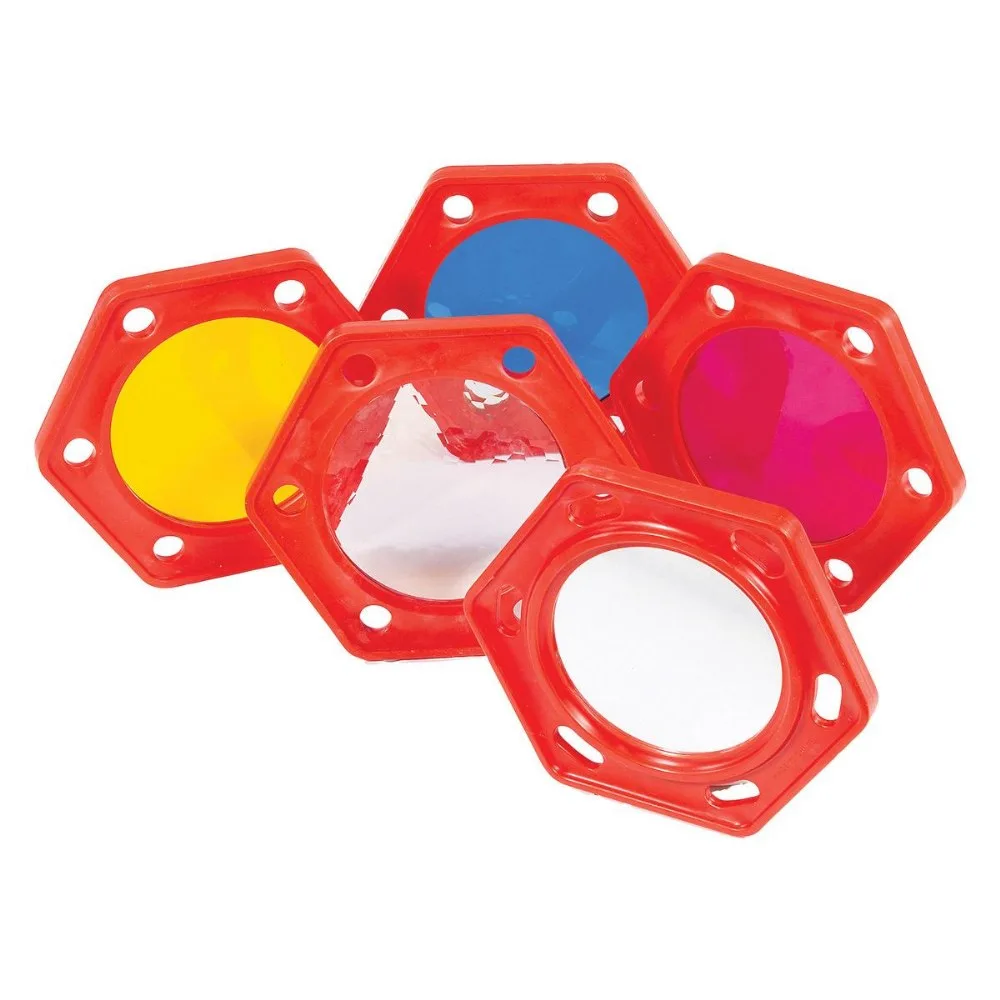
Color Lenses - Set of 5
-
Translucent Cubes with Mirror Tray - 100 Pieces: 100 translucent cubes (1 inch each) with a mirrored tray; for ages 3 and up. The tray keeps cubes contained and adds a reflective surface, so children can see colors from above and below.
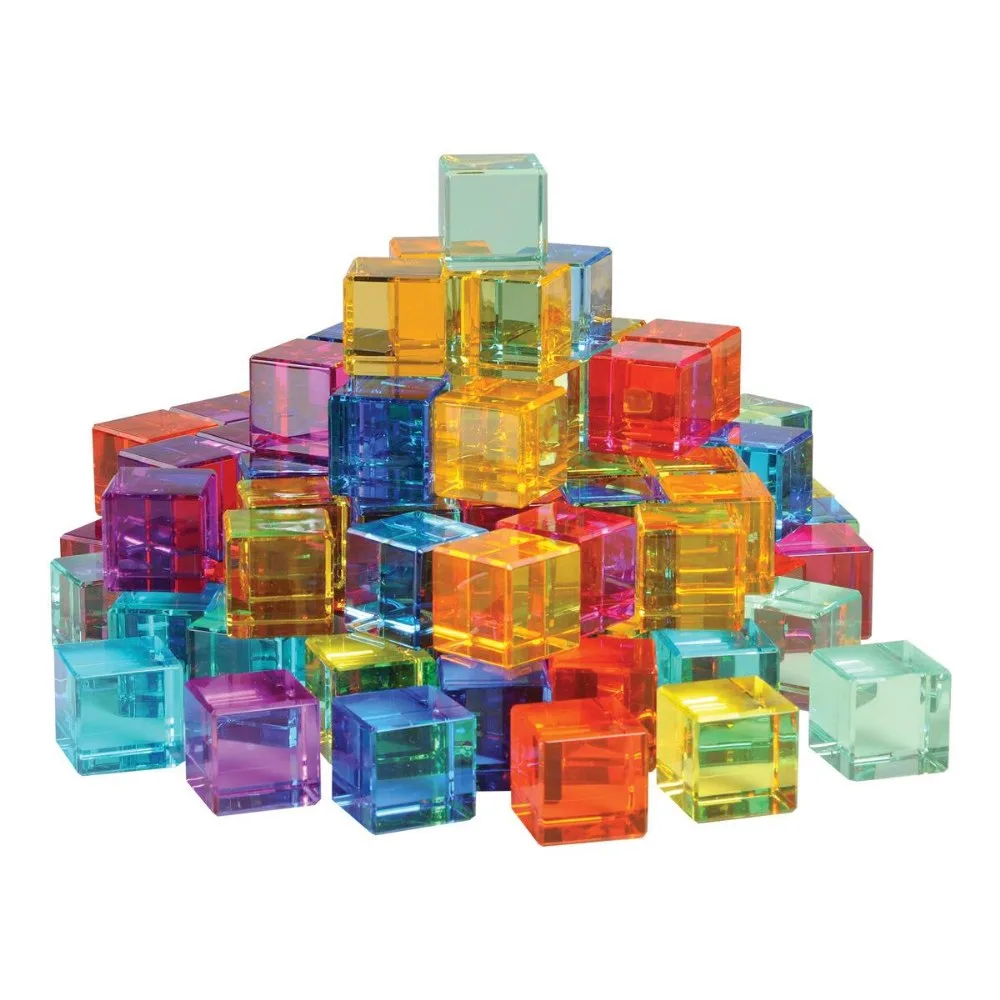
Translucent Cubes with Mirror Tray - 100 Pieces
-
Color Mixing Glasses: Child-size glasses with two lenses each of red, yellow, blue, and distortion; combine up to two lenses per side; for ages 4 and up. Children can physically stack lenses to test color mixing predictions, which makes abstract color theory concrete.