Start with the lamp's role, not the room
The Lightguide ellipse + dome table lamp is a design piece first: a bold elliptical glass bulb paired with a textured, matte base. That combination means placement should begin with a simple question — do you want this lamp to be the focal point, or a supporting layer of light? Answer that before you pick a surface, because the lamp's sculptural shape reads very differently when it is the hero of a corner versus one element in a busy arrangement.
Because the supplied catalog describes the bulb as handblown glass and the base as 3D-printed from bio-circular materials, the lamp has a crafted, tactile character. That favors spots where people see it up close — a bedside table, a sideboard, a reading nook — rather than a high shelf where the detail disappears.
What the catalog confirms about this lamp
-
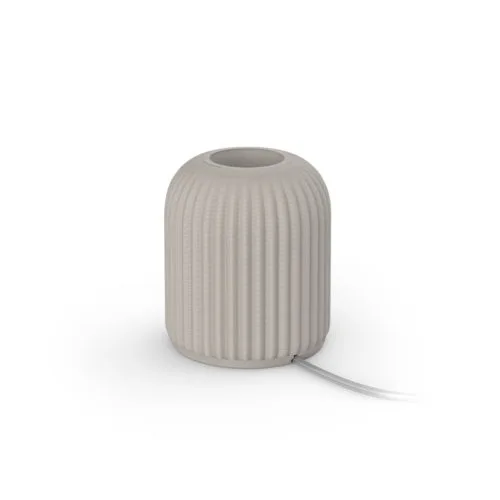
Lightguide ellipse + dome table lamp (sand): The duo pairs the bold shape of the Lightguide ellipse bulb with a textured, matte lamp base. The contrast between smooth handblown glass and a matte base is the lamp's visual signature, so place it where that contrast is visible rather than hidden behind other objects.
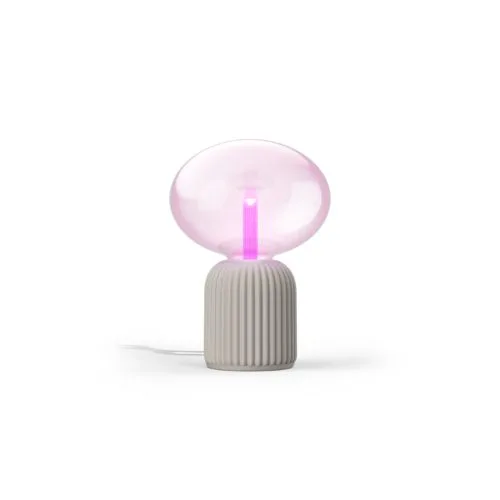
Lightguide ellipse + dome table lamp (sand)
-
Lightguide ellipse + dome table lamp (sand): The bulb is handblown glass, while the lamp base is 3D-printed using bio-circular materials. This mix of modern and traditional craftsmanship suits rooms where material texture matters — bedside, living room side tables, or a hallway console.
Bedside placement: scale and reachability
A bedside table is one of the most natural homes for this lamp, but check two things before you commit. First, surface space: the elliptical bulb is the visual mass, so leave breathing room around it rather than crowding it with books, glasses and a phone charger. Second, reachability: you want the switch or control within easy reach from lying down, and the lamp positioned so the glass bulb is not knocked when you set down a glass of water.
If your bedside table is small, consider whether the lamp's footprint leaves room for the essentials. The catalog does not list base dimensions, so measure your table and compare it with the lamp's actual footprint before buying — that is a decision limitation worth checking in person or in the full product listing.
Placement checkpoints before you settle on a spot
- Surface stability: The lamp combines a glass bulb and a matte base; choose a level, stable surface away from the edge of a table where it could be knocked.
- Sightline to the glass: The handblown glass bulb is the focal element. Place the lamp so the ellipse is visible from where you sit or lie, not tucked behind a monitor or a stack of books.
- Contrast with the background: The sand finish and textured matte base read best against a background that lets their texture show — a plain wall or a simple textile rather than a busy pattern.
- Cable and control access: The catalog does not confirm cable length or control type, so plan a spot near a power source and confirm the control method in the full listing before purchase.
Living room and console styling
On a sideboard or console, the Lightguide ellipse + dome lamp works as a sculptural anchor. Give it a clear zone — a tray or a single object beside it rather than a cluster — so the elliptical silhouette stays legible. The sand finish is warm and neutral, which makes it easy to pair with wood, linen and ceramic surfaces without competing for attention.
For hue table lamp styling, think in layers: this lamp can carry a corner on its own, or sit beside a floor lamp or a smaller accent light. Keep the taller elements behind it so the glass bulb is not visually swallowed. The catalog does not confirm dimming behavior or smart features, so treat those as things to verify in the full product record rather than assume.
Setup: what to confirm before and after unboxing
The supplied record does not include preparation steps, operating instructions or care guidance for this lamp. That is a gap in the available evidence, not a statement that none exist. Before setup, check the full product listing and any included documentation for assembly, bulb fitting and care instructions, and follow those rather than improvising.
As a practical checkpoint, unbox onto a soft surface so the handblown glass bulb is not set down on a hard edge, and keep the lamp unplugged until you have read the supplied instructions. If the documentation specifies a particular bulb or control method, follow it exactly — the catalog does not confirm compatibility details, so the manufacturer's guidance is the authority here.
Where this lamp works less well
Because the design leans on visible craftsmanship, a few placements undercut it. A high shelf or the top of a tall bookcase puts the glass and matte texture out of close view. A crowded desk or kitchen counter risks knocks to the glass bulb. And a spot with no nearby power source adds a cable run that can spoil the clean look — the catalog does not confirm cable length, so check that before you plan a far-from-outlet placement.
If you need a lamp for a high-traffic, hard-working surface, a more compact fixture may suit better. The Lightguide ellipse + dome is at its best where it can be seen, touched and enjoyed as an object.