Quick answer
Mount the Liila Wall Outdoor where its slim arm and opal glass can be seen from the main approach, then protect that position with a simple seasonal routine. Treat placement as a lighting decision first and a weather decision second.
Why the black and opal version changes placement
The black metal finish recedes into dark siding, brick, or shadow, while the opal glass disc stays visibly brighter. That contrast rewards a spot where the glass is viewed against a darker background rather than in front of a bright window or white wall.
Because the light is reflected from the glass rather than aimed through a wide shade, the lamp reads best as an accent near a door, a quiet facade section, or a seating corner. Avoid using it as the only light for a wide driveway or a busy step run where broad illumination matters more than a soft focal point.
What the catalog does and does not tell you
The supplied catalog describes a wall-mounted backplate, a slender metal arm, and a thin round metal disc that reflects light from mouth-blown glass. It does not list an IP rating, dimming compatibility, or recommended mounting height, so those decisions must come from your electrician and the actual installation instructions.
That absence is a planning limitation, not a flaw. Confirm wiring, junction box position, and local exterior-lighting requirements before you commit to a height or a circuit.
Placement and care steps
- Choose the viewing angle first: Stand at the main approach to the wall and pick a spot where the opal disc will be seen against a darker surface, not against a bright window or a white wall. Check the view from both day and night positions. If the disc disappears into a bright background, move along the wall before drilling.
- Set height and clearance: Confirm the mounting height with your electrician and the installation instructions, then check that the slim arm and disc clear door swings, shutters, and nearby foliage. Keep the glass away from sprinkler heads and downspout spray. Open every nearby door and shutter through its full swing before fixing the backplate.
- Plan spacing for a pair or row: If you use more than one, space them evenly along the facade and align the backplates to the same height. Avoid crowding them near a single door unless the wall is long enough to keep the rhythm calm. Mark all positions with painter's tape and view them from the street before committing.
- Wire and mount with exterior protection: Have a qualified electrician confirm the circuit, junction box, and any required exterior-rated connections. Follow the supplied installation instructions for the backplate and arm rather than improvising a bracket. Do not seal or silicone around the fixture unless the instructions call for it; trapped moisture can be worse than an open joint.
- Clean the opal glass gently: Switch off the circuit, then wipe the glass and black metal with a soft, damp cloth and a mild non-abrasive cleaner. Dry the surfaces afterward and avoid solvent-heavy products that could dull the finish. Clean when the fixture is cool, not after hours of use.
- Run a seasonal weather check: At each season change, look for loose fixings, water marks, insect nests, or debris on the disc and arm. Tighten only what the instructions allow and clear any blockage that could hold moisture against the glass. Photograph the fixture after installation so you can spot changes over time.
Product facts
-
Liila Wall Outdoor Lampe, PRO, black / opal: The Liila Wall Outdoor is designed for outdoor mounting and combines a black metal finish with opalized glass. It is built for exterior walls, so placement should account for weather exposure as well as sightlines.
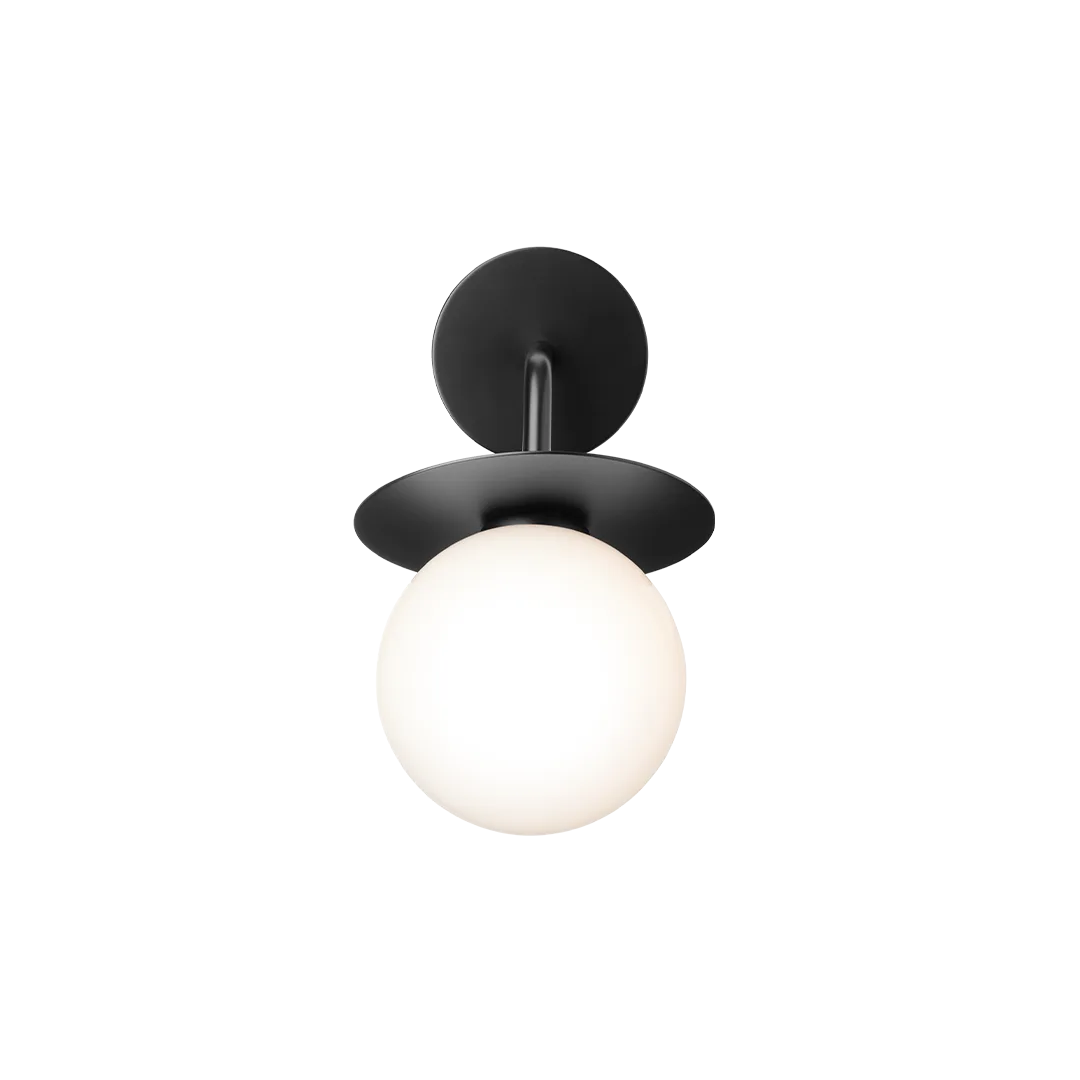
Liila Wall Outdoor Lampe, PRO, black / opal
-
Liila Wall Outdoor Lampe, PRO, black / opal: The fixture uses a wall-mounted backplate with a slim metal arm and a thin round metal disc that reflects light from the glass. The projecting arm and disc need clearance from doors, shutters, and tall plants so the reflected light stays unobstructed.