Quick answer
Choose the LilyPad Arduino for sewable, fabric-based wearable projects; pick the Type-C Pro Micro when you need a compact, USB-ready board for a rigid wearable or a small device.
Form factor and mounting
The LilyPad Arduino is designed for e-textiles: its large, circular shape has sewable tabs that let you stitch it directly into fabric with conductive thread. The Pro Micro is a tiny, rectangular board meant for breadboards or soldered connections, making it better for enclosures or rigid mounts.
If your project needs to flex and bend with clothing, the LilyPad is the natural fit. If you are building a compact gadget that will sit in a 3D-printed case, the Pro Micro saves space.
Connectivity and power
The Type-C Pro Micro includes a USB-C port for direct programming and power, which is convenient for rapid prototyping and charging via a modern cable. The LilyPad Arduino lacks onboard USB; you need an external FTDI adapter to upload code, but its sewable tabs make it easy to integrate a battery holder and switch into a garment.
For wearable projects that stay untethered most of the time, the LilyPad's power circuit is tailored for coin cells or small LiPo batteries. The Pro Micro's USB-C is a plus when you frequently plug in for debugging.
Trade-offs at a glance
- Sewability: LilyPad has large sewable tabs; Pro Micro has no sewable pads.
- USB connectivity: Pro Micro has USB-C for direct programming; LilyPad requires an FTDI adapter.
- Speed and voltage: LilyPad runs at 8 MHz / 3.3 V (low power); Pro Micro runs at 16 MHz / 5 V (faster, more power). If your project needs fast sensor polling or USB HID, the Pro Micro is the better choice.
Product facts
-
LilyPad Arduino (Compatible) 328 Main Board ATmega328P: LilyPad Arduino 328 Main Board ATmega328P Its ATmega328P runs at 8 MHz and 3.3 V, which is ideal for low-power wearable projects but limits processing speed compared to 16 MHz boards.
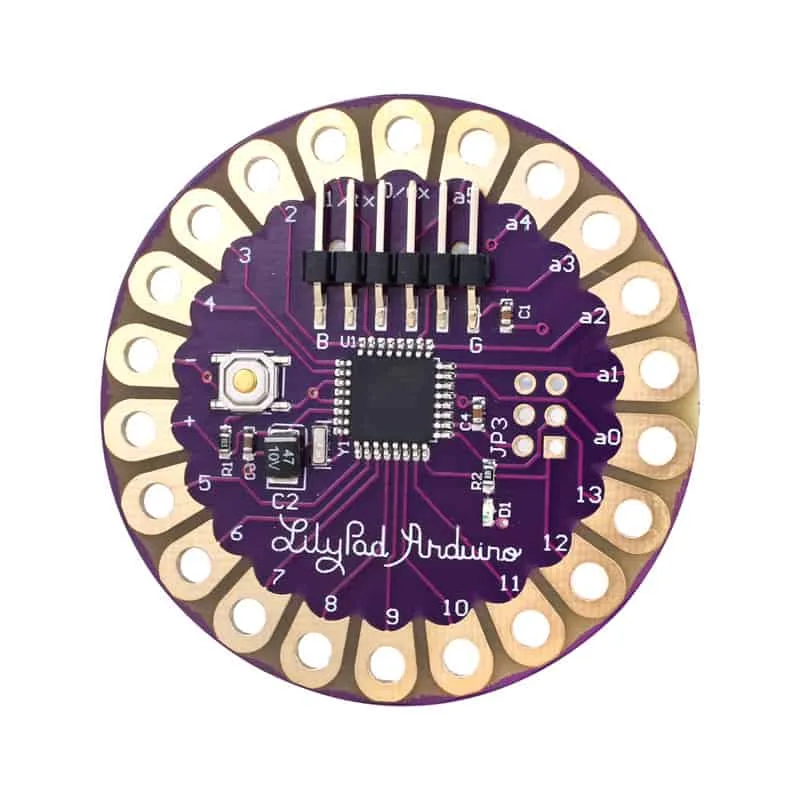
LilyPad Arduino (Compatible) 328 Main Board ATmega328P
-
Type-C Pro Micro ATmega32U4 5V 16MHz for Leonardo: Type-C Pro Micro ATmega32U4 5V 16MHz for Leonardo The ATmega32U4 has built-in USB, so you can program and power it directly via USB-C without an extra adapter, and its 16 MHz clock handles faster logic.
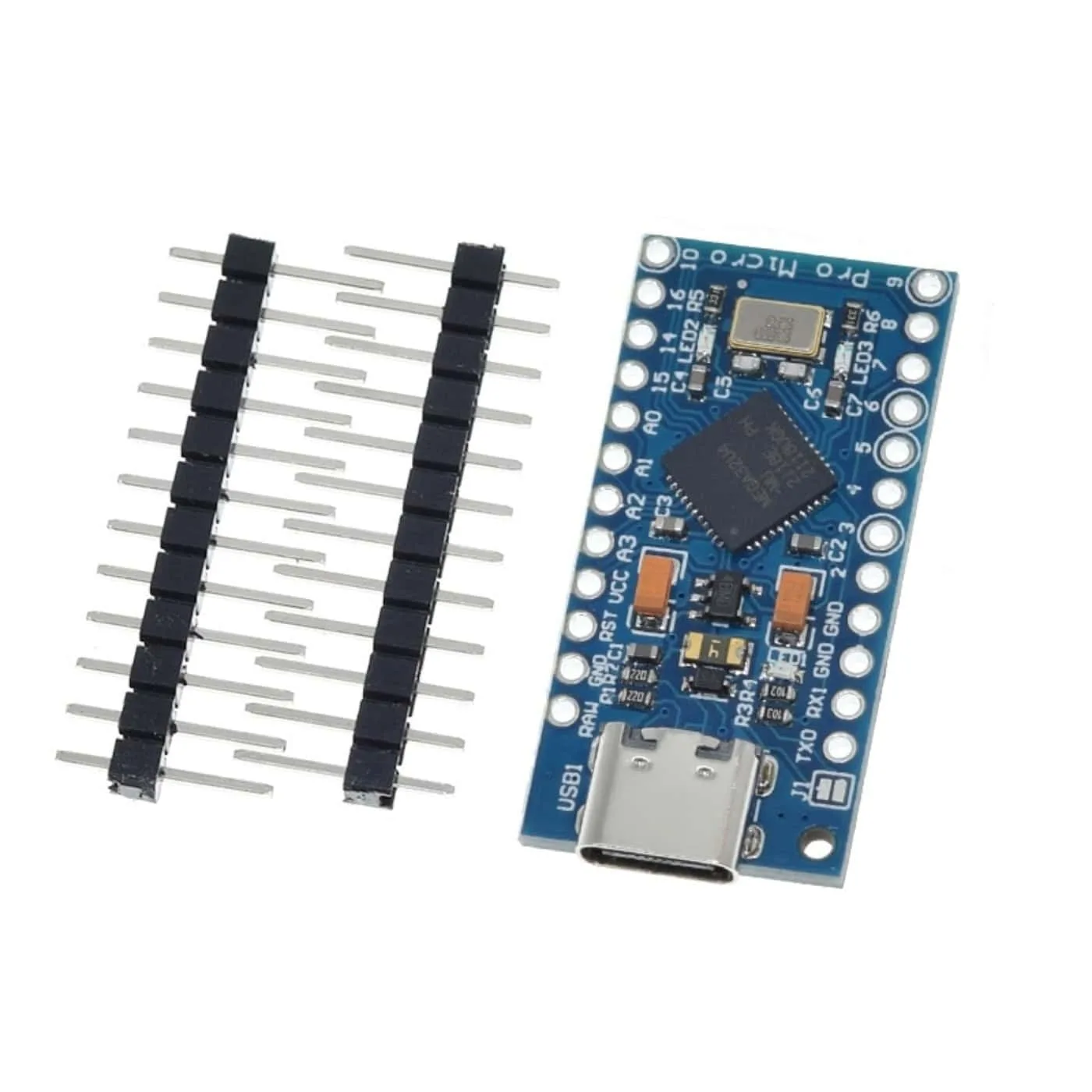
Type-C Pro Micro ATmega32U4 5V 16MHz for Leonardo
Which board fits your project?
Best for
- Sewable e-textile garments and accessories that need a flexible, fabric-friendly board
- Low-power wearable projects running on coin cells or small LiPo batteries
Not for
- Projects that require direct USB programming without an external adapter
- Compact rigid builds where every millimeter of space matters