Quick answer
Hand or machine wash your linen apron in cool water with a mild detergent, then tumble dry low or line dry. Iron while damp on the linen setting to keep the fabric smooth and avoid scorch marks.
Why linen needs gentle care
Linen is a natural fiber that becomes softer and more beautiful with each wash, but it can also shrink, wrinkle, or weaken if treated harshly. Hot water, aggressive detergents, and high heat in the dryer can damage the fibers and fade printed designs.
The Camellia Tree 100% Linen Apron, printed with artwork by Bethany Linz, is especially sensitive because the print can lift or fade with improper washing. Gentle handling preserves both the fabric and the design.
Common mistakes to avoid
One frequent error is using bleach or fabric softener. Bleach weakens linen fibers, and softeners coat the fabric, reducing its natural absorbency and softness. Another is wringing out the apron—twisting wet linen can cause permanent creases and distort the shape.
Also, avoid over-drying. Linen that becomes bone-dry in the machine is much harder to iron and more prone to scorching. Take it out while still slightly damp.
Step-by-step linen apron care routine
- Pre-treat stains gently: Apply a drop of mild liquid detergent directly to the stain and let it sit for 10 minutes. Do not rub hard—blot or gently work the detergent into the fabric with your fingers. For stubborn marks, use a dilute white vinegar solution (1 part vinegar to 3 parts water) instead of bleach. Common mistake: Using bleach or scrubbing vigorously can lighten the color or damage the linen fibers.
- Wash in cool water: Set your machine to a gentle cycle with cool water (below 30°C or 85°F). Add a small amount of mild liquid detergent—avoid powders that may not dissolve fully. If hand washing, submerge the apron and swish it gently for a few minutes, then rinse thoroughly in cool water. Common mistake: Hot water can shrink linen and fade printed designs. Always use cool water.
- Dry properly: After washing, roll the apron in a clean towel to absorb excess moisture—do not wring. Then hang it to dry on a line or lay it flat on a drying rack. If you prefer the dryer, tumble dry on low heat and remove the apron while it is still slightly damp to make ironing easier. Common mistake: Over-drying in high heat makes linen stiff and prone to scorching during ironing.
- Iron while damp: Set your iron to the linen or cotton setting (usually high heat) and use steam. Iron the apron while it is still slightly damp, moving the iron along the grain of the fabric. For printed areas, iron on the reverse side to protect the design. Focus on the front panel and pocket edges for a crisp look. Common mistake: Ironing completely dry linen can leave shiny scorch marks. Always iron damp and avoid lingering on printed areas.
- Store correctly: Fold the clean apron and store it in a cool, dry place away from direct sunlight, which can fade the print over time. If hanging, use a wide padded hanger to avoid creasing the shoulders. For long-term storage, wrap the apron in acid-free tissue paper. Common mistake: Hanging a heavy linen apron on a thin hanger can create permanent creases and distort the neckline.
Product spotlight
-
Camellia Tree 100% Linen Apron: Crafted from 100% heirloom quality linen, with gilded gold eyelets and a printed artwork by Bethany Linz. Because the printed design and gold eyelets are sensitive, you must use cool water, a mild detergent, and avoid bleach or scrubbing directly on the print.
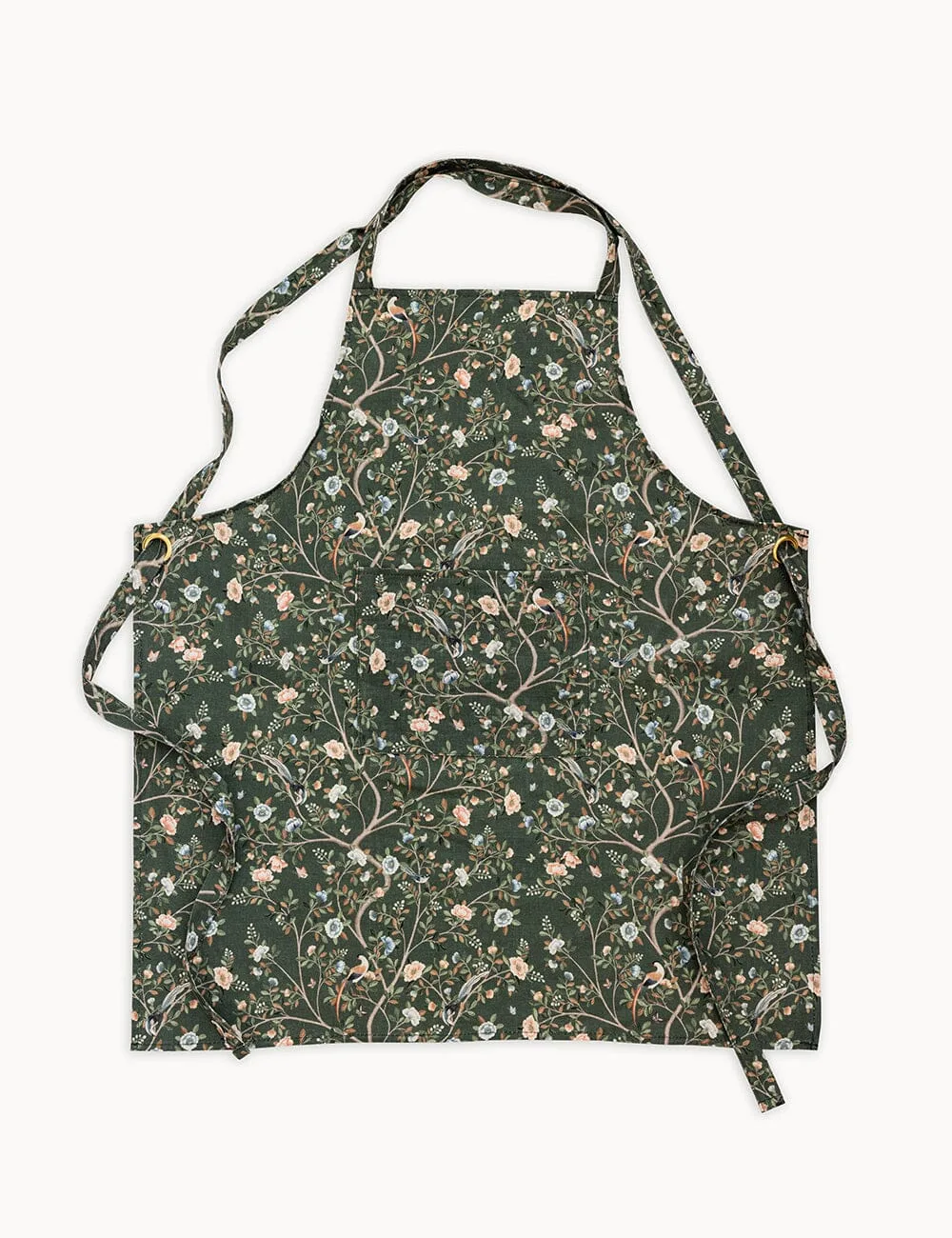
Camellia Tree 100% Linen Apron