Start with the pieces in your child's hands
A chunky wooden puzzle works best when you treat it as a small, repeatable activity rather than a test. The Lion Wooden Puzzle is built around that idea: the pieces are described as chunky and easy for little hands to grasp, so the first job is simply letting your child pick them up, turn them over and feel how they fit.
That sounds almost too simple, but it is where the fine motor puzzle play actually happens. Before a toddler can match a shape, they need to hold it, rotate it and bring it back to the board. Your role is to set up the pieces and stay nearby, not to guide every move.
What the lion puzzle is designed for
-
Lion Wooden Puzzle: Chunky wooden puzzle pieces described as ideal for little hands to grasp. Grip is the first step in toddler puzzle activities, so the piece size shapes how you start.
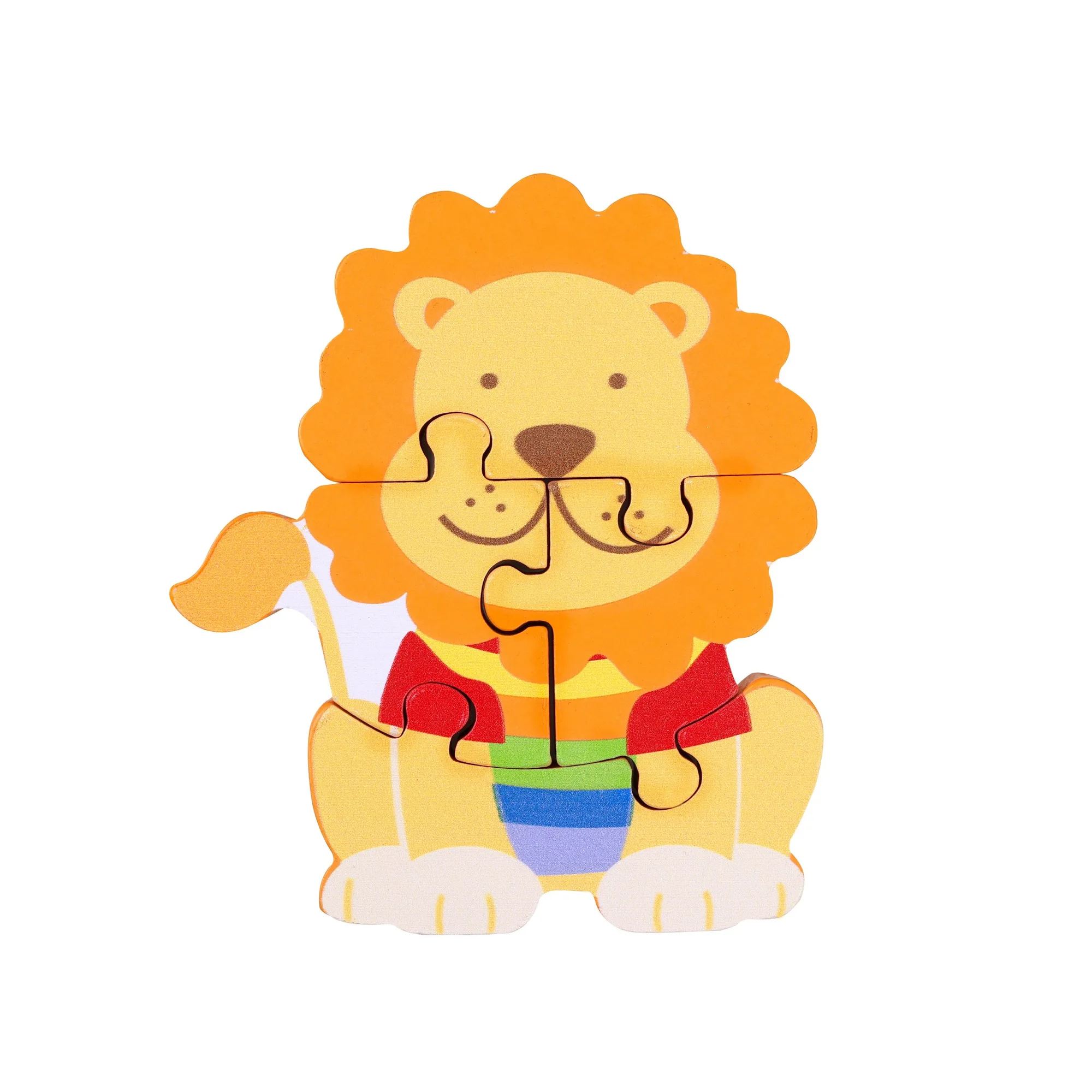
Lion Wooden Puzzle
-
Lion Wooden Puzzle: The puzzle encourages key motor skills such as hand-eye coordination and shape recognition. These are the two skills your play routine can quietly reinforce without turning it into a lesson.
-
Lion Wooden Puzzle: The completed character is described as great for imaginative play. The puzzle does not have to end when the last piece goes in; the finished lion can become part of pretend play.
-
Lion Wooden Puzzle: Made from FSC®-certified wood. A material detail some families look for when choosing a wooden animal puzzle.
A simple first play routine
Keep the session short and let your child lead. The steps below use only what the catalog supports: grasping, fitting pieces together and using the finished character for play.
- Set out the pieces: Place the puzzle board and the chunky pieces within easy reach. Let your child choose a piece rather than handing one over.
- Let them grasp and turn: Give time for picking up and rotating the pieces. This is the hand-eye coordination and shape recognition practice the puzzle is described as encouraging.
- Fit the pieces together: Work toward completing the lion. Offer a piece back if your child loses interest, but avoid correcting every placement.
- Use the finished lion for pretend play: Once the character is complete, bring it into imaginative play. The catalog notes the completed character is great for this, so the puzzle can become a small toy in its own right.
Toddler puzzle activities that stay within the evidence
These variations reuse the same chunky pieces and the same two supported skills. None of them requires extra equipment or instructions the catalog does not supply.
- Piece-by-piece naming: Hold up one piece at a time and talk about it before fitting it. This supports shape recognition without adding rules.
- Take-apart and rebuild: Let your child remove the pieces after the lion is complete, then rebuild. Repetition is the point for little hands.
- Lion as a story character: Use the completed lion in a short pretend-play scene. This is the imaginative play the catalog highlights.
- Quiet independent play: Set the puzzle out and stay nearby without directing. Some toddlers focus better when the activity is not narrated.
What to check before you buy
The supplied information describes the Lion Wooden Puzzle as a chunky wooden puzzle made from FSC®-certified wood, with pieces for little hands and a finished character for imaginative play. It does not include a recommended age, piece count, exact dimensions or care instructions, so check those details on the product listing or packaging before buying if they matter to you.
The catalog also lists Retail and Trade pricing options. That is a purchasing detail rather than a play feature, but it is worth knowing if you are buying for a setting rather than a home.
At a catalog price of USD 3.59, compared with a catalog comparison price of USD 4.99, this is a low-cost way to add a wooden animal puzzle to a toddler's toy shelf. Treat the price as a practical detail, not a promise about how long the puzzle will hold attention.
Where the lion puzzle fits in everyday play
This is a small, focused toy rather than a whole playroom in one box. It suits a short daily routine: a few minutes of grasping and fitting, then a few minutes of pretend play with the finished lion. That rhythm matches the skills the catalog names, hand-eye coordination and shape recognition, without asking the puzzle to do more than it is described as doing.
If you are choosing between this and another chunky wooden puzzle, the decision usually comes down to the character your child responds to and the piece size. The lion's chunky pieces and completed-character play are the two details the supplied information makes clearest.