Quick answer
Roll your liquid core chonk d20 on a padded dice tray and keep it away from hard tables, heat, and long direct sun. Clean it with a soft damp cloth only, and stop using it if the core looks cloudy, the resin feels tacky, or the die has a visible crack.
Why a 40mm liquid core die needs different handling
A standard d20 is about 20mm across. The Pastelaria Liquid Core Chonk D20 is 40mm, so it lands with more mass and a wider contact patch. That extra size makes a padded tray more than a style choice: it spreads the impact and reduces the chance of scuffing the polished faces or stressing the resin around the liquid core.
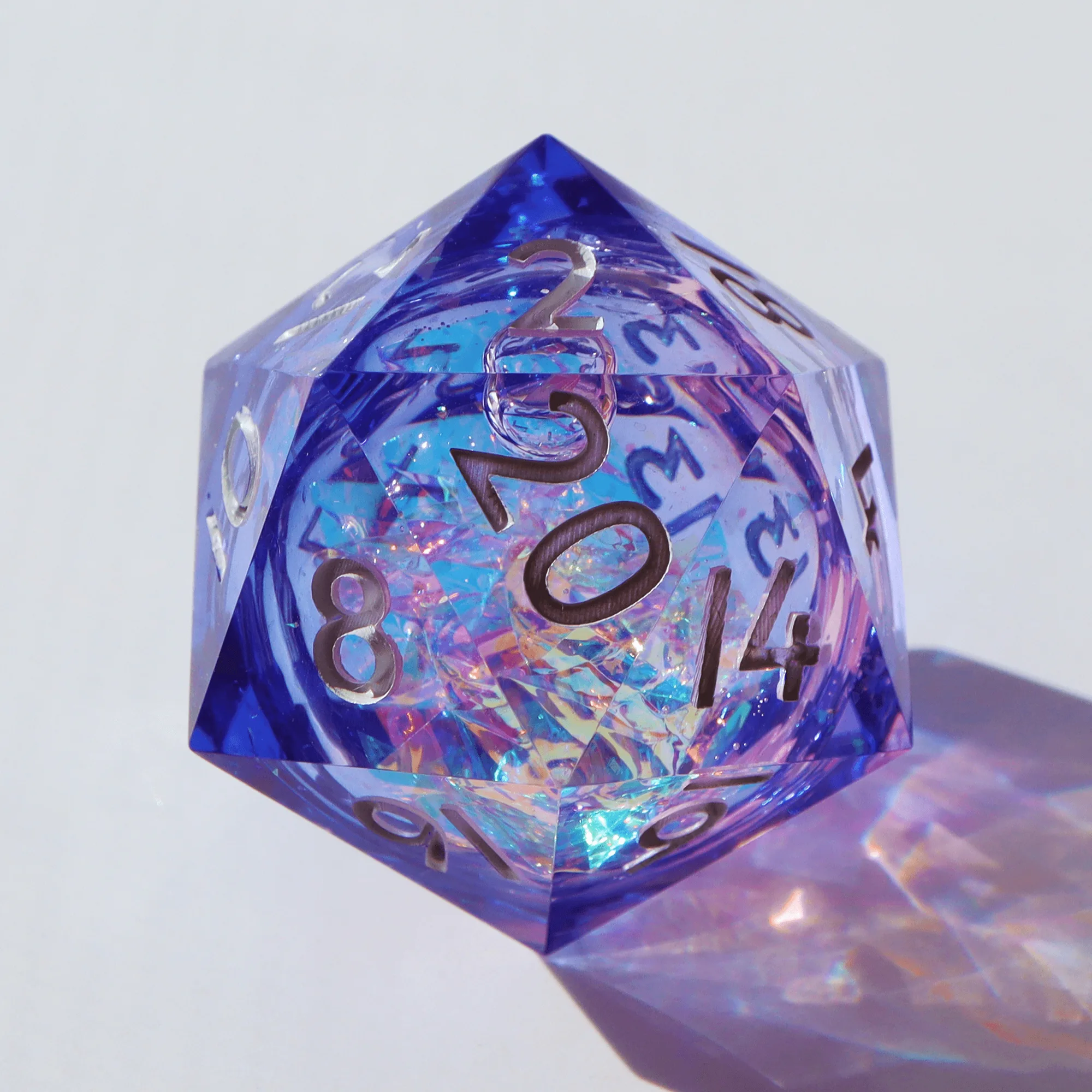
The liquid core also makes the die visually dynamic, but it is sealed inside resin. You do not need to shake it before rolling, and you should not treat the core as a separate toy. The goal is to let the die tumble naturally so the liquid moves on its own.
When a soft roll is not enough
A padded tray solves most impact problems, but it will not fix a die that is already damaged. If you notice a hairline crack near an edge or the liquid appears to be seeping, stop rolling that die on any surface. Handmade resin dice are quality-inspected for casual play, but they are not indestructible, and a compromised core can leak or cloud further with use.
Diagnose your liquid core d20 issues
- Cloudy or milky core: Symptom: the liquid inside looks hazy instead of clear. Likely cause: moisture ingress through a micro-crack, or prolonged exposure to heat or sunlight. Corrective action: stop rolling it, wipe the exterior with a dry soft cloth, and store it in a cool, dark place. If the cloudiness does not clear after a day, retire the die from play. Do not try to open or drain the die; the core is sealed and cannot be serviced at home.
- Sticky or tacky surface: Symptom: the resin feels slightly sticky even after cleaning. Likely cause: residue from hand oils, lotions, or cleaning products, or early resin degradation from heat. Corrective action: wash with a drop of mild dish soap and lukewarm water, rinse, and pat dry with a microfiber cloth. If tackiness returns within a few rolls, stop using it. Avoid alcohol wipes and solvent cleaners; they can dull the finish and weaken the resin.
- Chipped edge or visible crack: Symptom: a nick, chip, or line near the edge of the die. Likely cause: impact on a hard surface or a drop onto stone or tile. Corrective action: stop rolling immediately. A cracked liquid core die is not safe for continued play because the liquid can leak. Set it aside as a display piece only. If you need a playable oversized d20, choose an undamaged die rather than repairing a cracked one.
- Liquid moves sluggishly or looks uneven: Symptom: the core seems thick or the liquid does not flow freely. Likely cause: cold temperature or a partially compromised seal. Corrective action: let the die sit at room temperature for an hour and roll it gently on a padded tray. If it still looks uneven, stop using it for play and contact the maker. Do not warm the die with a hair dryer or hot water; sudden heat can stress the resin.
Product facts
-
Pastelaria Liquid Core Chonk D20: Oversized 40mm d20, twice the size of a normal d20, with a pink and purple holographic liquid core. The larger size means more surface area to protect, so a padded tray and gentle cleaning matter more than with a standard die.
Pastelaria Liquid Core Chonk D20