What This Book Gives You
Lisa et Théo mettent la main à la pâte is a 5-stories-in-1 "high-low" book (high interest, low vocabulary) designed for B2-level French learners. The text is written as read-aloud dialogues that model authentic communication, and an audio version is included. The title story and four others follow the everyday lives of Lisa, Théo, and their family and friends, making it a natural fit for thematic lessons around baking, cooking, and daily routines.
Book Facts at a Glance
-
Lisa et Théo mettent la main à la pâte: Follow the lives of Lisa and Theo and their family and friends through this 5-stories-in-1 "high-low" book*. The text is in the form of read-aloud dialogues to model authentic communication. Audio version included. Level B2. The high-low format makes complex baking vocabulary accessible to intermediate learners, while the dialogue style supports listening and speaking practice.
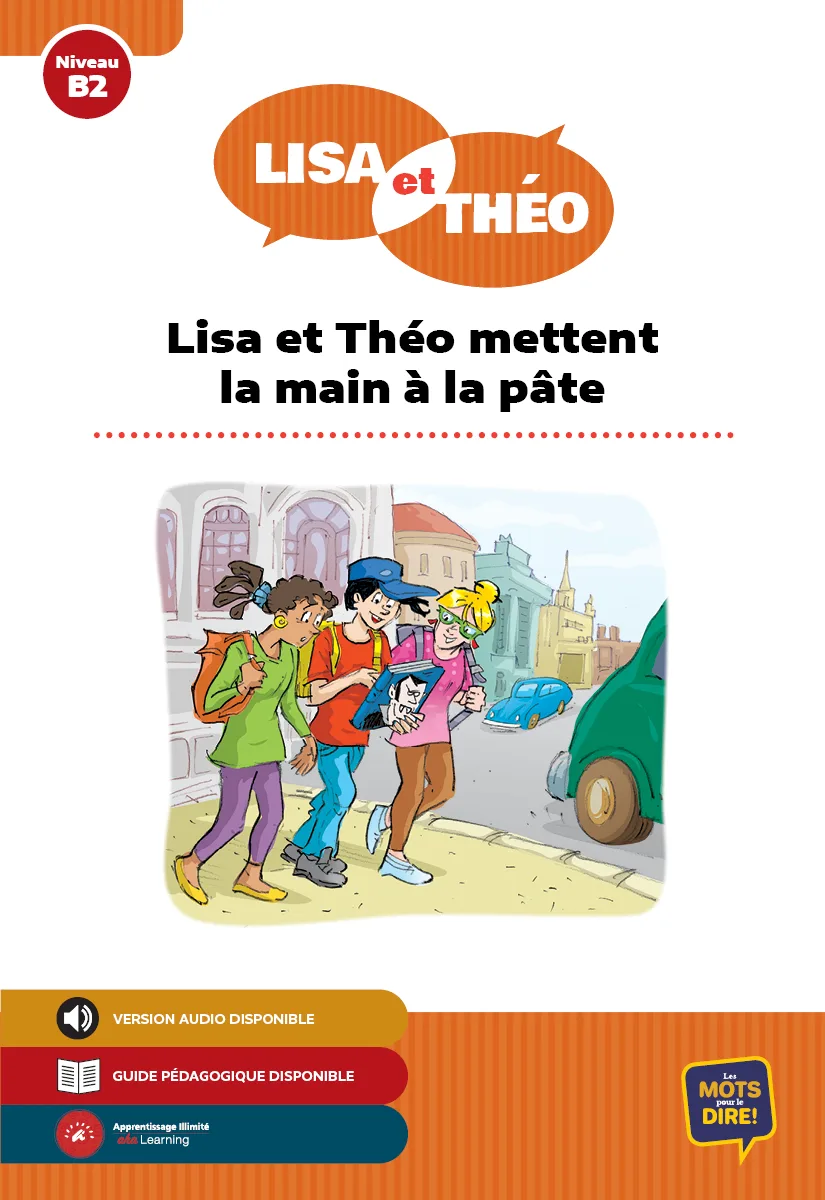
Lisa et Théo mettent la main à la pâte
-
Lisa et Théo mettent la main à la pâte: Story titles include: Lisa n'est pas dans son assiette, Frissons!!, Je donne ma langue au chat, Bonnes vacances, De bouche à oreille. Titles like 'Lisa n'est pas dans son assiette' (not feeling well / literally 'not in her plate') offer natural entry points for food-related idioms and cultural expressions.
-
Lisa et Théo mettent la main à la pâte: An age-appropriate highly engaging book at a low reading level. Older learners can engage with baking-themed content without feeling the language is too childish, making it suitable for teen or adult beginner-intermediate classes.
Using the Stories for Baking Vocabulary
Each story in the collection can anchor a mini-unit on French baking or cooking vocabulary. For example, the title story "Lisa et Théo mettent la main à la pâte" (literally 'put their hand to the dough') introduces kitchen actions, ingredients, and expressions. The read-aloud dialogue format lets you pause and act out steps like mixing, rolling, or tasting.
Before reading, pre-teach 5–8 key baking terms from the story (e.g., la pâte, le four, mélanger, cuire). During reading, students listen and repeat phrases. After reading, use the included audio for a listening comprehension check: ask students to identify which steps were mentioned or to sequence events.
A Simple Three-Step Reading Routine
This routine works with any of the five stories and stays close to the book's dialogue structure.
- Step 1: Listen and Follow Along: Play the audio version while students read along silently. Ask them to underline any baking or cooking words they recognize. The dialogues model natural intonation and pronunciation.
- Step 2: Pair Read-Aloud: Assign character roles (Lisa, Théo, narrator) and have students read the dialogue aloud in pairs. This builds fluency and confidence with authentic speech patterns.
- Step 3: Act It Out: After reading, students can reenact a short scene using simple props (a bowl, a spoon, a pretend oven). This kinesthetic step reinforces vocabulary and makes the language memorable.
Extending the Lesson Beyond the Book
Because the book is high-interest and low-vocabulary, you can extend learning without overwhelming students. Have them create a simple recipe card in French for a dish mentioned or implied in the story. Or ask them to write a short dialogue between Lisa and Théo about baking a cake, using the read-aloud style as a model.
The audio version is especially useful for homework: students can listen at home and then bring a new baking word or phrase to share in the next class.
What the Catalog Does Not Confirm
The catalog does not specify which story involves baking or cooking directly. The title "Lisa et Théo mettent la main à la pâte" strongly suggests a baking theme, but the supplied evidence does not list detailed plot summaries or specific vocabulary lists. Teachers should preview the story to confirm which terms appear before planning a lesson.
Similarly, the catalog does not provide a recommended age range beyond 'age-appropriate' for a low reading level. Use your judgment based on your students' maturity and interests.