Quick answer
Treat Little Leo as a hands-on play companion first, then give him a simple, low-traffic display spot when playtime ends. Rotate between floor play, storytime, and a shelf or basket display so the plush stays special without becoming purely decorative.
Why Little Leo works for both play and display
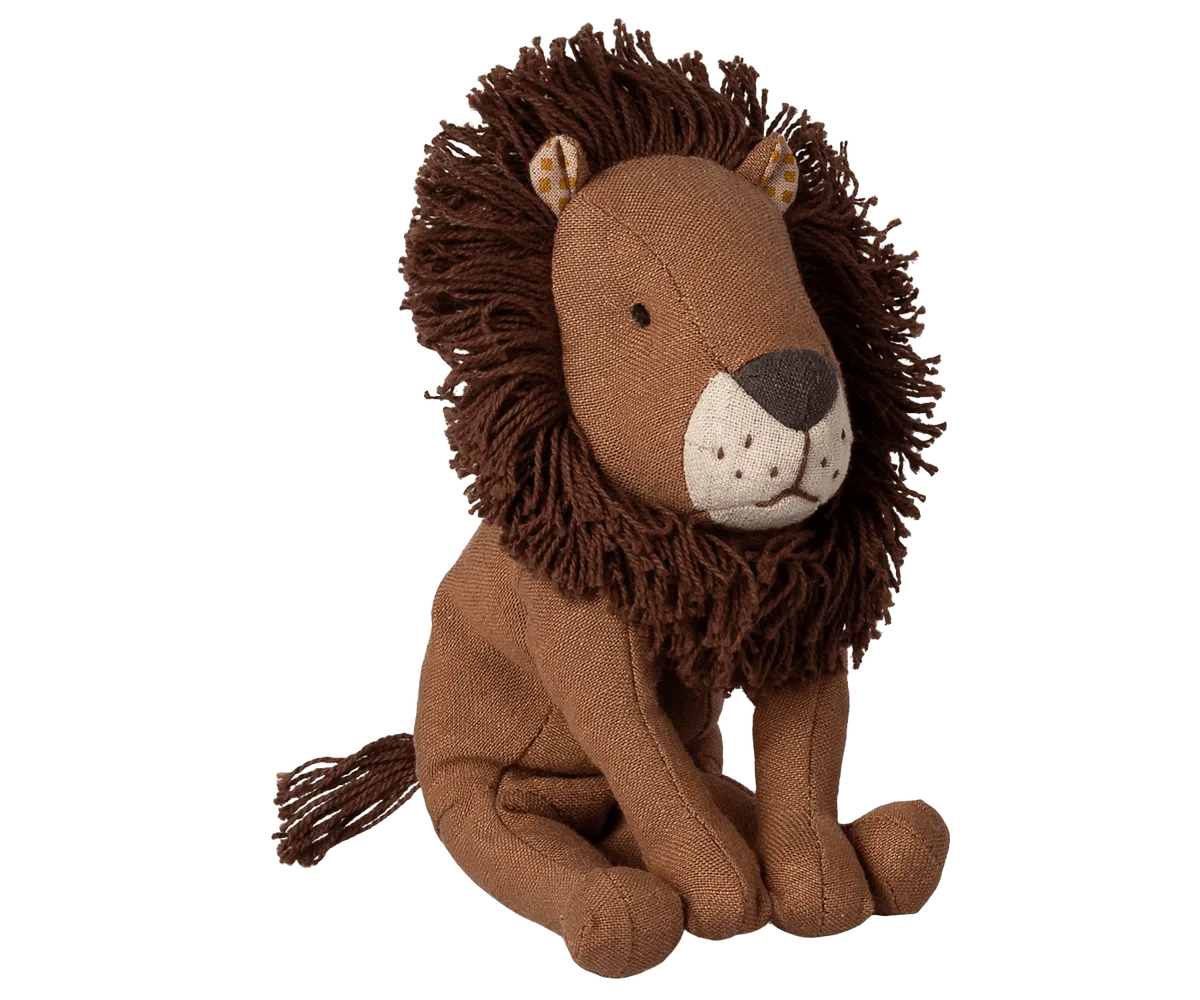
Little Leo stands on all four legs and has a lively mane, so he reads as a playful animal figure rather than a flat cuddly toy. That makes him easy to set down in a play scene, walk across a rug, or park beside a dollhouse. For display, the standing pose helps him hold a spot on a low shelf or in an open basket without slumping.
Because the catalog doesn't list a height or materials, check the product page for exact dimensions and care instructions before you plan a shelf height or wash routine. Those missing details matter more than any general advice about plush toys.
Toddler-friendly play vs. rougher play
For a soft toy for toddlers, keep play low to the ground and supervised. Little Leo's small size and standing legs make him a good carry-along companion, but toddlers often grab legs or manes when lifting. Show them how to hold the body instead, and put Little Leo away if play turns to tugging or throwing.
Older children can use him in pretend safari or rescue stories, but the same rule applies: the plush is not a pull toy or a teether. If you need a toy that can handle rough and tumble, choose something designed for that rather than testing Little Leo's limits.
Where to display Little Leo without making him off-limits
A nursery display works best when it stays reachable. Try a low shelf, an open woven basket, or a windowsill-free spot at child height so Little Leo can be taken down and put back without help. Avoid high shelves and glass cabinets if you want the plush to remain part of daily play.
For lion plush display ideas, pair Little Leo with a few books or a small blanket rather than a crowded arrangement. A single plush with breathing room looks intentional and makes it easier for a child to return him to the same spot.
How to play with and display Little Leo
- Set up a floor play zone: Clear a low-traffic rug or play mat and place Little Leo there with one or two simple props, like a block or a small basket. Keep the area free of hard toys that could scratch or crush him. Check that the play zone is away from table edges and stairs before your child starts moving Little Leo around.
- Teach a carry hold: Show your child how to scoop Little Leo up with one hand under his body rather than grabbing a leg or the mane. Practice the hold together once before play begins. If your child keeps lifting him by one leg, pause play and model the body hold again.
- Use story prompts for pretend play: Give Little Leo a simple role, such as a lion who guards a block tower or explores a blanket cave. Ask your child what Little Leo sees or where he walks next to keep the play going. Rotate the prompt every few days so the plush does not become background clutter.
- Choose a reachable display spot: Pick a low shelf, open basket, or child-height cubby where Little Leo can stand on all four legs. Keep the spot clear of direct sun and dampness, and avoid stacking heavy items against him. Make sure the display spot is stable enough that Little Leo will not fall when your child reaches for him.
- Reset after play: At the end of play, have your child walk Little Leo back to his display spot and stand him on all four legs. Smooth the mane with your fingers and check for any loose threads or damage. If you notice a tear or loose part, remove Little Leo from play until you have checked the care guidance on the product page.
Product facts
-
Little Leo: Little Leo is a small lion that stands proudly on all four legs with a lively mane. The standing pose makes him easy to place in play scenes and display spots, while the small size suits carry-along play for toddlers.
Little Leo