Quick Answer
If you need to step down a voltage with minimal heat and high efficiency, the LM2596 buck converter is the better choice. A DIY linear regulator is simpler and cheaper for low-current, low-drop applications, but it wastes excess voltage as heat. For most Arduino and general electronics projects, the LM2596 offers the best balance of performance and practicality.
Efficiency and Heat: The Core Difference
The LM2596 is a switching regulator that converts excess voltage into current, achieving up to 95% efficiency. This means less energy is wasted as heat, making it ideal for battery-powered projects or enclosed cases. In contrast, a linear regulator dissipates the difference between input and output as heat, so a 12V to 5V drop at 1A wastes 7W of power. That heat can require heatsinks or active cooling, adding bulk and cost.
For low current draws, such as a sensor or a microcontroller in sleep mode, a linear regulator's heat is manageable. But for continuous loads above a few hundred milliamps, the LM2596's efficiency becomes a practical advantage, especially when you want to avoid heat sinks or extend battery life.
Adjustability and Control: CV/CC Features
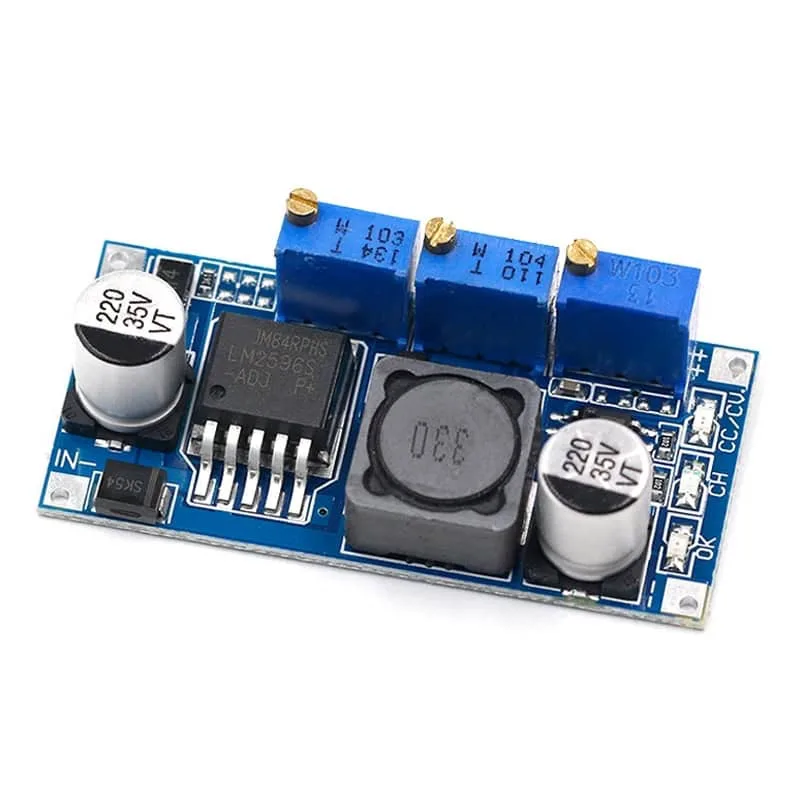
The LM2596 adjustable buck converter includes CC/CV control, letting you set both voltage and current limits. This makes it useful for charging batteries or driving LEDs with a constant current. A DIY linear regulator typically provides a fixed voltage and has no current-limiting feature, so you would need additional circuitry for such tasks.
The three potentiometers on the LM2596 allow fine-tuning of voltage, current, and charge control. This adds flexibility but also requires a multimeter to set accurately. Linear regulators are simpler—just set the output voltage with resistors or use a fixed version—but they lack the dynamic control of the LM2596.
Cost and Complexity: What You Pay For
An LM2596 module costs around $2.12, while a basic linear regulator IC can cost under a dollar. However, the LM2596 module includes the inductor, capacitors, and potentiometers, so you avoid sourcing multiple components. For a DIY linear regulator, you need to design and solder the circuit yourself, which takes time and adds room for error.
If you value simplicity and are comfortable with soldering, a linear regulator can be cheaper for a one-off project. But the LM2596's plug-and-play nature and built-in protection features often justify the slightly higher cost, especially for beginners or when you need reliable performance quickly.
Noise and Ripple: A Trade-off to Consider
Switching regulators like the LM2596 produce ripple and switching noise, which can interfere with sensitive analog readings. Linear regulators provide clean, low-noise output, making them preferred for audio or precision measurement circuits. If your project involves analog sensors or audio, you may need to add filtering capacitors to the LM2596 output.
For digital logic and most Arduino projects, the noise is usually acceptable. But if you are building a high-precision ADC circuit or an audio amplifier, a linear regulator might be the safer choice. This trade-off is often overlooked, but it can be critical for certain applications.
Trade-offs at a Glance
- Efficiency vs Simplicity: The LM2596 offers up to 95% efficiency and low heat, but requires a multimeter for setup. A linear regulator is simpler but wastes excess voltage as heat. Choose LM2596 for battery-powered or high-current projects; choose linear for low-current, simple builds.
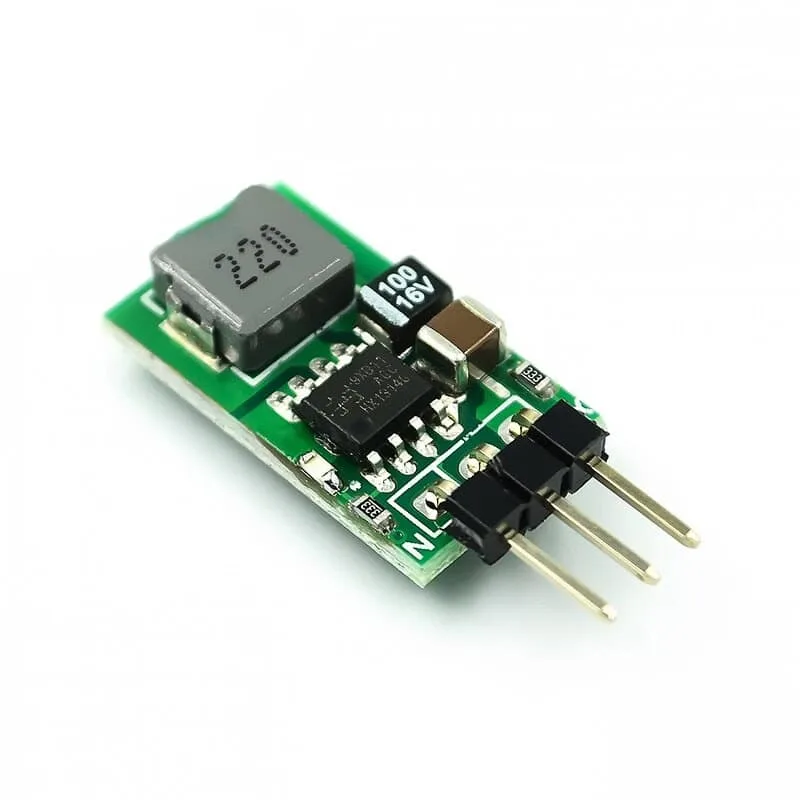
- Adjustability vs Fixed Output: The LM2596's CV/CC control allows adjustable voltage and current, ideal for charging or LED drivers. A fixed 5V module like the Positive Voltage Regulator is plug-and-play for standard logic. If you need variable output, go with the LM2596; if you only need 5V, the fixed module is easier.
- Noise vs Clean Power: Switching regulators produce ripple; linear regulators provide clean output. For sensitive analog or audio circuits, linear may be better despite heat. Consider adding filtering if using LM2596 with analog sensors.
Product Facts: LM2596 and a Fixed 5V Alternative
- LM2596 Adjustable Buck Converter CC CV 5-35V to 1.25-30V 2.5A: Adjustable DC-DC buck converter with CV/CC control. 5-35V input, 1.25-30V output, 2.5A max. Three potentiometers for voltage, current, and charge control. 95% efficiency. This gives you the flexibility to set both voltage and current, making it suitable for battery charging and LED drivers, not just fixed voltage rails.
- Positive Voltage Regulator 5.5-32V To 5V1A Buck Module: DC-DC synchronous rectification step-down module, 5.5-32V to 5V at 1A. If you only need a fixed 5V rail for logic or sensors, this module offers a simpler, lower-cost solution without the need to adjust potentiometers.
Which Should You Choose?
Best for
- Projects with battery power or enclosed cases where heat matters
- Applications needing adjustable voltage or current limiting, such as battery charging or LED drivers
Not for
- Ultra-low-noise analog or audio circuits where clean power is critical
- Simple fixed 5V logic projects where a cheaper, simpler module suffices