Quick answer
For most high-power builds, LOC Plywood fins offer the best balance of strength, workability, and cost. G10 is stronger but heavier and harder to shape; composite fins are lighter but more brittle. Choose based on your rocket's weight, speed, and your building skills.
Strength vs. Workability: The Core Trade-off
The strongest fin material isn't always the best choice for your build. G10 fiberglass offers high tensile strength and resists flexing, but it's dense and requires carbide tooling to cut and sand. LOC Plywood, made from Baltic Birch plywood, is strong enough for most mid- and high-power rockets and can be shaped with standard woodworking tools. Composite fins (carbon or glass fiber) are lighter but can crack under point impacts or high-G flights. The trade-off is between ultimate strength and ease of construction.
Weight and Balance Considerations
Fin weight affects your rocket's center of gravity and stability. G10 is roughly twice as dense as plywood, so a full G10 fin set can shift the CG aft, requiring more nose weight. LOC Plywood fins are lighter, helping keep the CG forward without extra ballast. Composite fins are the lightest option, but their brittleness means they need careful handling and may not survive rough landings.
Fin Material Trade-offs at a Glance
- LOC Plywood (Baltic Birch): Best all-around choice for most builders. Strong enough for mid- and high-power flights up to moderate speeds. Easy to cut, sand, and finish with standard tools. Available in 1/8" (3-ply) and 1/4" (5-ply) thicknesses. The 1/8" sheets may warp slightly in humid climates; store flat and seal before painting. Ideal for builders who want strength without specialized tooling.
- G10 Fiberglass: Higher tensile strength and stiffness than plywood. Resists flexing under high aerodynamic loads. Much heavier – can shift CG aft. Requires carbide or diamond blades and sanding discs. Dust is hazardous; use a respirator. Not repairable if cracked. Choose G10 only for rockets that exceed Mach 0.8 or have very high thrust-to-weight ratios.
- Composite (Carbon/Glass Fiber): Lightest option, saving 20-30% weight over plywood. Good tensile strength but brittle – can shatter on hard landings or if struck by debris. Requires vacuum bagging or pre-preg layup for consistent quality. Difficult to repair. Best for weight-critical competition rockets, not for everyday sport flying.
Product facts
-
LOC Plywood: LOC Plywood is made from 6x12" sheets of Baltic Birch plywood, laser cut from the same stock used in the brand's kits. Available in 1/8" 3-ply and 1/4" 5-ply. Note that 1/8" sheets may warp slightly due to climate changes during shipping. The Baltic Birch construction gives you a strong, consistent fin material that's easy to sand and paint, but the 1/8" option requires careful storage to avoid warping before assembly.
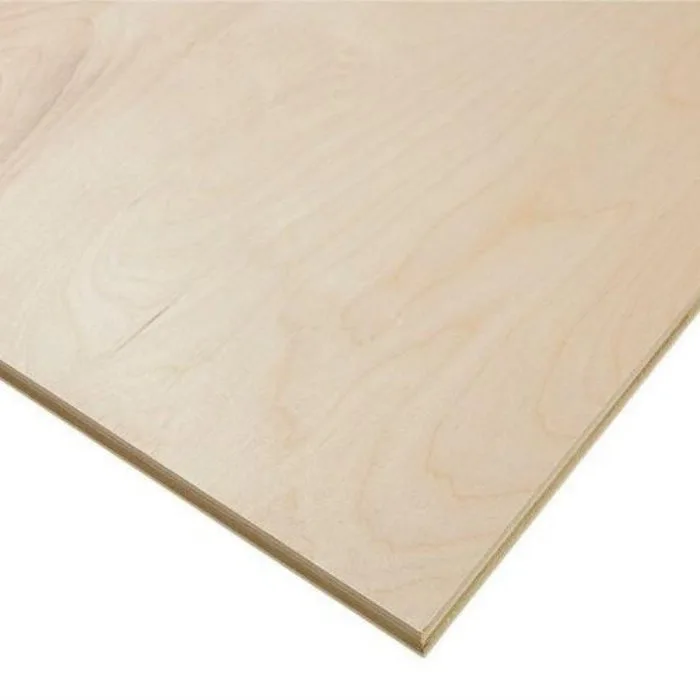
LOC Plywood
Which fin material fits your build?
Best for
- Sport and mid-power rockets up to Mach 0.6 – LOC Plywood offers the best strength-to-weight and ease of use.
- Builders who want to shape, sand, and paint fins with common hobby tools – LOC Plywood is the most workable option.
Not for
- High-speed supersonic flights (Mach 0.8+) where G10's stiffness is required to prevent flutter.
- Ultra-light competition rockets where every gram counts – composite fins are lighter.