When space is at a premium in a child's bedroom, every square foot counts. Two of the most popular solutions for maximizing floor area are loft beds and trundle beds. Both offer clever ways to combine sleeping with storage or play areas, but they serve different needs and age groups. Understanding the differences can help you make an informed choice that will work for your family for years to come.
In this guide, we'll compare loft beds and trundle beds across key factors like space efficiency, safety, versatility, and cost. We'll also highlight some of Oeuf NYC's best-selling options to help you visualize the possibilities. Whether you're outfitting a nursery for a toddler or a big-kid room for a school-age child, this comparison will point you toward the right solution.
What Is a Loft Bed?
A loft bed elevates the sleeping surface high enough to create usable space underneath. Unlike a bunk bed, which has two sleeping areas stacked, a loft bed leaves the lower level open for a desk, play area, storage, or even a cozy reading nook. Loft beds are typically designed for children ages six and up, as they require climbing a ladder and a certain level of coordination and maturity.
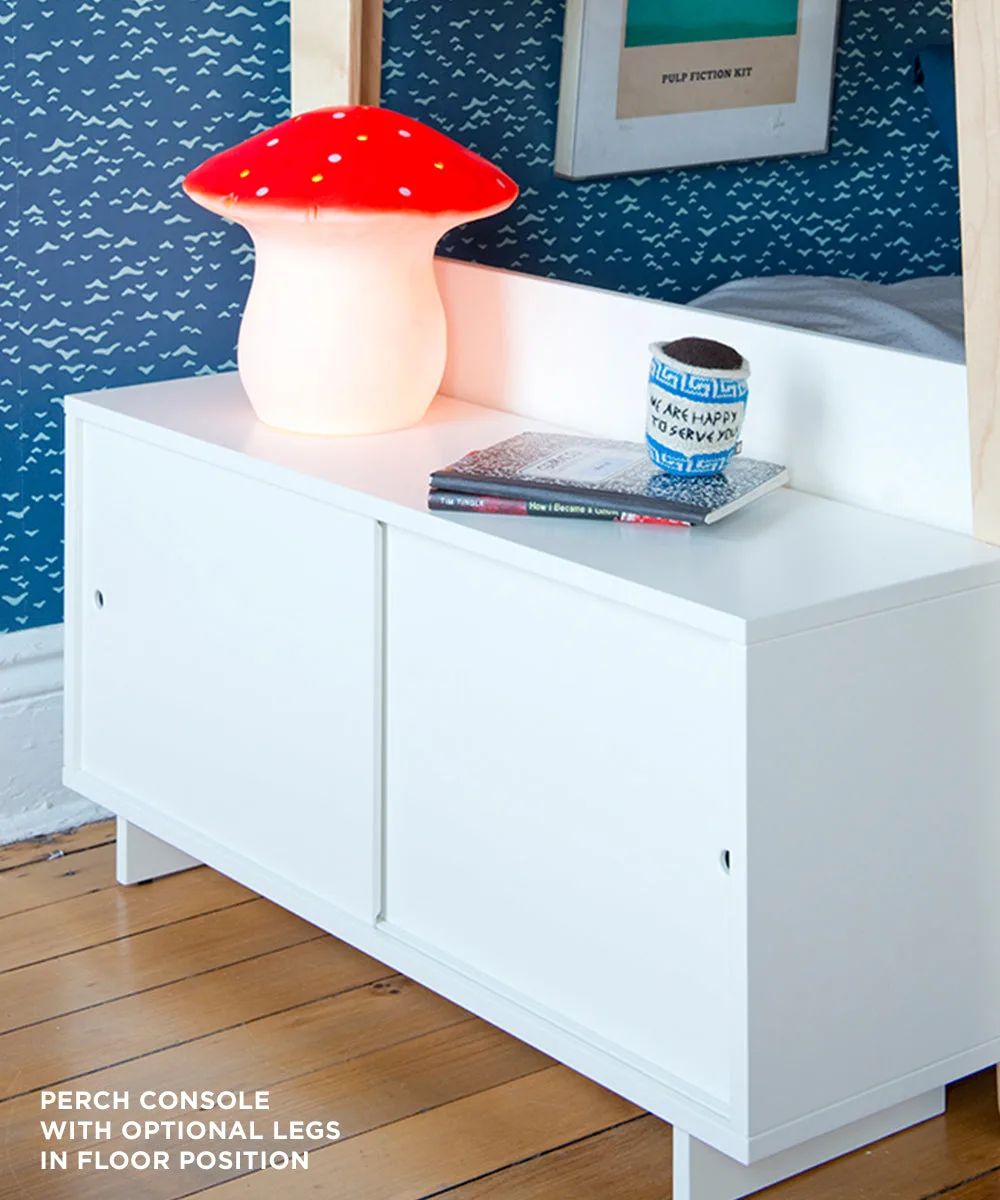
At Oeuf NYC, the https://homekids.shop/products/perch-twin-loft-bed-hardware-112336Perch Twin Loft Bed Hardware is a standout option. It allows you to convert a Perch Twin bed into a loft configuration, freeing up floor space for a desk or play zone. The hardware is made from sustainable materials and is designed to grow with your child—a hallmark of Oeuf's commitment to long-lasting, eco-friendly furniture.
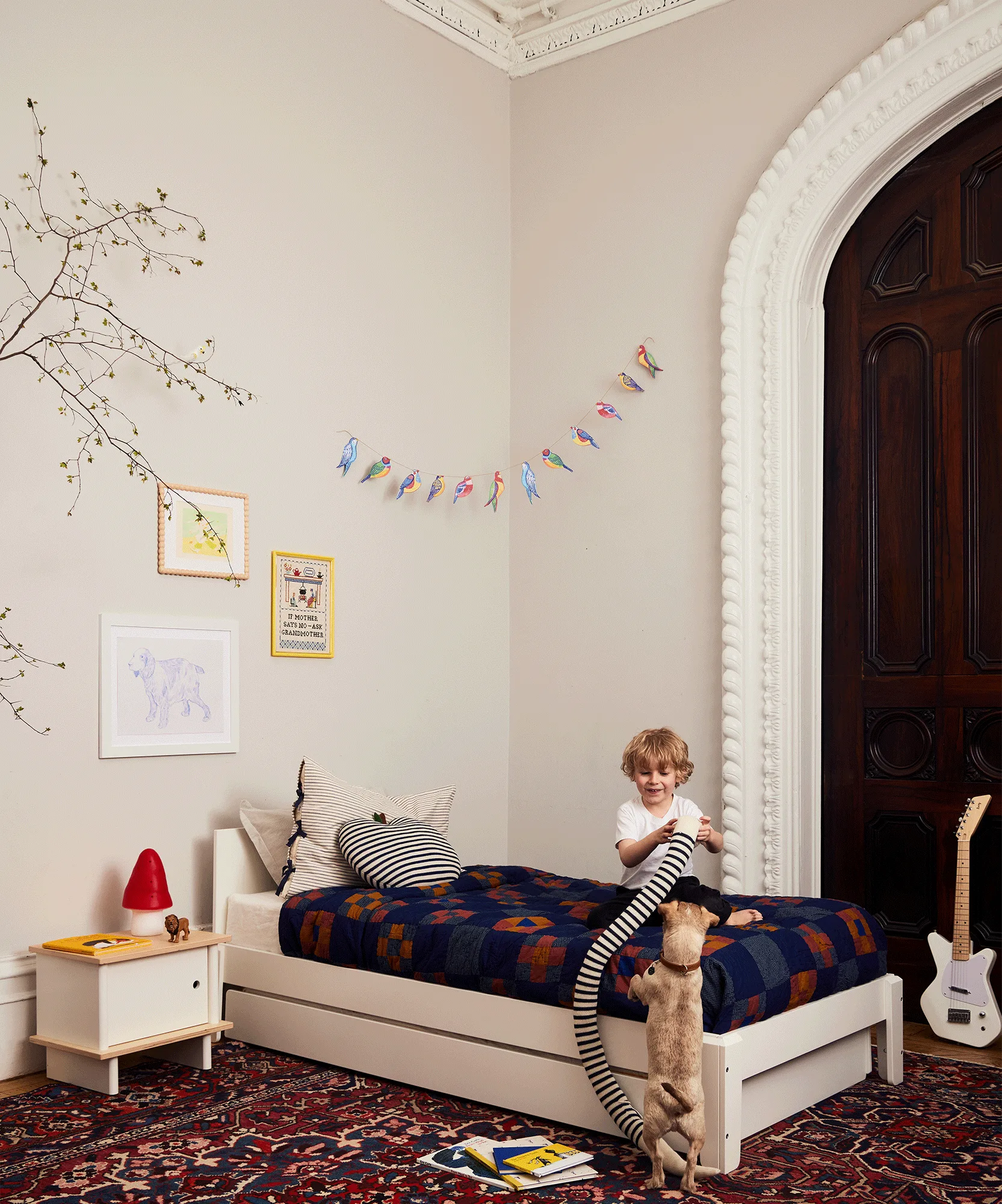
Perch Twin bed
- Ideal for children ages 6 and older.
- Creates a dedicated play, study, or storage zone underneath.
- Often requires a ladder or stairs for access.
What Is a Trundle Bed?
A trundle bed features a second mattress that slides out from underneath the main bed. This design is perfect for sleepovers, siblings sharing a room, or guests. When not in use, the trundle tucks away, leaving the floor clear. Trundle beds are suitable for a wider age range than loft beds—even toddlers can use the main bed while the trundle remains hidden.
For families looking for a versatile, space-saving solution, the Sparrow Trundle Bed is an excellent choice. It combines a full-size main bed with a pull-out trundle, making it ideal for a shared room or a guest-ready child's space. The Sparrow's clean, modern design and use of non-toxic materials align with Oeuf's eco-friendly ethos.
- Works for children from toddler age through teens.
- Offers an extra sleeping surface without taking up permanent floor space.
- Great for sleepovers or shared rooms.
Loft Bed vs. Trundle Bed: Key Differences
The primary difference lies in how each bed uses vertical space. A loft bed elevates the sleeping area to create a multi-functional zone underneath, while a trundle bed keeps both sleeping surfaces low to the ground. This distinction affects safety, accessibility, and the age at which each bed is appropriate.
Loft beds are better for older children who can safely climb and who need a dedicated space for homework or play. Trundle beds are more versatile for younger children and for families who frequently host overnight guests. In terms of storage, loft beds allow for a desk or shelving underneath, while trundle beds provide an extra bed that can be pulled out as needed.
- Loft beds: best for ages 6+, creates open floor space below.
- Trundle beds: suitable for all ages, offers a hidden extra bed.
- Loft beds require a ladder; trundle beds are ground-level.
Space Efficiency: Which One Saves More Room?
Both beds save floor space, but in different ways. A loft bed reclaims the entire footprint underneath for non-sleeping activities, which can be a game-changer in a small room. For example, you can place a desk, a small table, or even a play tent under a loft bed, effectively doubling the usable area.
A trundle bed, on the other hand, saves space only when the trundle is not in use. When the trundle is pulled out, it occupies roughly the same floor area as two separate beds. However, when tucked away, it leaves the room feeling open and uncluttered. For rooms that need to transition quickly from a play space to a sleep space, a trundle bed is a practical choice.
- Loft beds free up the entire floor area below for multiple uses.
- Trundle beds keep the floor clear when the extra bed is not needed.
- Consider your child's daily activities to decide which layout works best.
Safety Considerations
Safety is paramount when choosing any bed for a child. Loft beds require a sturdy ladder and guardrails to prevent falls. The American Academy of Pediatrics recommends that children under six should not sleep on the top bunk of a bunk bed or loft bed. Always ensure the bed is placed away from ceiling fans and light fixtures.
Trundle beds are inherently safer because both mattresses are close to the ground. There is no risk of falling from a height, making them a better choice for younger children. When selecting a trundle bed, look for smooth-rolling mechanisms and a design that prevents the trundle from accidentally rolling out. Oeuf's Sparrow Trundle Bed features a secure locking system for peace of mind.
- Loft beds: require guardrails and a safe ladder.
- Trundle beds: low to the ground, minimal fall risk.
- Always follow age and weight recommendations.
Versatility and Longevity
One of the biggest advantages of Oeuf's furniture is its adaptability. The Perch Twin Loft Bed Hardware is a perfect example: it can be used to convert a standard Perch bed into a loft, and later reconfigured back to a low bed as your child's needs change. This modularity extends the life of the furniture and reduces waste.
Trundle beds also offer longevity. A full-size trundle bed like the Sparrow can accommodate a child from toddlerhood through the teenage years. The trundle itself can be used for sleepovers, or the lower space can be repurposed for storage. Both options are sustainable choices that grow with your family.
- Loft beds can be converted back to standard beds with the right hardware.
- Trundle beds work for multiple ages and uses.
- Investing in convertible furniture reduces the need for replacements.
Which Bed Is Right for Your Child?
The decision ultimately depends on your child's age, the room's layout, and your family's lifestyle. If your child is over six and needs a dedicated homework or play area, a loft bed is an excellent investment. The Perch Twin Loft Bed Hardware allows you to transform an existing bed without buying a whole new piece of furniture.
If you have younger children, frequently host sleepovers, or want a low-profile option that can serve as a guest bed, a trundle bed is the way to go. The Sparrow Trundle Bed offers both style and functionality, with a design that fits seamlessly into any modern nursery or big-kid room. Whichever you choose, Oeuf NYC's commitment to non-toxic materials and sustainable production ensures a safe, healthy sleep environment for your child.
- Loft beds: best for ages 6+ who need a study or play zone.
- Trundle beds: ideal for younger children or frequent guests.
- Consider the room's dimensions and ceiling height before deciding.
Choosing between a loft bed and a trundle bed comes down to your child's age, the room's layout, and how you plan to use the space. Both options from Oeuf NYC are designed with safety, sustainability, and versatility in mind. To see these space-saving solutions in action, explore the Sparrow Trundle Bed and discover how it can transform your child's room into a functional, stylish haven.