Start with what this film is designed to do
LomoChrome '92 Sun-Kissed is a color negative film with a warm, nostalgic palette: soft orange and yellow hues, glowing skin tones, and a rich grain structure. It is rated ISO 400, so it sits in a useful middle ground for daylight and bright interiors. The look is the point, so your exposure choices should protect the highlights while letting that warmth come through.
Because it is a standard C-41 film, you can treat it like other color negative stocks at the lab. The creative decisions happen at the camera: what light you put it in, how you meter, and how much you lean into the golden-hour glow the emulsion is built to render.
The specs that shape your exposure decisions
-
Lomography LomoChrome '92 Sun-Kissed ISO 400 - 120 Film: LomoChrome Color '92 Sun-kissed 120 ISO 400, color negative film ISO 400 gives you flexibility in daylight and open shade; the 120 format means you get 10–16 exposures per roll depending on the camera's format.
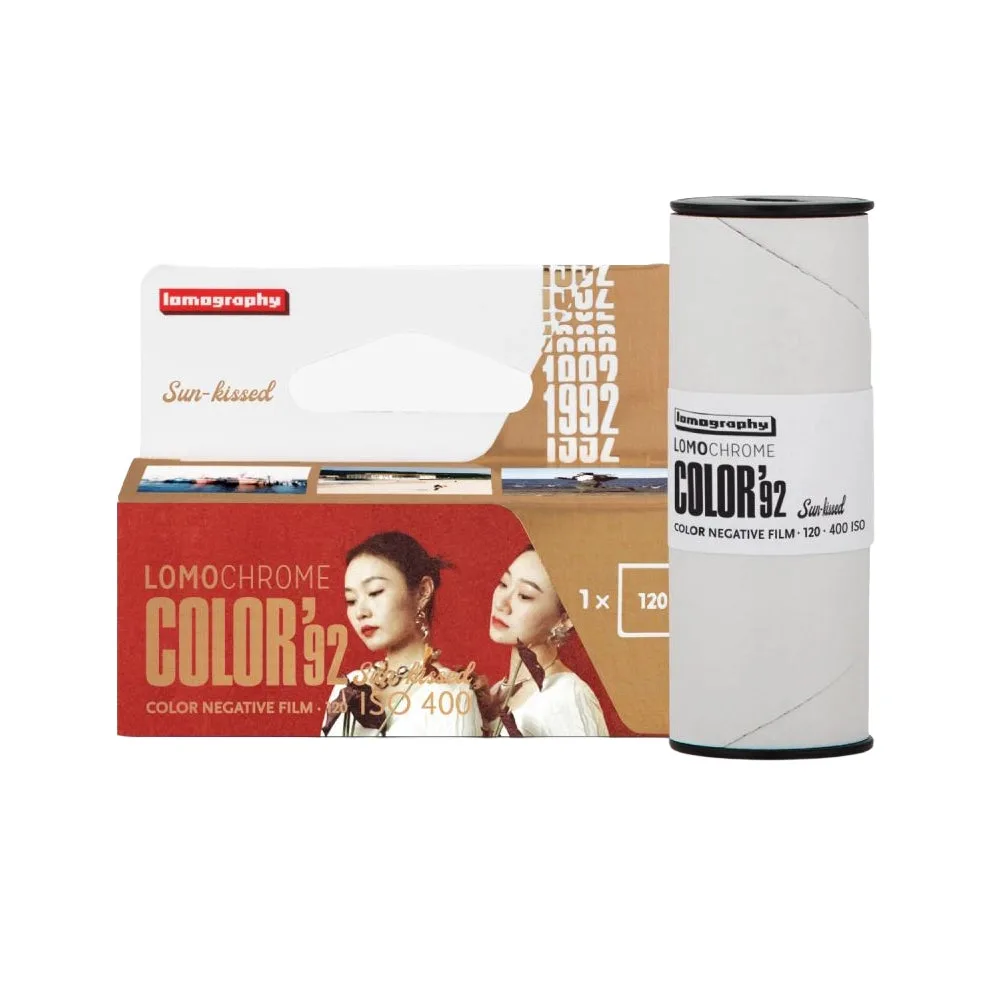
Lomography LomoChrome '92 Sun-Kissed ISO 400 - 120 Film
-
Lomography LomoChrome '92 Sun-Kissed ISO 400 - 120 Film: Standard C-41 development process You can send it to any lab that handles C-41 color negative film; no special development instructions are required by the supplied record.
-
Lomography LomoChrome '92 Sun-Kissed ISO 400 - 120 Film: DX Code: No Cameras that rely on DX coding to set ISO will not read this film automatically, so you may need to set ISO 400 manually if your camera allows it.
Meter for the look, not just the middle
The film's warm bias means bright, warm light can intensify quickly. If you meter for the shadows in a high-contrast scene, you risk blowing out skin tones and losing the soft glow that makes this emulsion distinctive. A safer habit is to meter for the highlights or use your camera's center-weighted average and then check that the brightest important area is not clipping.
There is no supplied exposure-compensation recommendation for this film, so treat any adjustment as your own test. Shoot a short roll at box speed first, then compare a few frames at one-third or one-half stop over and under. Keep notes so you can repeat what you like.
A simple field routine for 120 color film
These steps assume a camera that lets you set ISO manually and a lab that processes C-41. Adjust only what your equipment supports.
- Set ISO 400 manually if your camera requires it: The supplied record confirms no DX code, so cameras that depend on DX reading will not set the speed for you. Check your camera's ISO control before loading.
- Choose warm, directional light for the signature look: The film is described as giving a '90s golden-hour glow with soft orange and yellow hues. Early or late daylight will lean into that character more than flat overcast.
- Protect skin tones by watching the brightest areas: Glowing skin tones are part of the design, but overexposure can wash them out. Meter so the brightest face or highlight retains detail.
- Note your exposure choices per frame: Because there is no official compensation guidance in the supplied information, your own notes are the best way to learn how this film responds to your meter and your light.
- Develop as standard C-41: The record lists C-41 as the development process. Tell your lab it is color negative film and let them handle it normally.
Where the sun-kissed look works best
Portraits in warm light are the obvious match: the film's soft orange and yellow rendering flatters skin without needing a filter. Landscapes with golden light, warm stone, or autumn foliage will also pick up the nostalgic cast. In cool, blue-heavy shade, expect the warmth to be less pronounced, which can be useful when you want a more neutral result.
The rich grain structure is part of the character, not a defect. In 120 format the grain is relatively fine compared with smaller formats, but it still contributes texture. If you want the cleanest possible look, expose accurately and avoid underexposure, which tends to make grain more visible in color negative scans.
Checkpoints before you load the roll
- Confirm your camera's ISO setting: Since the film has no DX code, set ISO 400 manually if your camera does not read DX codes or if you want to override the meter.
- Check the roll length against your camera: The record lists 10–16 exposures per roll depending on format. Know how many frames your camera yields so you can plan a shoot.
- Tell the lab it is C-41: Standard C-41 development is confirmed; no push or pull process is specified in the supplied information.
What the supplied information does not settle
The record does not include a recommended exposure index beyond ISO 400, nor does it specify how the film behaves when pushed or pulled. Any decision to rate it differently is a personal test, not a manufacturer instruction. Similarly, the record does not list reciprocity characteristics for long exposures, so bracket if you plan night work.
Use the confirmed facts as your foundation: ISO 400, C-41, 120 format, and a warm color palette. Everything else is best learned by shooting a roll in the light you actually plan to use.