Quick Answer
Choose a turret camera if you need a vandal-resistant design with a lower profile and flexible positioning. Choose a bullet camera if you prefer a traditional shape that's easy to aim and often offers integrated deterrent features. For most residential and light commercial use, turret cameras provide a better balance of durability and coverage.
When choosing a security camera, the housing design matters as much as the resolution or smart features. Lorex offers both bullet and turret cameras in its wired lineup, and each shape serves a different purpose. Understanding the tradeoffs helps you pick the right tool for your property.
This comparison focuses on the physical design differences—coverage angle, mounting flexibility, and vandal resistance—so you can decide which style fits your needs. We'll reference specific Lorex models to illustrate the practical implications.
Design Differences: Bullet vs Turret
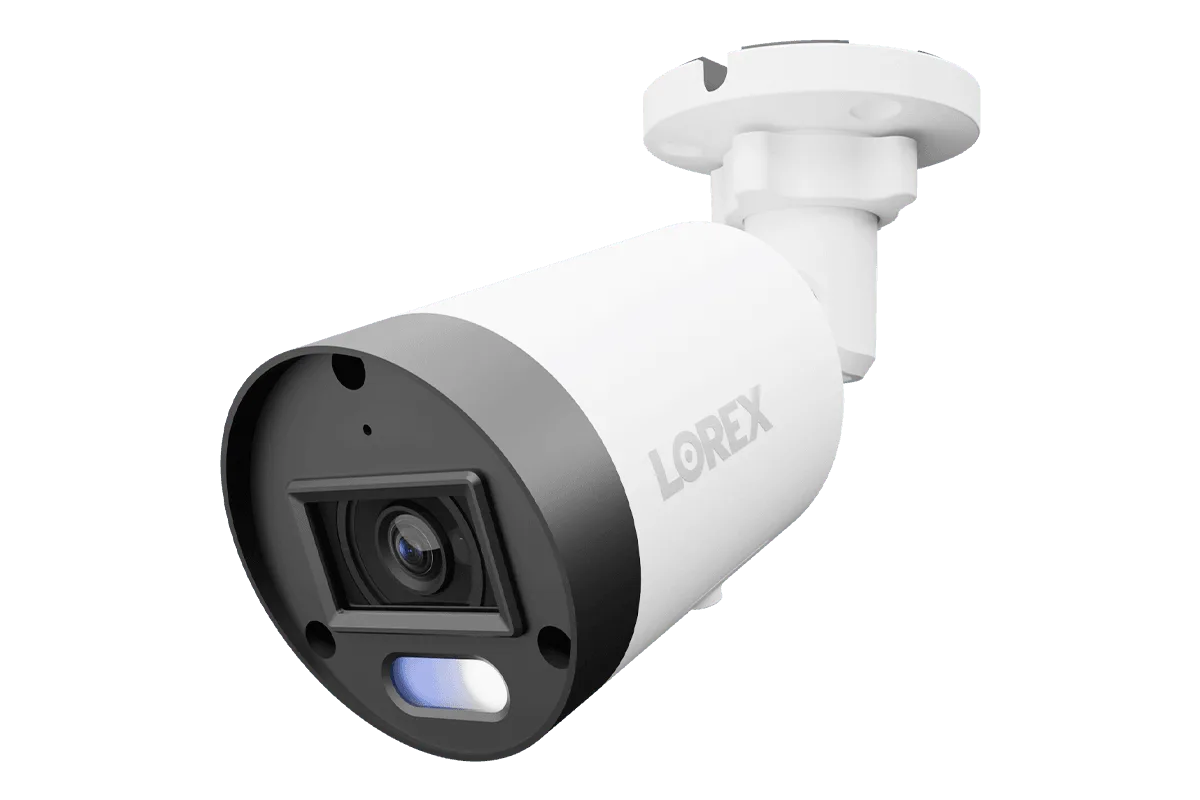
Bullet cameras are cylindrical and typically mount to a wall or ceiling with a bracket. Their shape makes it easy to see where the lens is pointing, which can act as a visual deterrent. The Lorex A4 4MP IP Wired Bullet Security Camera is a good example: it offers 4MP resolution and an IK10 vandal proof rating, meaning it can withstand physical impact.
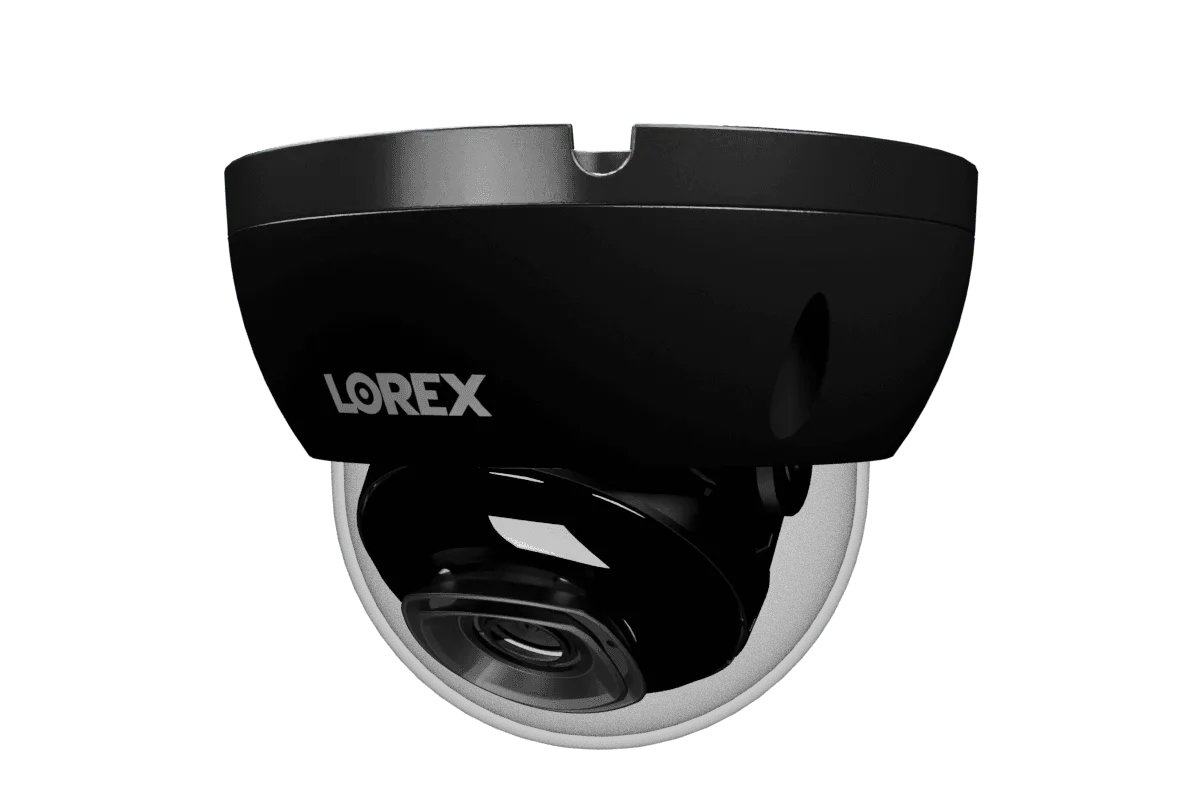
Turret cameras, also known as dome-style or eyeball cameras, have a compact, rounded housing that sits closer to the mounting surface. This lower profile makes them less obtrusive and harder to grab or knock out of alignment. While turret cameras are often vandal-resistant, the specific rating varies by model, so it's important to check the specs before assuming protection.
- Bullet cameras are easier to aim because the lens is visible and the bracket allows fine adjustments.
- Turret cameras have a lower profile, which can make them less noticeable and more resistant to tampering.
Coverage Angle and Mounting Flexibility
Coverage angle is influenced by the lens and the camera's ability to rotate. Turret cameras typically offer three-axis adjustment (pan, tilt, and roll), allowing you to fine-tune the view without moving the mount. This flexibility is ideal for corners or ceilings where you need to direct the lens precisely.
Bullet cameras usually have a fixed lens and a simpler bracket, but their shape allows for easy manual aiming. Some models, like the Lorex Connect X3 4K Motorized Varifocal PoE Bullet Camera, add remote zoom, which lets you adjust the field of view without climbing a ladder. This is a significant advantage for covering distant areas like a long driveway or parking lot.
- For adjustable coverage from a single mount point, turret cameras are often easier to position.
- For remote zoom and flexible focal length, a motorized varifocal bullet camera is hard to beat.
Durability and Vandal Resistance
Vandal resistance is a key factor for cameras placed within arm's reach. The IK10 rating indicates the camera can withstand 5 joules of impact, which is roughly equivalent to a 5 kg object dropped from 10 cm. The Lorex A4 bullet camera carries this rating, making it a solid choice for areas prone to tampering.
Turret cameras are often favored for their low-profile design, which reduces the leverage an attacker can apply. However, not all turret cameras are IK10-rated, so you need to verify the specific model. If vandal resistance is critical, look for an explicit IK10 rating regardless of the housing style.
- Check the IK10 rating on any camera you're considering—don't assume it based on the shape.
- A low-profile turret can be less inviting to tamper with, but a bullet with IK10 offers proven impact protection.
Tradeoffs at a Glance
- Bullet Camera Pros: Traditional shape is easy to aim, often includes deterrent features like active lighting and sirens, and some models offer motorized zoom for remote adjustment. Pick a bullet if you need a visible deterrent or remote zoom capability.
- Turret Camera Pros: Low-profile design is less obtrusive, typically offers three-axis adjustment for precise positioning, and is often harder to knock out of alignment. Choose a turret if you want a discreet camera with flexible mounting options.
- Durability Considerations: Both designs can be vandal-resistant, but the IK10 rating is the key spec to check. A turret's low profile reduces tampering leverage, but a bullet with IK10 offers proven impact protection. Always verify the IK10 rating before relying on vandal resistance.
Product Facts
- https://gadgetguardai.shop/products/lorex-a4-4mp-ip-wired-bullet-security-camera-with-ik10-vandal-proof-rating-218124Lorex A4 4MP IP Wired Bullet Security Camera with IK10 Vandal Proof Rating, Listen-In Audio and Smart Motion Detection - Amazon: 4MP resolution captures clear video details for identification purposes. IK10 vandal proof rating ensures robust protection against physical impact. This bullet camera gives you a traditional form factor with the peace of mind of a certified impact-resistant housing, suitable for exposed locations.
- Lorex Connect X3 4K Motorized Varifocal PoE Bullet Camera with Active Deterrence - Black/White: Delivers sharp 4K video day or night with the flexibility to remotely zoom in on distant areas without losing detail. Active deterrence with lighting and a warning siren helps prevent incidents. If you need to cover a long driveway or large yard, this bullet camera's motorized zoom lets you adjust the view remotely, and the active deterrence can scare off intruders.
- Lorex A14 IP Wired Bullet Security Black Camera with Listen-In Audio and Smart Motion Detection - Amazon: Wired bullet camera for stable, continuous monitoring. Listen-In Audio allows you to hear what's happening near the camera. Smart Motion Detection helps reduce false alerts by focusing on relevant activity. This model adds two-way audio and smarter alerts to the bullet design, useful for areas where you want to hear visitors or deter package thieves.
Which Design Fits Your Needs?
Best For
- Turret cameras are ideal for residential driveways and backyards where you want a discreet camera that's easy to position and less likely to be tampered with.
- Bullet cameras with IK10 ratings are best for commercial properties or high-risk areas where visible deterrence and proven impact resistance are priorities.
Not For
- Turret cameras are not ideal if you need remote zoom to cover distant areas—look for a motorized varifocal bullet instead.
- Bullet cameras may not suit locations where a low-profile, unobtrusive design is required, such as some residential front porches.
Both bullet and turret cameras have their place in a security setup. Assess your coverage needs, mounting location, and the level of vandal risk to make the right choice. Remember to verify the IK10 rating for impact resistance and consider whether remote zoom or a low profile matters more for your property.