Quick answer
Set up a simple big-brother scenario with LouiMax, then let your child lead the story. The goal is to give an older sibling a safe way to practice sharing, helping, and making decisions—not to script every move.
Why a big-brother mouse works for sibling play
An older sibling often gets told to be patient or helpful. LouiMax flips that: the child becomes the one showing the mouse how to be a good big brother. That shift from being instructed to being the expert can make the play feel more engaging and less like a lesson.
LouiMax is a small, adventurous character with magnets in his paws, so he can hold onto props like his kick board. That physical detail gives children a natural way to act out helping or leading—for example, LouiMax holding a tool while the child narrates the rescue.
Keep the play open-ended
Avoid turning the activity into a test of good behavior. If your child wants LouiMax to be grumpy or make a mistake, let that happen. The learning comes from resolving the story together, not from forcing a perfect big brother every time.
You do not need a full dollhouse or elaborate setup. A few loose parts—a small box, a piece of fabric, a toy vehicle—are enough to start a scene. The value is in the conversation and choices, not the props.
How to set up big-brother play, step by step
- Choose a simple big-brother job: Pick one job for LouiMax, such as showing a smaller toy where to sleep or carrying a supply to a pretend neighbor. Keep the job small enough for a child to complete in a few minutes. Common mistake: choosing a job that needs many props or adult help. One clear job keeps the play focused and lets your child feel successful.
- Let your child assign the roles: Ask your child who LouiMax is helping and what the other character needs. Let them decide whether LouiMax is confident, nervous, or silly. Common mistake: an adult assigning all the roles, which turns play into a performance. When the child owns the casting, they invest more in the story.
- Use the magnets for a helping moment: Find a small metal object—like a key or a toy tool—and have LouiMax hold it while helping another toy. Demonstrate once, then let your child take over. Common mistake: expecting the magnet to hold heavy or non-metal items. The magnet is a storytelling prop, not a lifting tool; keep objects light.
- Pause for a sibling check-in: Mid-story, ask: “What could LouiMax say to help?” or “What would make the little one feel better?” Give your child time to answer without correcting. Common mistake: rushing to a tidy resolution before the child has thought it through. The pause is where the sibling lesson happens, so protect it.
- Close the loop with a recap: At the end, ask your child to tell you one thing LouiMax did as a big brother. You can repeat it back in your own words. Common mistake: quizzing or praising only “good” answers; accept any answer that shows thinking. A short recap helps your child name the behavior without feeling tested.
Product facts
-
LouiMax, Mouse, Big brother: LouiMax is dressed in a blue striped shirt and denim pants and comes in a decorative box. He is ready to play right out of the box, and the packaging doubles as a gift-ready container.
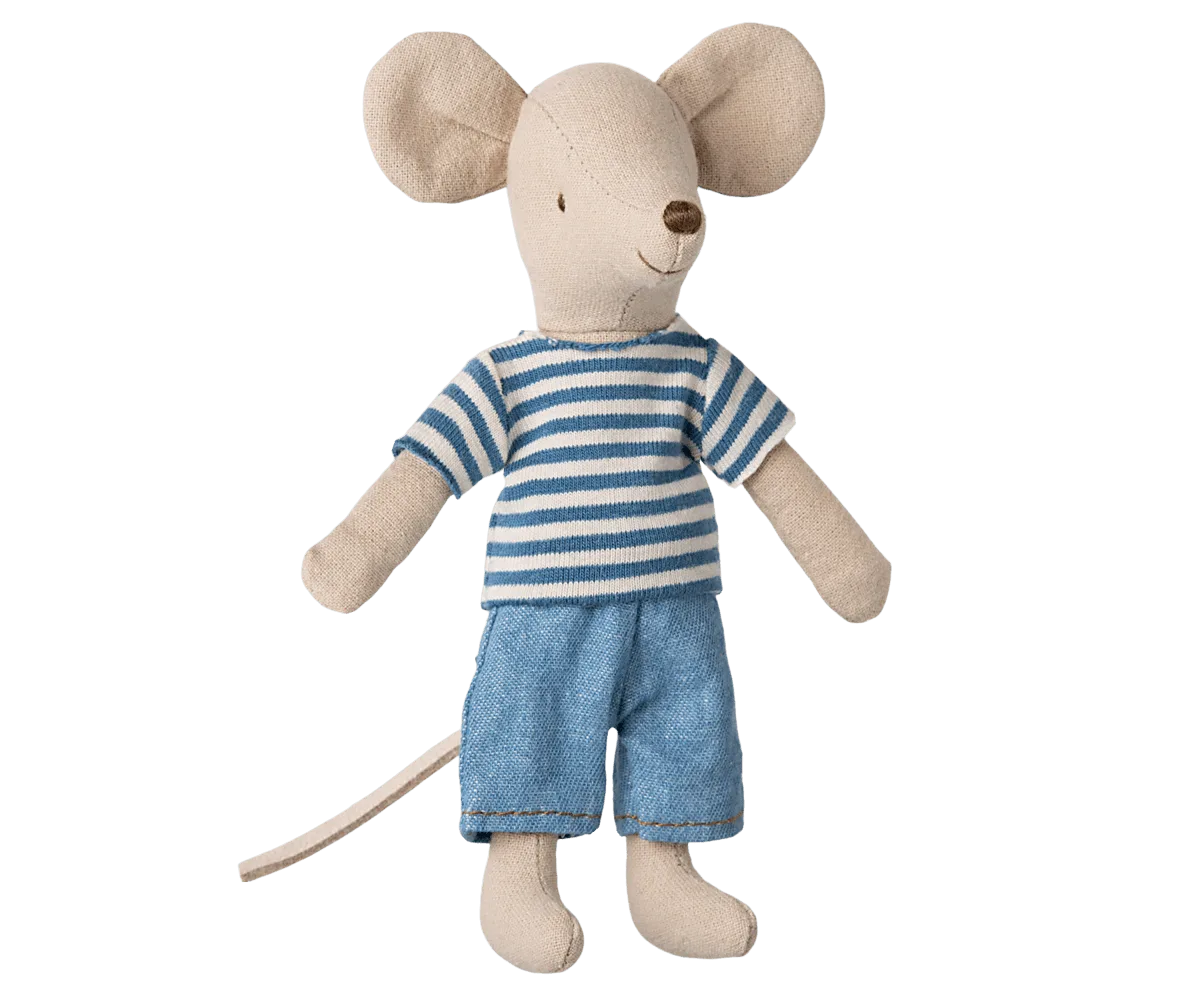
LouiMax, Mouse, Big brother
-
LouiMax, Mouse, Big brother: Magnets in his paws let him hold onto small metal objects, including his kick board. Children can act out helping or carrying scenes without needing extra hands or sticky tape.