Quick answer
To spot a royal horse portrait of Louis XIV, look for the king in ornate armor on a rearing or stately horse, with sculpted details that reflect 17th-century royal iconography. The Papo figurine captures this with a monarch known for his long reign and absolute rule.
Why royal horse portraits matter
Royal horse portraits were a standard way to show power in 17th-century Europe. A king on horseback signaled control, strength, and divine right. Louis XIV, who ruled France from 1643 to 1715, used such imagery extensively, especially at Versailles.
When you look at a figurine, the horse's pose and the king's attire are the first clues. A rearing horse suggests action and dominance, while a calm stance may indicate a more ceremonial or hunting scene. Both are valid, but they tell different stories.
What to check in the sculpt
Look for details that match the historical period: the king's wig, the style of armor or clothing, and the horse's tack. Louis XIV often appears in Roman-style armor or a royal coat, with a long curly wig. The horse may have a decorated saddlecloth or a royal emblem.
Papo's historical figures are known for their attention to detail, but always compare the figurine to period paintings or engravings. If the proportions seem off or details are blurry, it may be a less accurate reproduction.
Trade-offs: accuracy vs. playability
Some collectors want museum-level accuracy, while others prefer a sturdy toy that can withstand play. Papo figurines balance both, but they are not miniature replicas. The paint may simplify complex patterns, and the horse's pose is chosen for visual impact rather than exact anatomical realism.
If you're buying for a child, durability matters more than fine details. If you're a serious collector, you might prefer a larger, more detailed statue, but that often comes at a higher price and less play value.
Decision rules for choosing a Louis XIV horse figurine
- Check the horse's pose: A rearing horse suggests a heroic or battle scene; a standing horse may indicate a formal portrait. Choose based on the story you want to tell.
- Look for royal symbols: Look for the fleur-de-lis, the king's wig, or a decorated saddlecloth. These confirm the figure represents Louis XIV, not a generic horseman. If you see a crown or a sun emblem, it's likely a royal portrait.
- Set your priority: play or display: For a child's toy, prioritize sturdy construction and safe materials. For a display piece, consider the paint detail and historical accuracy. Decide before you buy to avoid disappointment.
- Compare with period art: Look up paintings of Louis XIV on horseback (e.g., by Rigaud or Van der Meulen) and compare the figurine's details. This helps you spot inaccuracies.
Product spotlight
-
Figurine Louis XIV sur son cheval: Louis XIV, known as the Sun King, ruled France from 1643 to 1715, one of the longest reigns in European history. This figurine represents a historically significant monarch, making it a meaningful addition to any historical collection or educational play set.
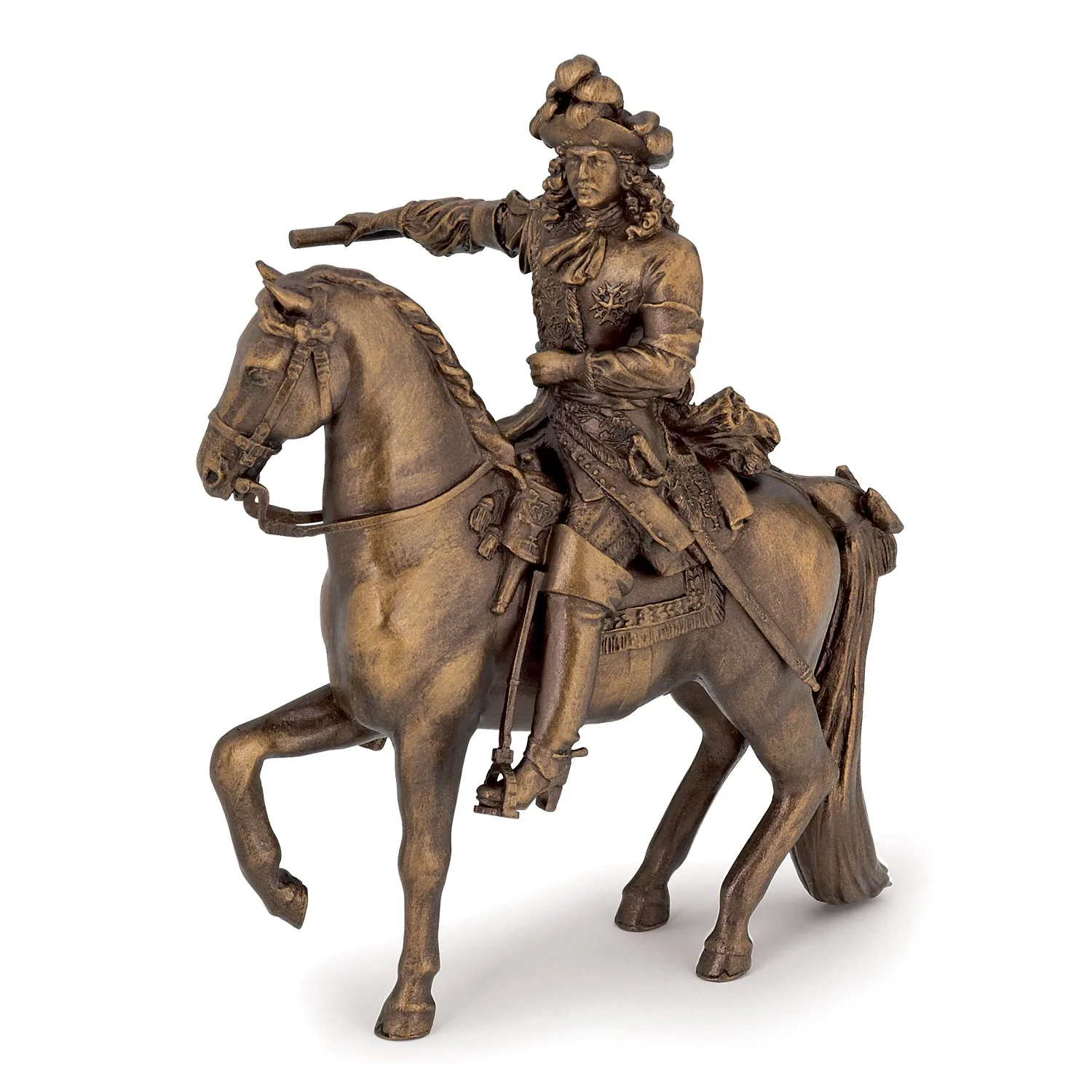
Figurine Louis XIV sur son cheval
Who is this figurine for?
Best for
- Collectors of historical toy figures who value a recognizable monarch
- Parents or educators teaching French history in a hands-on way
Not for
- Those seeking a highly detailed, museum-grade statue (consider larger display models)
- Children who prefer action figures with movable parts (this is a static figurine)