Quick answer
Use Box 5 as a short, consistent routine: preview one activity, let your child lead the hands-on play, then connect it to a single decoding or comprehension goal. Keep sessions to 10–15 minutes and stop while it still feels like play.
Why Box 5 fits the K–1st grade window
Box 5 is designed for children in kindergarten to first grade, so the activities assume some letter-sound knowledge but not fluent reading. That makes it a bridge box: it supports phonics, decoding, and comprehension through hands-on play rather than worksheets.
If your child is still solidifying letter sounds, you may need to repeat activities more often. If they are already blending simple words, you can move faster through the decoding portions and spend more time on comprehension talk.
What to prepare before you start
Set up a distraction-free space and keep the box's materials organized by activity so you can pull one out without sorting through everything. Read the activity card or guide yourself first, then decide on one goal for the session—not three.
How to use Box 5: a 5-step routine
- Preview one activity together: Before starting, show your child the materials for a single activity and ask what they notice. This builds anticipation and gives you a quick read on what they already know. Common mistake: dumping out the whole box at once, which turns the session into cleanup instead of learning. Choose one activity per session; keep the rest stored away.
- Model the play, then hand it over: Demonstrate the activity once, thinking aloud as you go, then let your child try it independently. Resist correcting every error immediately—give them a chance to self-correct first. Common mistake: turning a hands-on activity into a quiz by asking too many questions. Aim for your child doing most of the talking and moving.
- Connect the activity to one reading goal: After the play, name the skill you just practiced in plain language, such as 'You blended those sounds to read the word.' Then try one quick application, like finding a word with the same pattern in a book. Common mistake: skipping the connection, which leaves the play feeling like a game with no transfer. End each session with one real reading moment.
- Keep it short and stop while it's fun: Set a timer for 10–15 minutes. If your child is still engaged, you can continue; if frustration appears, stop and revisit the same activity another day. Common mistake: pushing through to finish an activity because it's 'supposed' to be done. Frequency beats duration—three short sessions a week work well.
- Review and repeat before moving on: At the end of the week, repeat one earlier activity to check retention. If your child breezes through it, move to the next activity; if not, repeat with a different book or word list. Common mistake: treating the box as a checklist instead of a spiral review. Repeat an activity until your child can do it with less support.
Product facts
-
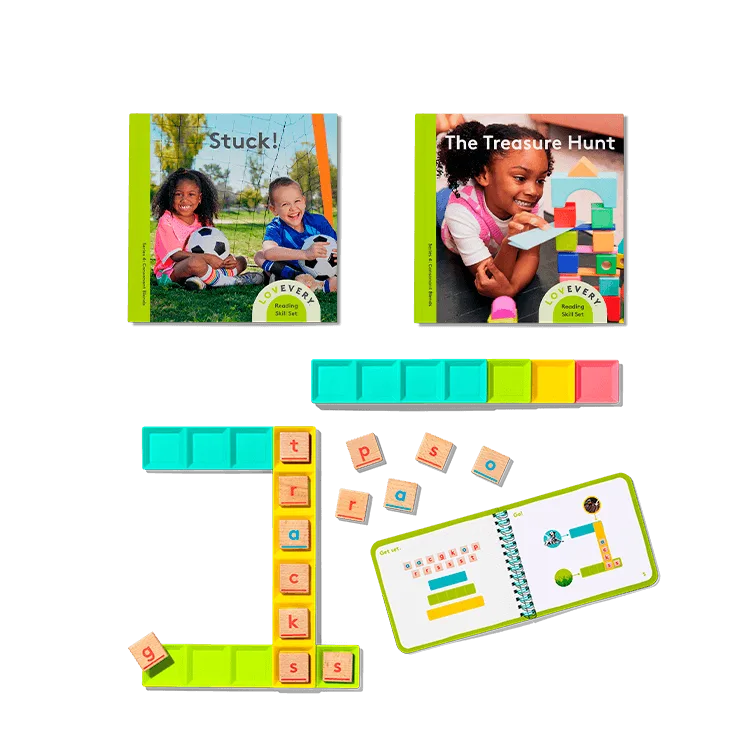
Reading Skill Set, Box 5, K to 1st grade: Designed for children in kindergarten to first grade, with research-backed activities that build foundational reading skills through hands-on play. The K–1st grade range tells you the box assumes early reading skills, so you can pace activities to your child's actual decoding level rather than age.
Reading Skill Set, Box 5, K to 1st grade