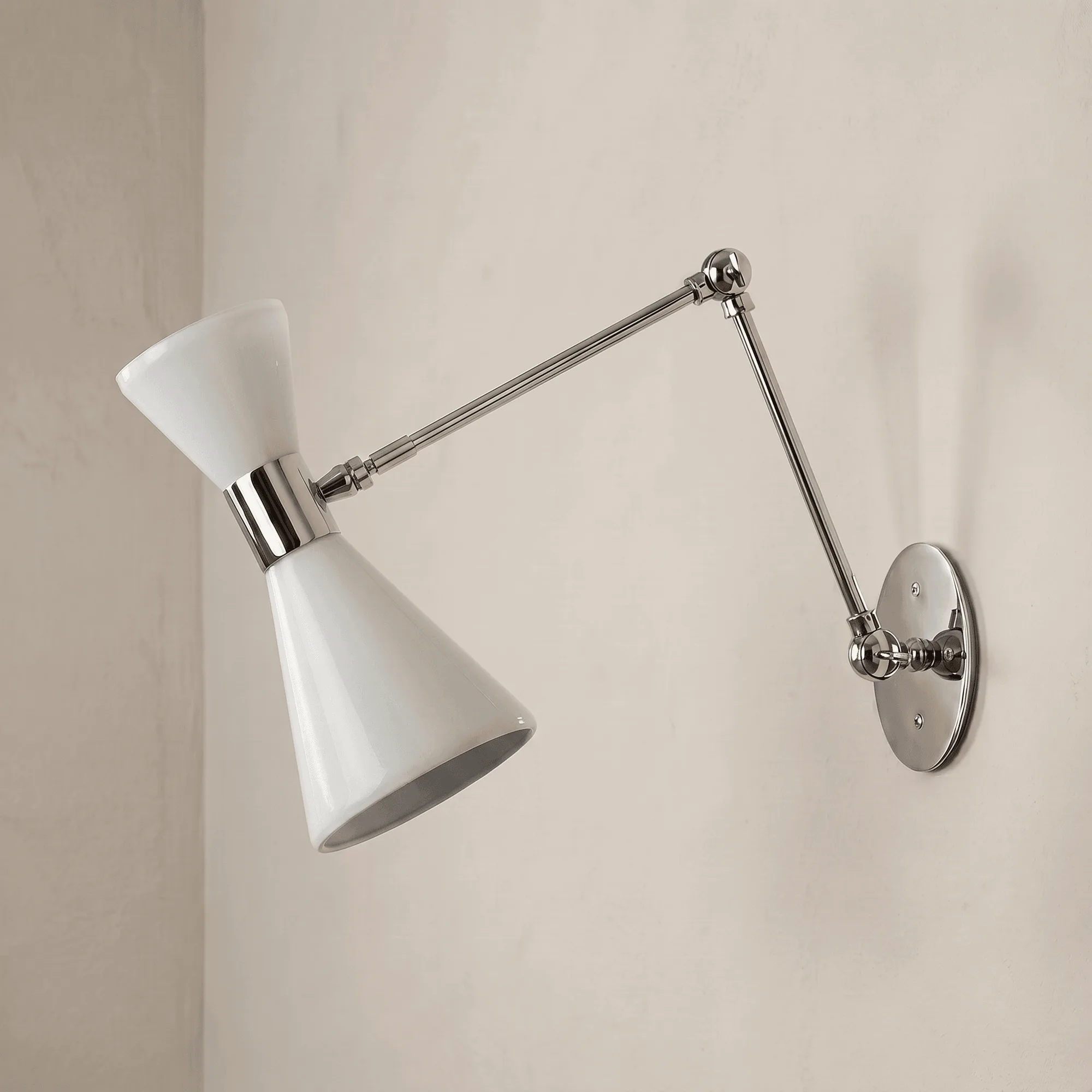
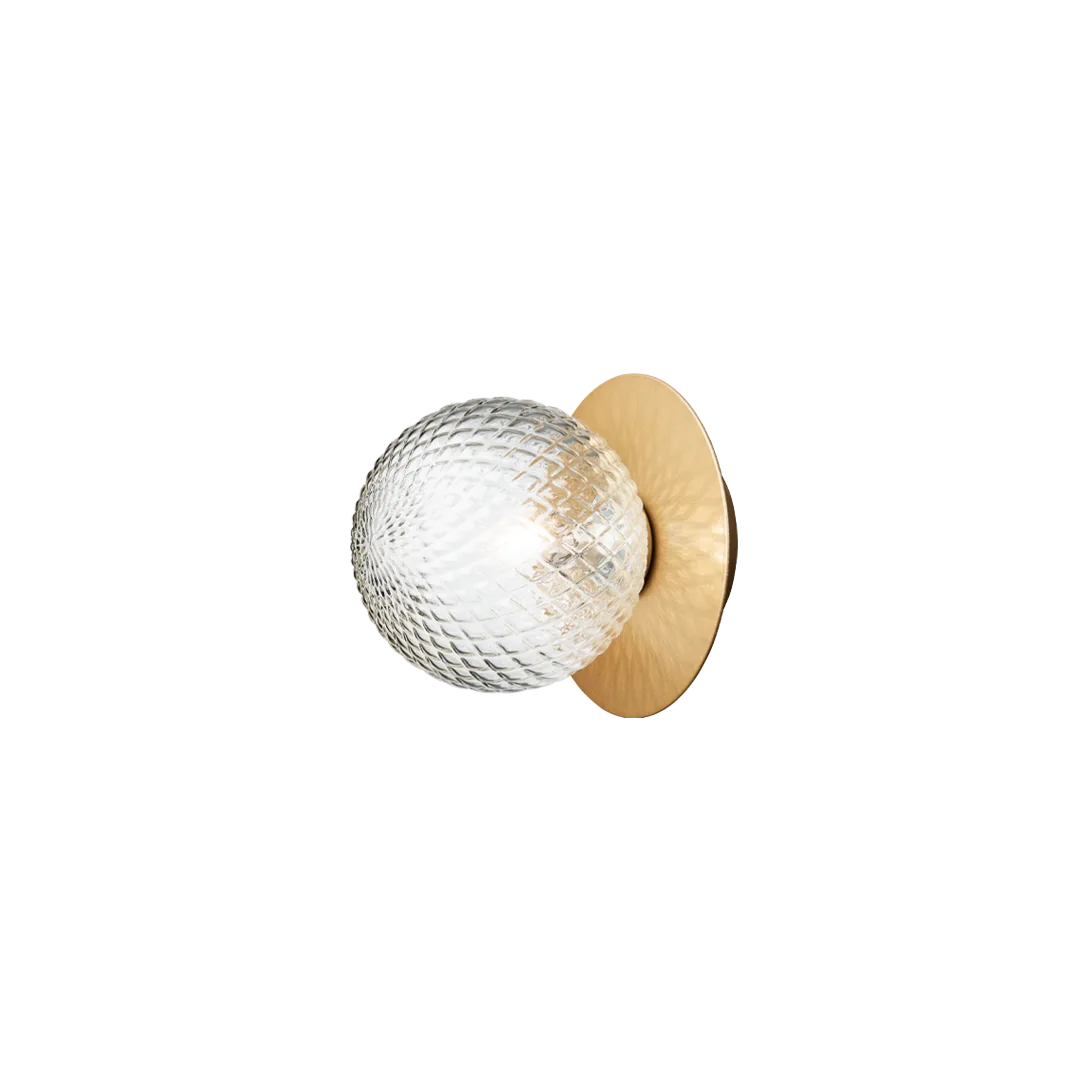
Two wall lamps, two different jobs
The Lucie Wall Sconce and the Campana Wall Sconce are both wall-mounted fixtures, but they solve different problems. The Lucie is a fixed sconce built around a circular stone backplate, with a soft, inviting glow. The Campana is an articulating sconce with a swiveling head and spun aluminum cones, designed to make a strong design statement. If you need to aim light—say, for reading in bed—the Campana's adjustment is the key difference. If you want a calm, sculptural wash of light and a natural stone surface, the Lucie is the more direct choice.
This comparison focuses on what the catalog actually confirms: the Lucie's stone variation and fixed form, and the Campana's swiveling head, aluminum construction and suggested rooms. Where the records are silent—such as exact dimensions, bulb type, or dimming compatibility—treat that as a question to confirm before ordering, not as a feature the fixture lacks.
Lucie vs Campana at a glance
- Adjustability: Campana has a swiveling head for cone adjustment; Lucie is described as a fixed sconce with a circular stone backplate. If you want to direct light, Campana is the one with confirmed articulation.
- Material and look: Lucie features a natural stone backplate with inherent color and veining variation. Campana uses spun aluminum cones influenced by vintage 1950s Italian design, with a wide band and beveled edge.
- Suggested placement: Campana is described as suitable for a master suite, nursery, or glam room, and works in groupings or pairs. Lucie's record does not specify rooms; its design story references Parisian elegance and New York modernity.
- Stone variation: Lucie's stone will vary in color, veining, texture, and pattern; these differences are inherent and not eligible for exchange. Campana's record does not mention a comparable natural-material caveat.
What the Lucie record confirms
-
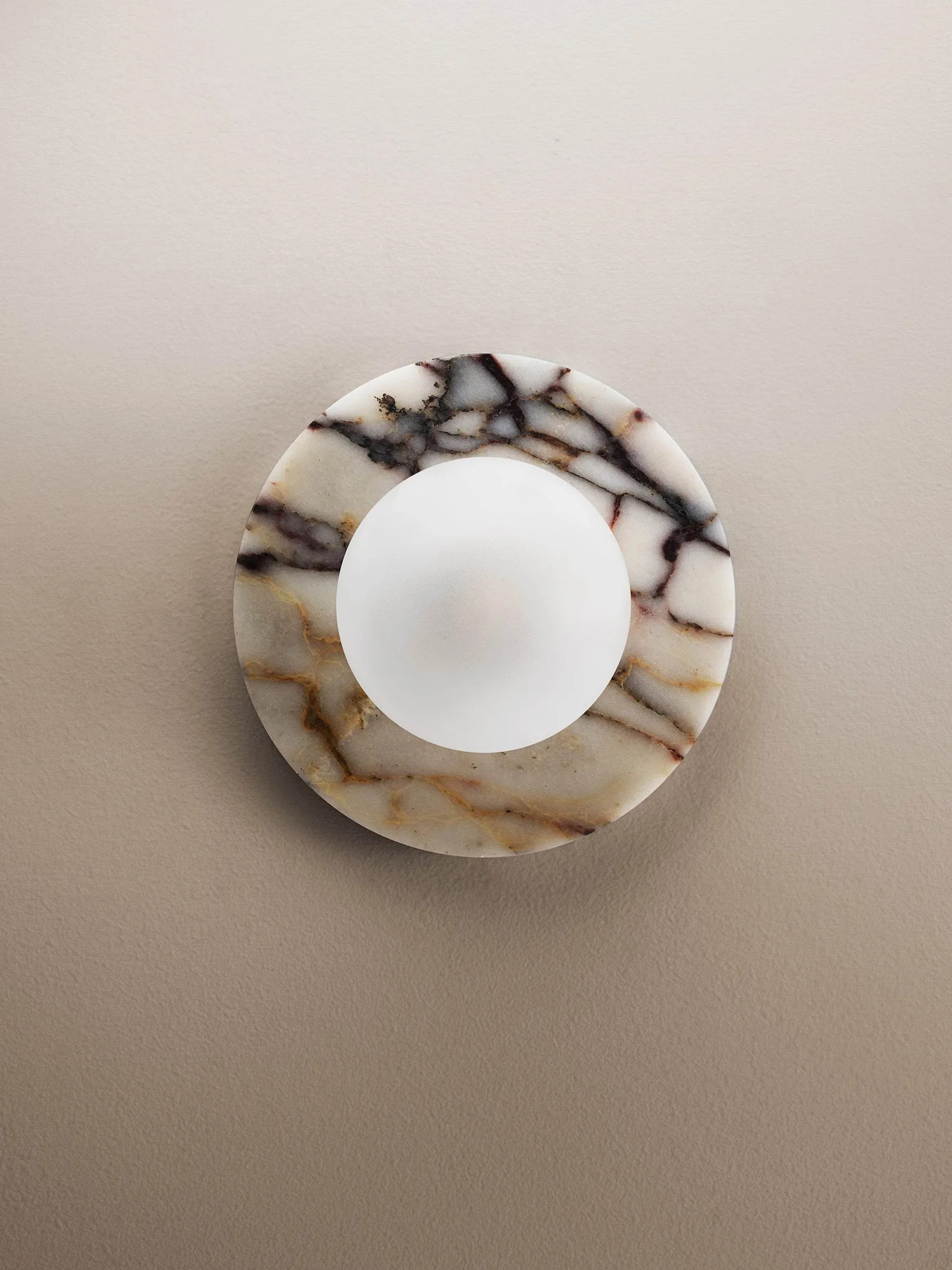
Lucie Wall Sconce: Circular stone backplate with a soft, inviting glow; inspired by the proportions of Dior's iconic pearl earrings. This tells you the Lucie is a fixed, backplate-centered design—best where you want a calm, decorative light source rather than an adjustable task light.
Lucie Wall Sconce
-
Lucie Wall Sconce: Stone variation: color, veining, texture, and pattern will occur due to natural characteristics, and these differences are not eligible for exchange. If you expect a perfectly uniform stone surface, the Lucie may surprise you. The variation is part of the material, so it is not a defect and cannot be exchanged for a different pattern.
What the Campana record confirms
-
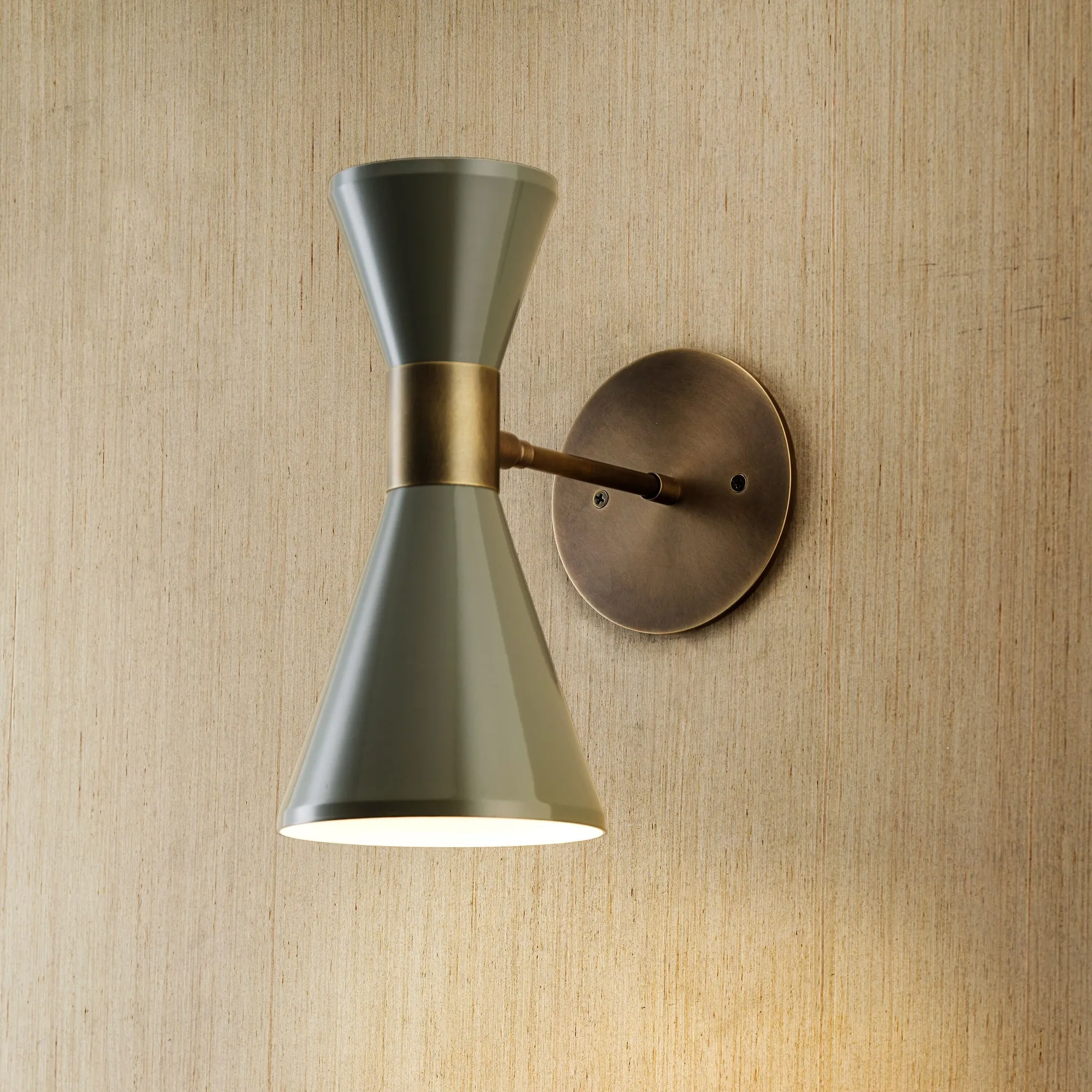
Campana Wall Sconce: Swiveling head allows for cone adjustment. This is the decisive feature for a bedside wall lamp: you can angle the light toward a book or away from a sleeping partner, within the range the swivel allows.
Campana Wall Sconce
-
Campana Wall Sconce: Spun aluminum cones influenced by vintage 1950s Italian design; wide band and distinctly beveled edge. The Campana is a visual statement. If your room leans mid-century or you want the fixture itself to be a focal point, this construction supports that.
-
Campana Wall Sconce: Suggested for a master suite, nursery, or glam room; impactful in groupings or in pairs, yet sculptural enough to stand alone. This gives you a clear placement brief from the catalog. It also confirms the Campana can work as a single fixture, so you are not obligated to buy a pair.
Articulating vs fixed: which matters for your room
An articulating sconce like the Campana earns its place when the light needs to move with you. Bedside reading is the obvious case: a swiveling head lets you shift the cone as you sit up or lie back. The same adjustment helps in a nursery, where you might want to redirect light away from a crib, though the catalog does not specify a safe aiming angle or distance—so use your own judgment and confirm any nursery-specific guidance with the manufacturer.
A fixed sconce like the Lucie is better where the light is part of the architecture. Its circular stone backplate and soft glow suit a symmetrical arrangement, a hallway, or a vanity where you want a consistent wash rather than a spotlight. The trade-off is honest: you cannot redirect the Lucie after installation, so its placement and the room's ambient light need to do the work.
The stone question: what to expect from Lucie
The Lucie's stone backplate is its defining material, and the catalog is explicit that color, veining, texture, and pattern will vary. That is not a flaw to negotiate—it is inherent to the material and not eligible for exchange. If you are ordering a pair for symmetry, expect the two stones to differ. If a uniform, engineered surface matters more to you than natural stone, the Campana's aluminum construction avoids this issue entirely.
The Lucie's design story—Parisian elegance and New York modernity—is context, not a performance claim. What the record confirms is the circular stone backplate and the soft glow; it does not list dimensions, bulb type, or dimming support. Those are the details to confirm before you commit, especially if you are matching an existing fixture or planning a dimmer circuit.
A short pre-order check for either sconce
The catalog records for both fixtures are silent on several installation details. Use this checklist to close the gap before ordering.
- Confirm dimensions and backplate size: Neither record supplies measurements. Measure your wall space and compare against the manufacturer's published dimensions, particularly for the Lucie's circular backplate.
- Confirm bulb type and dimming: The records do not state bulb type or dimmer compatibility. If you plan to dim, verify the fixture's requirements with the manufacturer or your electrician.
- Decide fixed vs adjustable first: If you need to aim light, choose the Campana. If you want a fixed, decorative wash, the Lucie is the simpler fit.
- Plan for stone variation if choosing Lucie: Accept that the stone pattern will differ from photos and from any second unit; exchanges are not available for natural variation.