Quick answer
Spot-clean Luke the Leek with a damp cloth and mild soap, air-dry it completely, and check the beechwood clip and cord before every use. Wash less often than you check, and never soak the wooden clip.
Why the materials change your cleaning routine
Luke the Leek combines a cotton exterior, corn fiber filling, and a beechwood clip. Cotton and corn fiber tolerate gentle surface cleaning, but the beechwood clip is the part most likely to suffer from excess water. Treat the clip as the delicate component and the fabric as the easy part.
That means you can spot-clean the leek body more freely while keeping the wooden clip mostly dry. If the clip itself looks grimy, wipe it and dry it immediately rather than rinsing it under a tap.
When a washable pacifier clip still needs a pause
Even a washable pacifier clip has limits. Skip machine washing unless the care label explicitly allows it, and never tumble dry. Heat and agitation can distort the filling and damage the wood. If the clip has been in a mouth or dropped in dirt, clean it sooner, but still protect the wooden part.
A pacifier clip is not a teether or a toy. Keep it out of your baby's mouth and remove it during naps and nighttime sleep.
Step-by-step: clean and secure Luke the Leek
- Remove the clip before cleaning: Unclip Luke from clothing or the stroller and take the pacifier off the loop. Common mistake: cleaning while still attached, which wets the fabric around the clip and leaves moisture trapped. Check the clip's grip and the cord for fraying while it is off.
- Spot-clean the cotton body: Dampen a soft cloth with water and a drop of mild baby-safe soap, then dab the cotton surface. Do not scrub hard or submerge the leek. Checkpoint: the cloth should be damp, not dripping.
- Wipe the beechwood clip and dry it at once: Use a barely damp cloth on the wooden clip, then dry it immediately with a towel. Never soak the clip or leave it wet. Common mistake: letting water sit on the wood, which can roughen the surface. If the wood feels rough after drying, stop using the clip and inspect it for splinters.
- Air-dry completely: Lay Luke flat in a well-ventilated spot away from direct sun and heat. Do not tumble dry or place it on a radiator. Checkpoint: the filling and cord must feel dry all the way through before use.
- Reattach with a secure grip: Clip the beechwood clip to a sturdy edge of clothing, a stroller strap, or a carrier, not to a loose blanket or thin strap. Give a gentle tug to confirm the grip. Common mistake: clipping to something your baby can pull loose. Recheck the clip after every pick-up and before each outing.
- Do a daily safety check: Before each use, look for loose stitching, a stretched cord, or a clip that no longer closes firmly. If any part is damaged, retire the clip. Checkpoint: never repair a pacifier clip with tape or glue.
Product facts that guide care
-
Luke the Leek Pacifier Clip: Cotton exterior with corn fiber filling and a beechwood clip, OEKO-TEX Standard 100 certified. The certification supports peace of mind, but the mixed materials still call for gentle surface cleaning rather than soaking.
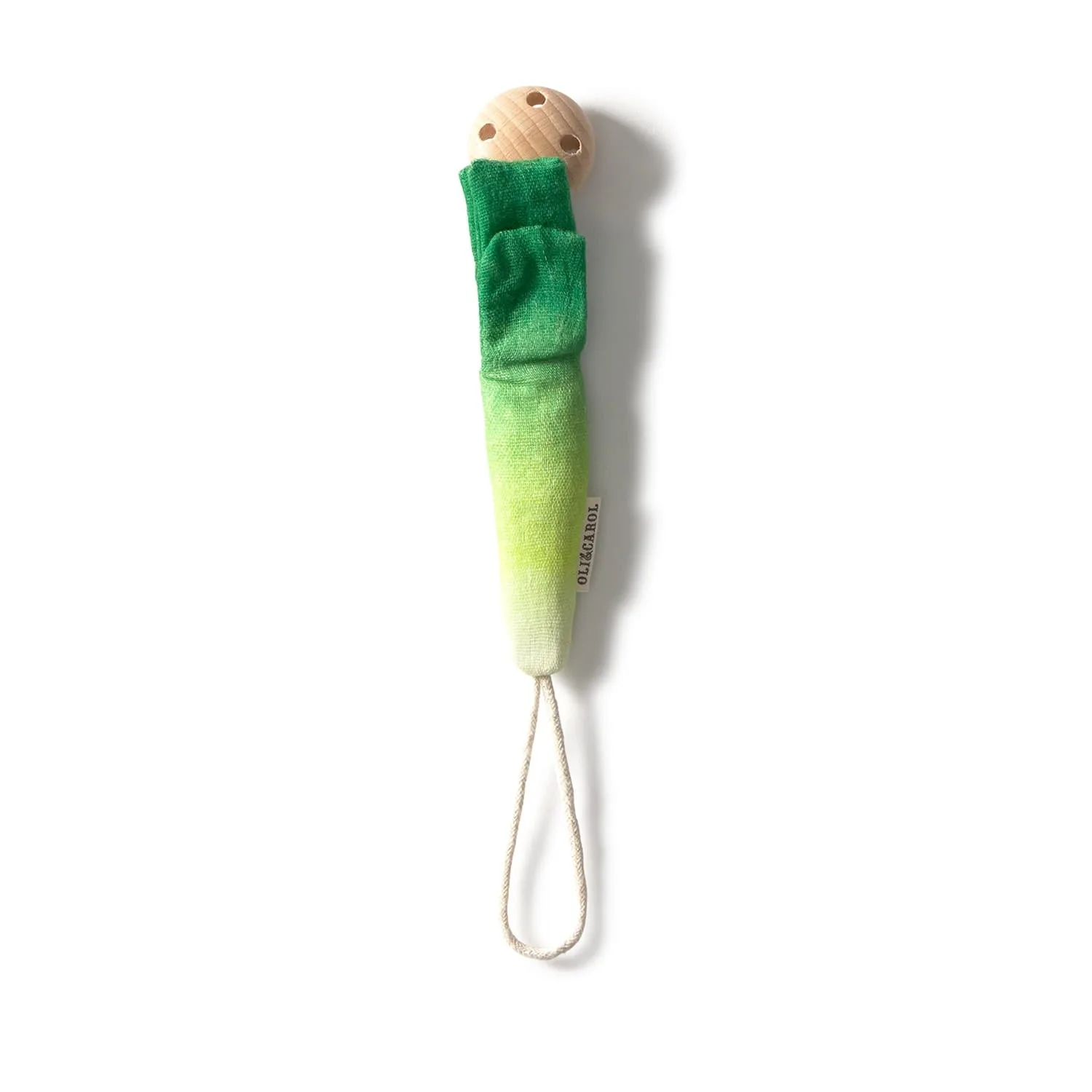
Luke the Leek Pacifier Clip
-
Luke the Leek Pacifier Clip: Approximately 15 cm / 5.9 in total length (hanger plus cord). A short clip is easier to inspect fully for wear and to keep clear of stroller wheels and crib rails.