Quick answer
Empty your lunch bag every day, wipe the lining with warm soapy water, and let it air-dry fully open. For lingering smells, sprinkle baking soda inside, leave it overnight, then vacuum or brush it out. If the odour survives a full wash and 24 hours of drying, the lining is likely holding bacteria or mould and the bag should be replaced.
Why lunch bags start to smell
Most lunch bag odours come from three sources: trapped moisture, food residue in seams and crevices, and the warm, dark environment inside a closed bag. Even a crumb or a few drops of dressing can feed bacteria and mould, which then produce the sour, musty smell you notice when you unzip the bag. Insulated bags with foam or padded layers are especially prone because moisture can seep into the insulation and stay there. The fix is not just masking the smell but removing the food and moisture that cause it.
Daily cleaning routine
The single most effective habit is to empty and air out your lunch bag as soon as you get home. Remove all containers, wrappers and utensils, then turn the bag inside out if the design allows and leave it open overnight. Once a day, wipe the interior lining with a cloth dampened with warm water and a drop of mild dish soap. Pay attention to corners, the zip line and any elastic loops where crumbs collect. Dry with a clean towel or let it air-dry completely before closing it. This two-minute routine prevents most odours from ever developing.
Deep cleaning an insulated lunch bag
Once a week, or after a spill, give the bag a deeper clean. Check the care label first; many insulated bags are hand-wash only because a washing machine can crush the insulation or warp the shape. Fill a sink with warm water and a small amount of mild detergent. Use a soft brush or sponge to clean the lining, seams and zip. Rinse thoroughly with a clean damp cloth, changing the water until no soap remains. Never submerge a bag that has a rigid frame or cardboard reinforcement. If the bag is machine washable, use a gentle cycle in a mesh laundry bag and skip the dryer, which can melt or distort the lining.
Removing stubborn odours
If the bag still smells after washing, the odour has likely soaked into the lining or insulation. Start with baking soda: sprinkle a generous layer inside the dry bag, close it, and leave it for 12 to 24 hours. Then vacuum or shake it out. For a stronger fix, place a small bowl of white vinegar or activated charcoal inside the bag and seal it for a day. Sunlight also helps; turn the bag inside out and let it sit in direct sun for an hour, which kills many odour-causing bacteria. Avoid using bleach or harsh chemicals, which can damage the lining and leave a residue near food.
Preventing smells before they start
A few small habits make cleaning much easier. Use leak-proof containers instead of loose food, and wrap strong-smelling items like tuna or curry in an extra layer. Keep a small reusable cloth or paper towel in the bag to absorb condensation. If you carry a damp cloth or wet wipes, store them in a separate zip pocket rather than loose in the main compartment. Rotate two lunch bags if you use one daily, so each has time to dry completely between uses. Finally, avoid leaving a dirty lunch bag in a hot car or a closed cupboard; warmth and darkness speed up bacterial growth.
Symptom, cause, fix: a lunch bag odour diagnosis
- Symptom: faint sour smell when you open the bag: Likely cause: crumbs or a few drops of food residue left in seams. Corrective action: empty the bag daily, wipe the lining with warm soapy water, and air-dry fully open. Stop here if the smell disappears after one wash. Daily wiping prevents most mild odours.
- Symptom: musty or damp smell that returns quickly: Likely cause: moisture trapped in the insulation or a lining that never dries completely. Corrective action: turn the bag inside out, wash with mild detergent, and dry in direct sun or a well-ventilated spot for a full day. If the smell returns within a day, the insulation may be holding mould. If mustiness persists after a full wash and dry, replace the bag.
- Symptom: strong, lingering odour after multiple washes: Likely cause: bacteria or mould have penetrated the lining or foam layer, which cannot be fully cleaned at home. Corrective action: try a 24-hour baking soda or activated charcoal treatment. If the odour remains, the bag is no longer safe for food storage. Choose a new bag with a wipeable lining and a design that lets you dry it completely.
A bag built for easier cleaning
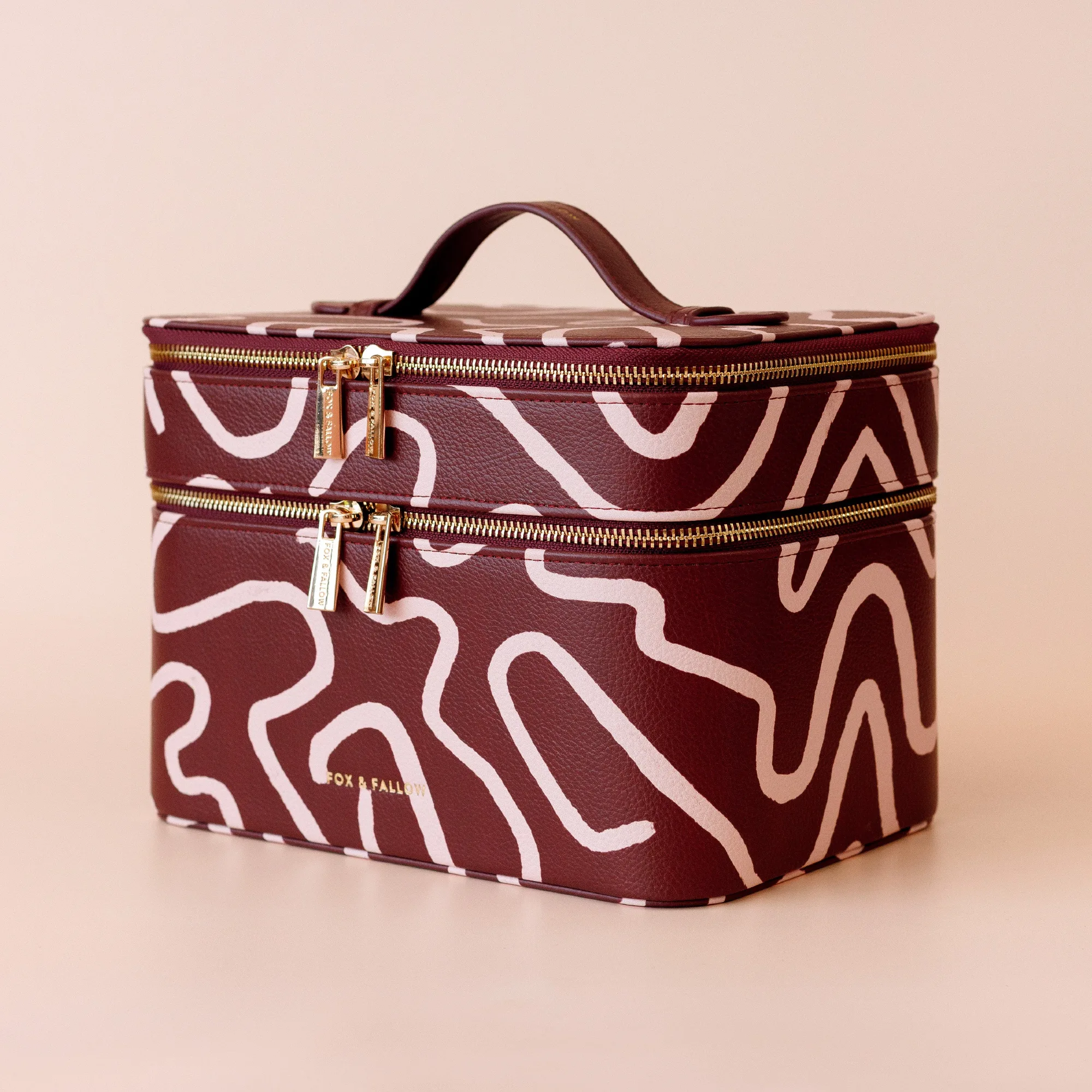
- Como Vanity Case - 'The Classic': Pebble vegan leather with a tan lining, dual layer with elastic loops, internal zip pocket and gold hardware. A smooth, non-porous lining wipes clean quickly, and the dual layer with elastic loops keeps containers upright so spills stay contained. The internal zip pocket is a good place to store a small cleaning cloth or wet wipes separately from food.