What the m12 Apex Module actually changes
The m12 Apex Module is a vented module that releases air pressure sealed in the ear canal. That single behavior explains most of what you notice when you install it: less pressure buildup, more comfort over long sessions, and a sound that feels more spacious and rich. It is not a solid plug, and it is not a noise-isolation accessory in the conventional sense.
If you are trying to reduce IEM listening fatigue, the m12 is the most direct lever in the Apex lineup. The venting lets you hear more of what you want at a lower decibel level, so the listening experience stays high-fidelity without requiring the volume to creep up.
Catalog facts that shape the decision
-
m12 Apex Module: The m12 houses Apex technology that alleviates listener fatigue by releasing air pressure sealed in the ear canal. This is the core function: pressure relief, not passive noise blocking.
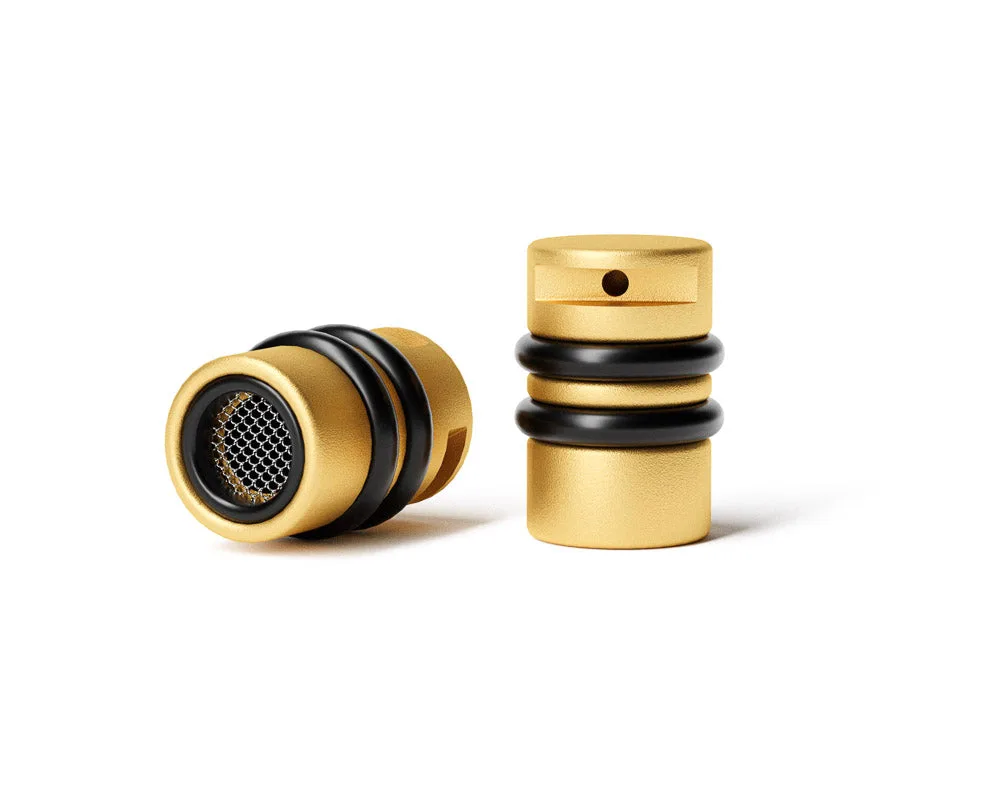
m12 Apex Module
-
m12 Apex Module: The venting enables musicians and music enthusiasts to listen more comfortably for longer and adds to a more spacious, rich sound. The benefit is comfort and perceived openness, which is what most people mean by reducing listening fatigue.
-
m12 Apex Module: Unlike a solid plug, Apex offers a high-fidelity listening experience so you hear more of what you want at a lower decibel level. The m12 is designed to preserve detail at lower volumes rather than to seal out the world.
-
m12 Apex Module: The m12 is designed to work in current 64 Audio in-ear monitors, excluding Duo, Trio and Fourté, and in High Fidelity Custom Earplugs. Compatibility is model-specific. Check your IEM model before ordering.
-
m12 Apex Module: Apex modules are easily interchangeable, so you can switch between all variations quickly. A swap is practical to do yourself, which makes the m12 a usable tool for different listening situations.
-
m12 Apex Module: Modules are sold in pairs only. You cannot buy a single module, so plan for a matched pair.
How the m12 affects isolation
The m12 trades some isolation for pressure relief. Because it vents air pressure rather than sealing the ear canal, it does not behave like a solid plug. The catalog frames this as a deliberate high-fidelity choice: you hear more of what you want at a lower decibel level, but you should not expect the m12 to block outside noise the way a sealed module would.
That makes the m12 a poor fit for situations where you need maximum isolation, such as loud stages or noisy commutes. It is a better fit for longer listening sessions where comfort and a spacious sound matter more than shutting out the room. If your priority is isolation, the m12 is the wrong tool; if your priority is reducing fatigue and pressure, it is the right one.
A practical way to swap in the m12
- Confirm your model is compatible: The m12 fits current 64 Audio in-ear monitors excluding Duo, Trio and Fourté, and High Fidelity Custom Earplugs. If you own one of the excluded models, the m12 is not the correct module.
- Work with a matched pair: Modules are sold in pairs only, so install both sides together rather than mixing a single m12 with a different module.
- Swap modules deliberately: Apex modules are easily interchangeable, so you can switch between variations quickly. Make the change before a listening session rather than mid-session.
- Set volume after the swap, not before: Because the m12 is designed to let you hear more at a lower decibel level, start at a lower volume and adjust from there rather than carrying over your previous setting.
- Evaluate fatigue over a full session: The benefit is comfort over longer listening, so judge the m12 after a realistic session rather than a few minutes.
m12 vs m20 isolation: what the record supports
The supplied information covers the m12 in detail but does not provide a side-by-side isolation specification for the m20. What can be said is directional: the m12 vents pressure, so it is not a maximum-isolation module. If you need a firmer seal against outside noise, the m12 is not the choice. The catalog does not confirm how much isolation the m20 provides relative to the m12, so treat any specific isolation comparison as unconfirmed by the supplied information.
- m12: Vented Apex module that releases ear-canal pressure to reduce fatigue and add spaciousness. Not a solid plug; not designed for maximum isolation.
- m20: The supplied record does not include isolation specifications or a direct comparison with the m12. Do not assume a specific isolation difference from the catalog alone.
When the m12 is the right module
- Long listening sessions: The m12 is built to alleviate listener fatigue by releasing air pressure, so it suits sessions where comfort over time matters.
- Lower-volume detail listening: Because it is designed to let you hear more at a lower decibel level, it fits listening where you want detail without raising volume.
- A more spacious sound: The venting adds to a more spacious, rich sound, which is useful when you want openness rather than a sealed-in feel.
- Quick module changes: Apex modules are easily interchangeable, so the m12 can be one of several modules you rotate rather than a permanent commitment.
When to choose something else
- You need maximum isolation: The m12 vents pressure and is not a solid plug, so it is not the module for blocking outside noise.
- Your IEM is a Duo, Trio or Fourté: The m12 is explicitly not designed for those models. Check compatibility before ordering.
- You want a single module: Modules are sold in pairs only, so a single-unit purchase is not an option.
- You need a confirmed m12 vs m20 isolation figure: The supplied information does not provide that comparison, so do not rely on the catalog for a specific isolation number.
The honest tradeoff
The m12 is a comfort-and-openness module, not an isolation module. Its value comes from releasing pressure so you can listen longer and at lower levels, and from the more spacious sound that venting provides. If you buy it expecting sealed-off quiet, you will be disappointed. If you buy it to reduce fatigue during long sessions and you have a compatible 64 Audio IEM, it does exactly the job the catalog describes.