Quick answer
Choose Mechanical Engineering: Machines & Vehicles for a classroom-focused, hands-on introduction to mechanical design, or Electricity & Magnetism for a versatile physics kit that works well for individual learners and small groups.
Scope and scale: classroom bundle vs single kit
The Mechanical Engineering: Machines & Vehicles Classroom Bundle 10-pack is designed for up to 30 students, making it a practical choice for co-op classes, after-school programs, or a single teacher managing multiple groups. The Electricity & Magnetism kit is a single-box set intended for one child or a small team, which keeps the investment lower and the setup simpler for home use.
If you are buying for a tax-exempt organization, the classroom bundle may offer purchasing advantages, but the single kit is easier to store and manage for a family or a tutor.
Learning focus: mechanical design vs physics fundamentals
The Mechanical Engineering kit focuses on how things move, covering the design, development, and testing of mechanical systems. This is ideal for learners who like building and seeing immediate physical results. The Electricity & Magnetism kit explores electric current and magnetic fields through circuit-building and magnetic contraptions, which suits curious kids who enjoy experimenting with invisible forces.
Both kits support STEM learning, but they address different branches: one is engineering-centric, the other physics-centric. Your choice should reflect whether your student is more drawn to structures and motion or to circuits and magnetism.
Trade-offs at a glance
- Classroom capacity vs individual use: The Mechanical Engineering bundle serves up to 30 students, while Electricity & Magnetism is a single-kit experience. If you teach a class, the bundle wins; for one child, the single kit is more cost-effective. Estimate your group size before deciding.
- Engineering vs physics focus: Mechanical Engineering emphasizes moving parts and design; Electricity & Magnetism covers circuits and magnetic fields. Choose the one that matches your curriculum or your child's interests. Match the kit to the learning goal, not just the price.
- Price vs experiment count: The bundle costs more but provides 10 kits; the single kit offers 60+ experiments for a lower price. If you need many kits, the bundle's per-student cost is efficient; if you need variety for one learner, the single kit gives more experiments per dollar. Calculate per-student cost for classroom budgets.
Product facts
-
Mechanical Engineering: Machines & Vehicles - Classroom Bundle 10-pack: This bundle includes 10 Mechanical Engineering: Machines & Vehicles STEM Experiment kits, recommended for up to 30 students. It gives you enough materials for a full classroom, so you can run group activities without buying multiple separate kits.
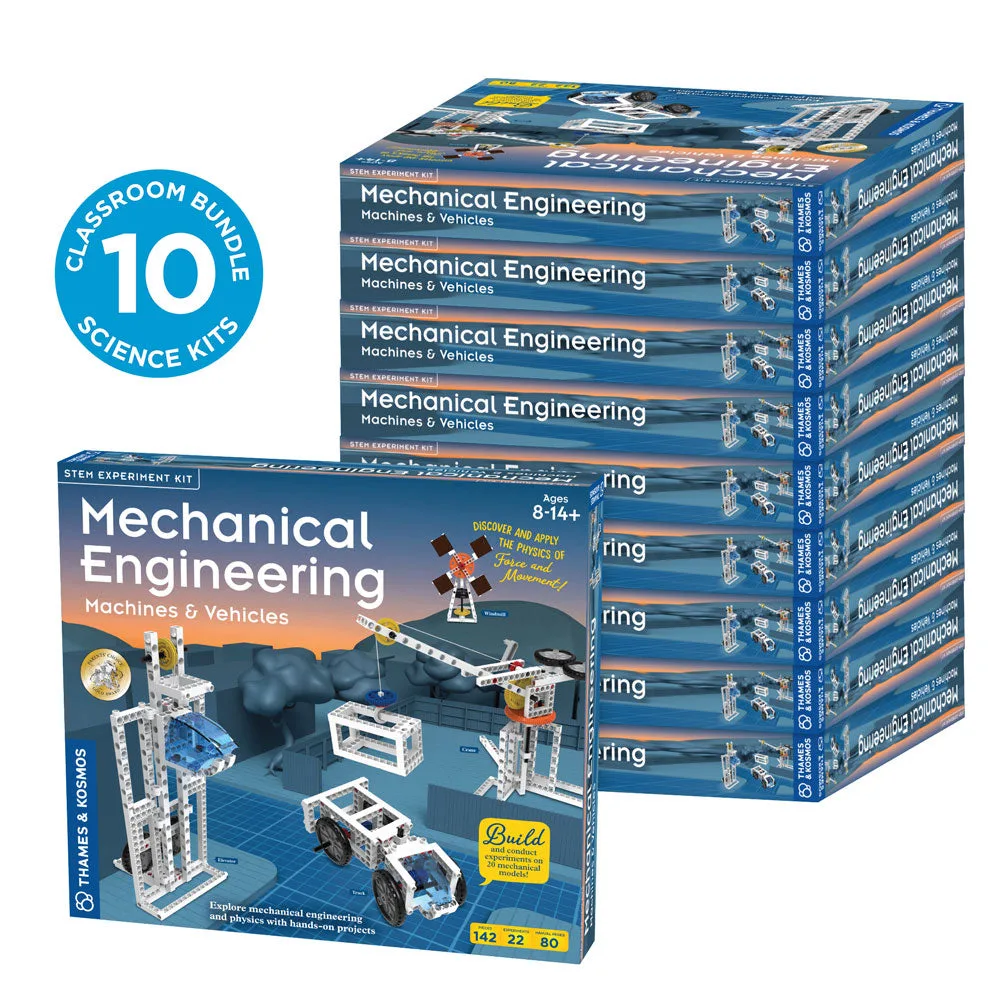
Mechanical Engineering: Machines & Vehicles - Classroom Bundle 10-pack
-
Electricity & Magnetism: Conduct more than 60 electrifying experiments with circuits and magnetic contraptions to learn about electricity and magnetism. The wide experiment range keeps a single child engaged over many sessions, making it a versatile home or small-group option.
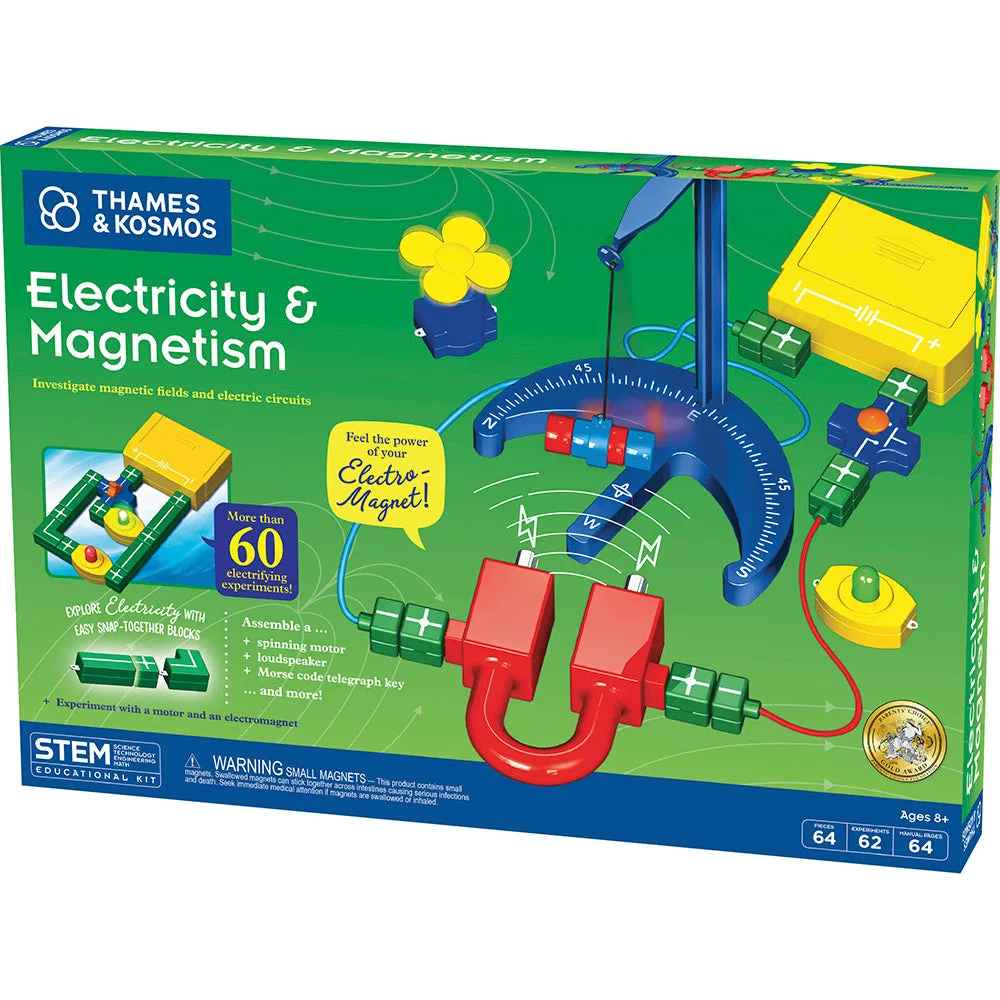
Electricity & Magnetism
Which should you choose?
Best for
- Teachers or group leaders who need a classroom-ready mechanical engineering kit for up to 30 students
- STEM programs focusing on engineering design and hands-on building
Not for
- Families with a single child who want a low-cost introduction to physics—consider Electricity & Magnetism instead