What the Magico QPod Isolation Feet Do
If you're looking to reduce unwanted vibration in your hi-fi system, isolation feet are a practical upgrade. The Magico QPod Isolation Feet are designed to manage resonance by converting vibrational wave propagation into heat energy through a process called shear deformation. This happens within each pod's layered construction, helping to reduce electrical and mechanical vibration-induced artifacts and improve signal fidelity.
Originally developed for Magico's internal R&D, the QPod platform applies advances in resonance management to front-end system performance. The pods themselves are CNC-turned and milled from hardened stainless steel, oxygen-free copper, and hard black-anodized aircraft-grade aluminum. These materials create constraining layers for a damping material that is alternately clamped between them, forming a single traverse dissipating unit.
Magico QPod Construction and Materials
-
Magico QPod Isolation Feet: The pods are CNC-turned and milled from hardened stainless-steel, oxygen-free copper, and hard black-anodized aircraft-grade aluminum. These materials create the constraining layers that alternately clamp the damping material, enabling the conversion of vibration into heat.
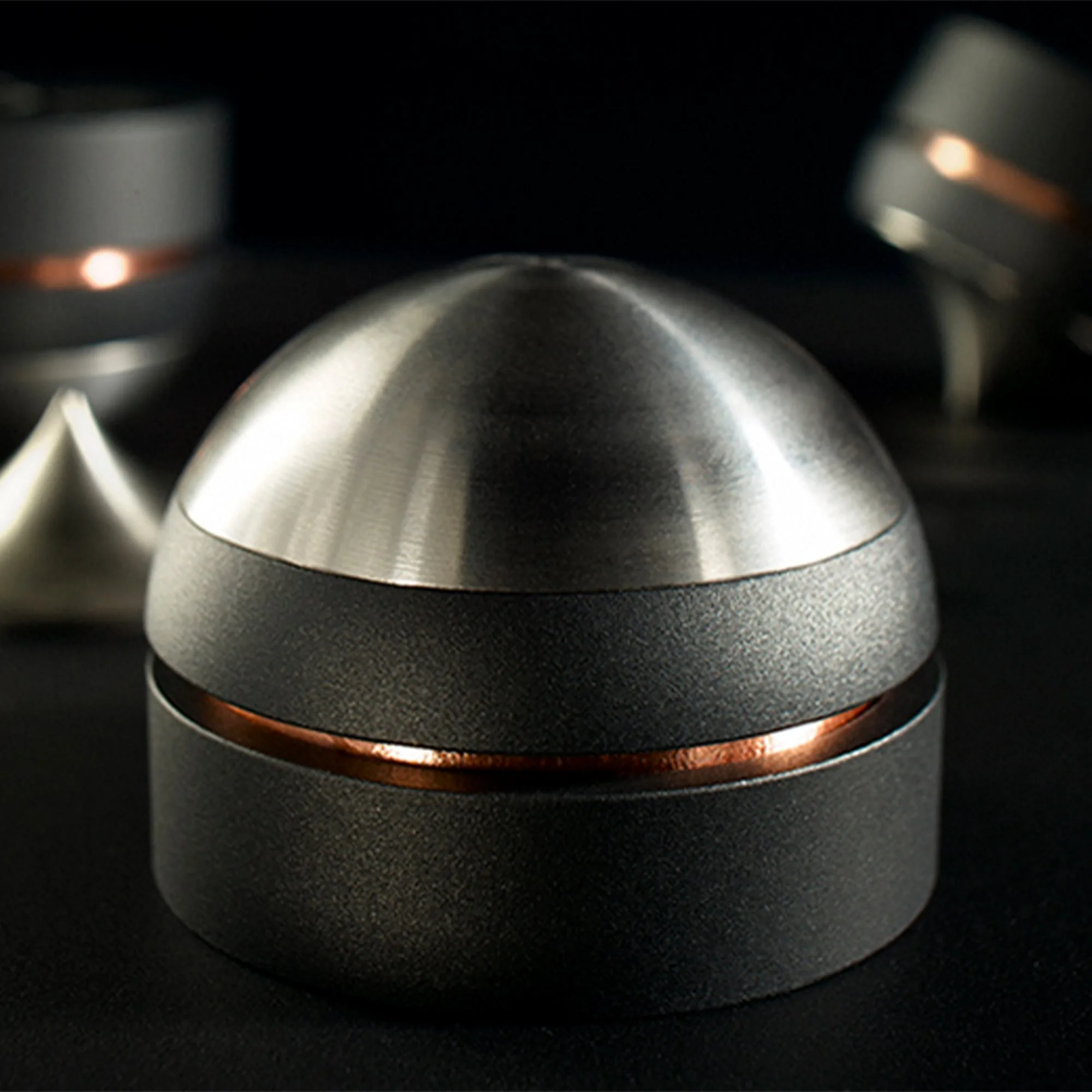
Magico QPod Isolation Feet
-
Magico QPod Isolation Feet: Vibrational wave propagation through the floor, stands, and equipment is converted into heat energy through side-to-side movement (shear deformation) within each layer of the pod. This mechanism reduces vibration-induced artifacts, potentially improving clarity and detail in your system's sound.
Choosing the Right Set: 3 vs 4 Pods
The Magico QPod is available in two variants: a set of 3 and a set of 4. The choice depends on the number of contact points your equipment needs. Many components use three points for a stable, non-rocking platform, while four pods offer a more conventional footprint for gear with four feet or a rectangular base.
Consider your equipment's existing footprint and weight distribution. If your component has three original feet or you prefer a three-point support for better leveling, the set of 3 is a natural fit. For most amplifiers, sources, or turntables with four corners, a set of 4 provides balanced support. There's no universal right answer—match the set to your specific gear.
What the QPod Doesn't Do
The QPod is a mechanical isolation device, not an electronic filter or power conditioner. It addresses physical vibration, not electrical noise from the mains. If your system suffers from hum or interference, isolation feet may help with microphonic effects but won't solve electrical issues.
Also, the QPod is designed for use under equipment, not as a replacement for loudspeaker spikes or floor couplers. Its intended application is under source components, preamps, DACs, and other front-end gear where vibration control can have the most audible impact on signal purity.
Honest Trade-Offs to Consider
The Magico QPod is a premium product with a corresponding price. It uses high-quality materials and precision machining, so it's an investment. If your system is already on a solid rack or in a low-vibration environment, the improvement may be subtle. The benefit is most noticeable in revealing systems where micro-details matter.
Another consideration: the QPod is a single-purpose device. It doesn't offer adjustable height or built-in leveling. You'll need to ensure your equipment's base is flat and the pods are placed evenly. For some users, simpler or cheaper isolation options may offer enough improvement without the cost.
Final Thoughts
The Magico QPod Isolation Feet are a well-engineered solution for reducing vibration in high-end audio systems. Their layered construction and use of aerospace-grade materials reflect a thoughtful approach to resonance management. Choose the set size that matches your equipment's footprint, and consider your system's overall sensitivity to vibration before committing. For those with revealing front-end components, the QPod can be a worthwhile addition to your setup.