Quick Answer
To spark creativity with magnetic building blocks, start with simple structures, introduce themed challenges, and encourage open-ended play. Rotate prompts and let your child lead to keep the experience fresh and engaging.
Magnetic building blocks are more than just toys—they're tools for imagination. With their satisfying click and endless possibilities, they invite kids to think in three dimensions, experiment with balance, and turn abstract ideas into tangible creations.
Whether your child is a toddler stacking their first tower or a school-age builder designing a castle, these blocks adapt to their skill level. Here’s how to guide them from basic stacking to creative masterpieces, all while having fun.
Why Magnetic Blocks Boost Creativity
Magnetic blocks encourage open-ended play, which is key to developing creativity. Unlike puzzles with a single solution, these blocks have no fixed outcome—kids can build a house, a rocket, or a robot, limited only by their imagination. This freedom helps children practice divergent thinking, where they generate multiple ideas from one starting point.
Playing with magnetic blocks also strengthens spatial reasoning and problem-solving. As kids figure out how to make two pieces stick or why a tower falls, they learn about geometry, gravity, and cause and effect—all while having fun.
- Start with a flat surface and a clear area to avoid frustration.
- Use a tray or mat to keep pieces contained and organized.
Choosing the Right Set
Not all magnetic blocks are the same. Look for sets with strong magnets and durable pieces that are safe for your child's age. The 'Magnetic Chess Board Game' from Istahly-Lebanons, for example, offers a versatile set that can be used for both chess and creative building, making it a great value for families who want multiple uses from one toy.
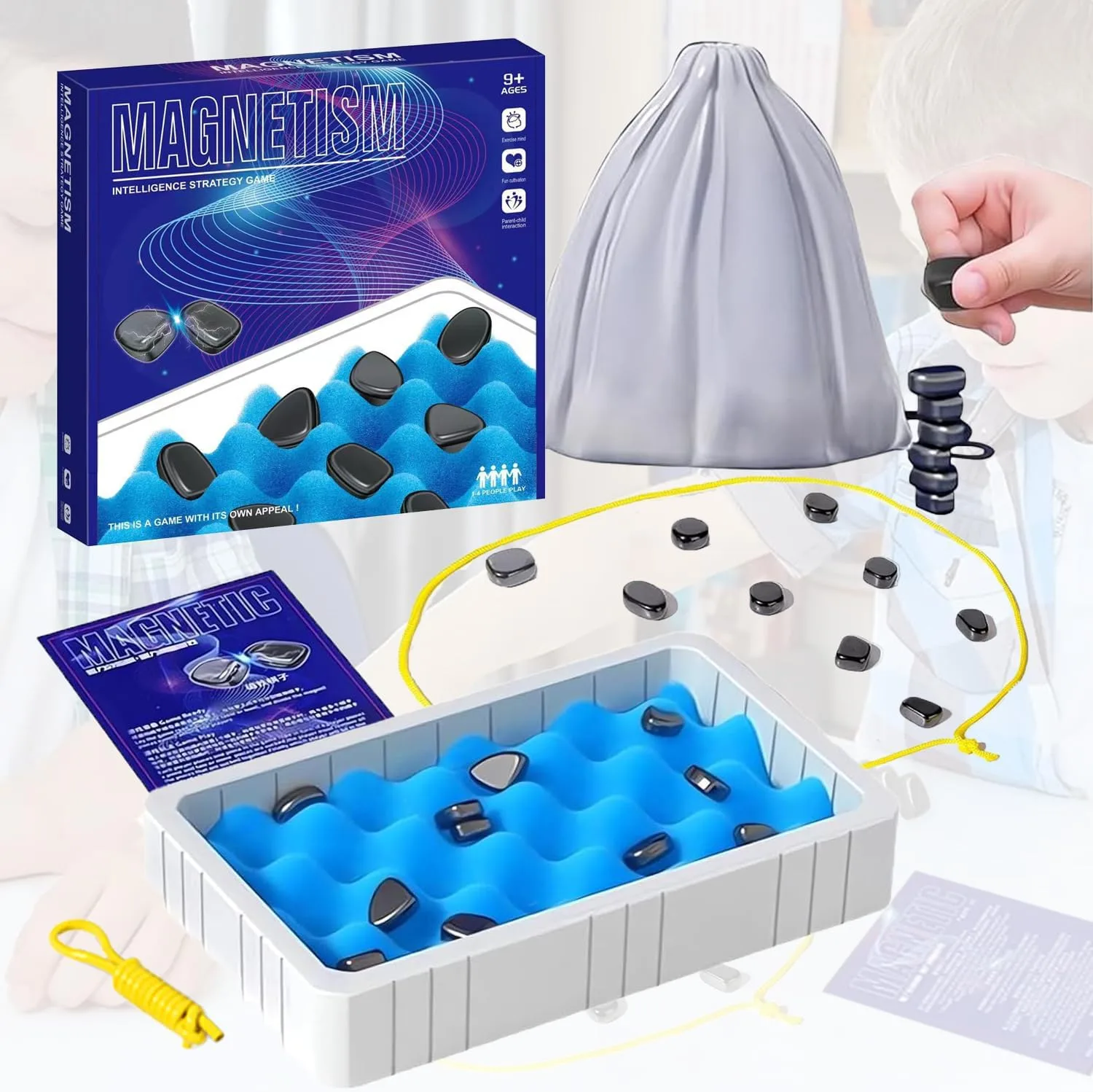
Magnetic Chess Board Game
Consider the number of pieces and shapes. A larger set with squares, triangles, and other shapes provides more building possibilities. Also, check that the magnets are securely enclosed to prevent swallowing hazards for younger kids.
Creative Play Ideas for Different Ages
For toddlers (ages 2-3), focus on simple stacking and knocking down towers. This helps them understand cause and effect and develops fine motor skills. Use large pieces that are easy to grasp and avoid small magnets that could be a choking hazard.
For preschoolers (ages 4-5), introduce patterns and shapes. Ask them to build a square, a triangle, or a letter. You can also create 2D mosaics on a flat surface—a great way to practice shape recognition and symmetry.
For school-age kids (ages 6+), encourage more complex structures like houses, animals, or vehicles. Challenge them to build a bridge that can hold a book or a tower as tall as themselves. This promotes planning and engineering thinking.
Themed Building Challenges
Themed challenges keep play exciting and push creativity. For example, set a 'build a zoo' challenge where your child creates animal enclosures and animals from blocks. Or a 'space adventure' where they build a rocket and a moon base. These themes provide a loose structure that sparks ideas without limiting possibilities.
You can also incorporate other toys, like toy figures or cars, to create a mini-world. This cross-play encourages storytelling and role-play, making the building process more meaningful and engaging.
Tips for Parents to Encourage Creativity
Your role is to facilitate, not direct. Ask open-ended questions like 'What are you building?' or 'How did you make that stay up?' rather than telling them what to build. Praise their efforts and process, not just the final product.
If your child gets stuck, offer a small hint or suggest a new piece to try, but let them solve the problem themselves. This builds resilience and confidence. Also, rotate the block sets you have out to keep interest high—put some away for a few weeks and bring them back as a 'new' toy.
5 Steps to Creative Magnetic Block Play
- Start with a simple base: Have your child build a flat square or rectangle using four blocks. This teaches stability and gives a foundation for more complex builds. Checkpoint: If the base wobbles, show them how to align the edges evenly.
- Add vertical elements: Encourage them to stack blocks upward to create walls or towers. Demonstrate how to place blocks at right angles for corners. Checkpoint: If the tower falls, discuss why it might be unstable and how to make it stronger.
- Incorporate different shapes: Introduce triangles, arches, or other shapes to add variety. Ask questions like 'What can we make with a triangle on top?' Checkpoint: If they're stuck, suggest a simple addition like a roof or a flag.
- Create a themed challenge: Set a fun theme like 'build a castle' or 'make a vehicle.' Provide props like toy animals or people to inspire storytelling. Checkpoint: If they lose interest, switch to a different theme or let them choose.
- Encourage free play: Let your child build whatever they want without instructions. This is where creativity truly flourishes. Checkpoint: Celebrate their unique creations, no matter how abstract!
Products That Enhance Creative Play
- Magnetic Chess Board Game: Embark on the thrill of multiplayer magnetic chess with our versatile chess set:Strategic Fun for All Ages: Elevate your family and friends' bonding moments with this engaging multiplayer game that sharpens logical and strategic thinking skills. Perfect for quality time and friendly competition. This set isn't just for chess—its magnetic pieces can be repurposed for creative building, giving you two toys in one and expanding the possibilities for imaginative play.
- Magic Gummy Blocks: Sensory Soft Gummy Blocks – Safe, Squishy & Fun Learning PlayBuild, stack, squeeze, and explore with colorful sensory blocks designed for little hands. Benefits: Encourages Early Learning: Helps children develop color recognition, shape matching, and problem-solving skills. Sensory Development: Soft, textured blocks stimulate touch and promote fine motor development. Safe for Babies & Toddlers: Soft material... For younger kids, these soft blocks offer a safe introduction to building and sensory exploration, complementing magnetic sets and supporting early cognitive development.
Magnetic building blocks are a fantastic way to nurture creativity and cognitive skills in kids. By following these steps and providing a supportive environment, you'll help your child build not just structures, but confidence and imagination. Ready to start? Grab a set and see what amazing things your child can create!