Quick answer
Most magnetic tile sticking problems come down to three things: dirty or obstructed magnet edges, a tile with a genuinely weak magnet, or a build that has grown too tall or too wide for its base. Wipe the magnet edges with a dry or slightly damp cloth first, then test each tile on a single upright tile to find weak ones. If all tiles hold well individually, the problem is the build, not the magnets — lower the center of gravity or add a wider base.
Clean the magnet edges before you assume the magnets are weak
Magnetic tile edges attract fine debris: dust, lint, dried playdough, sand from indoor sensory bins, and sticky residue from snacks. Even a thin film on the magnet edge reduces the contact between two tiles, so they slide apart instead of snapping. Wipe each edge with a dry microfiber cloth first. If you feel grit or stickiness, use a cloth barely dampened with water — never soak the tiles or run them under a tap, because water can get inside the sealed edge. Dry immediately and let them air out fully before play. For sticky residue, a tiny amount of mild dish soap on the cloth is enough; rinse the cloth, not the tile.
Test one tile at a time to find the weak link
If cleaning does not solve it, isolate the problem. Hold one tile upright on a table and press a second tile against it. A healthy magnet should pull the second tile into alignment with a noticeable snap and hold it there when you let go. Repeat with every tile in the set. Tiles that slide down or need pressure to stay attached have a weak magnet or a misaligned magnet inside the sealed edge. In most cases this is a manufacturing defect rather than something you caused, and no amount of cleaning will fix it. Set those tiles aside and contact the manufacturer about a replacement. Keep the weak tiles in a separate bin so they do not get mixed back into builds.
When the magnets are fine but the build keeps collapsing
A tower that falls over is usually a geometry problem, not a magnet problem. Magnetic tiles hold best when force pulls straight against a flat edge. Tall, narrow towers put sideways leverage on the joints, and a single bump topples them. Wide, low structures spread the load and stay put. If your child wants height, build a wider base two or three tiles across, then taper upward. Ramps and bridges need support underneath, not just at the ends. On smooth floors, a non-slip mat or a low-pile rug gives the bottom layer something to grip. Also check that the tiles are aligned edge-to-edge; a tile pressed on at an angle has less magnet contact and will pop off under any weight.
Diagnosis: match the symptom to the fix
- Tiles slide apart instead of snapping: Run a dry finger along the magnet edge. If you feel grit, film, or stickiness, wipe the edge with a dry cloth, then a barely damp cloth, and dry fully. Do not submerge tiles. If the edges are clean and tiles still slide, move to the single-tile test.
- One or two tiles never hold, even against a clean tile: Test each tile upright against a known-good tile. A weak tile will not snap into alignment and will fall when you let go. This points to a weak or misaligned internal magnet. Set weak tiles aside and contact the manufacturer. Cleaning will not restore them.
- Every tile holds individually, but the build collapses: Look at the base. Narrow, tall builds put sideways leverage on the joints. Rebuild with a wider base two or three tiles across, align edges flat, and add a non-slip mat under the bottom layer. If the build still falls, reduce height or add supports under ramps and bridges.
- Tiles hold on the table but not on a wall or vertical surface: Magnetic tiles are not designed to stick to walls, refrigerators, or glass. They only attract other magnetic tiles. A vertical build needs a frame of tiles around it, not a wall mount. If you need wall-mounted play, choose a different product category. Magnetic tiles are a tabletop and floor toy.
Products that help with common sticking and storage problems
- House 28 Piece Set: The House 28-Piece Set includes unique door and staircase pieces plus a sheet of reusable stickers. Door and staircase pieces create openings and step-ups that can make a house build feel unstable if the walls around them are not supported. Build the walls first, then fit the door and stairs into a finished frame rather than building outward from them.
- MAGNA-TILES Storage Bin: The Storage Bin holds up to 300 MAGNA-TILES pieces and unzips into an interactive play-mat. Keeping tiles in a closed bin keeps dust and grit off the magnet edges, which is the most common cause of tiles that will not stay together. The play-mat surface also gives the bottom layer of a build more grip than a bare table.
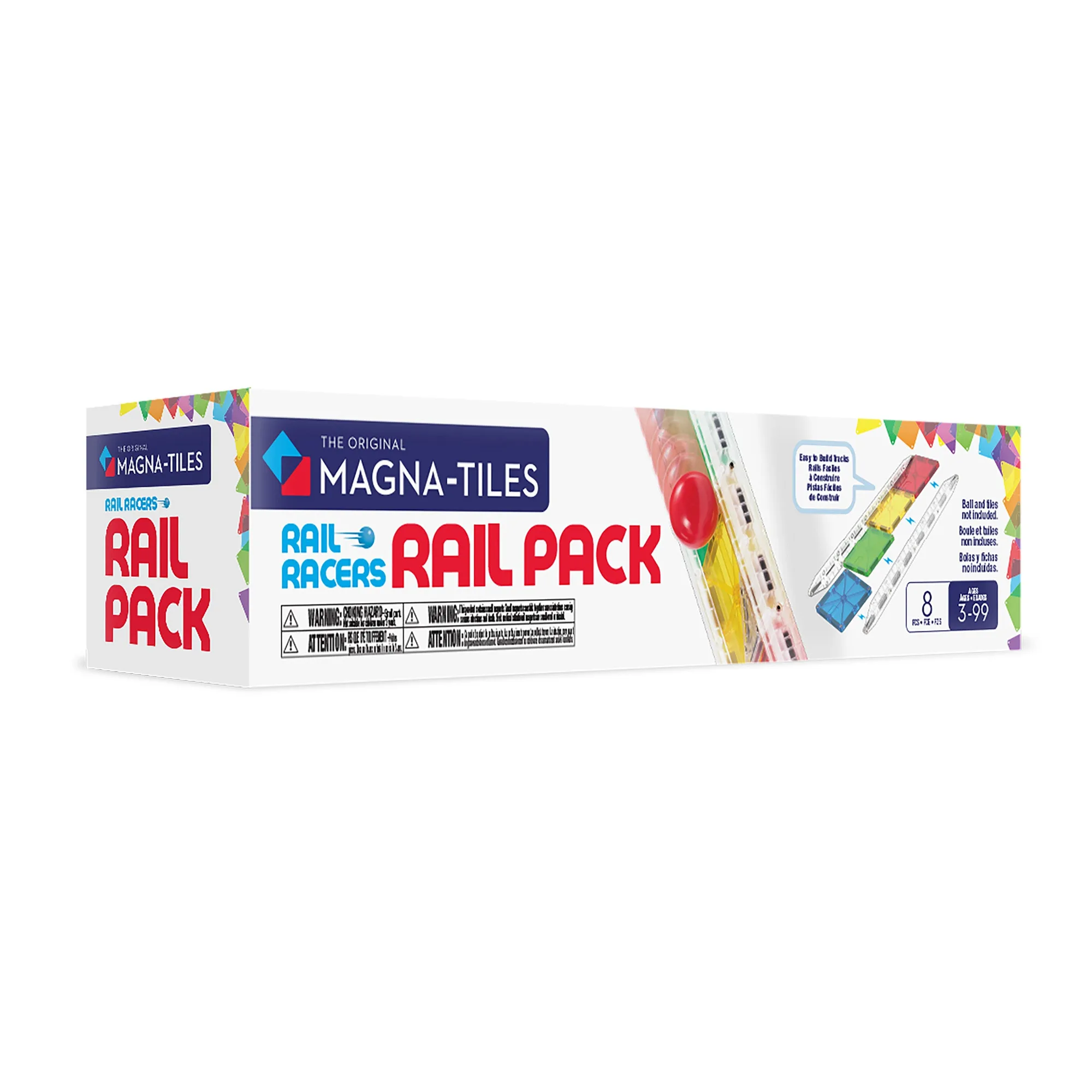
- Rail Racers Rail Pack: The Rail Racers 8-Piece Rail Pack adds eight clear rails for bigger tracks, higher ramps, and longer runs. Rails change how weight moves through a build. If a rail run keeps separating, the cause is usually the support structure under the rails rather than the magnets, so reinforce the base before adding more rails.