Start with the port, not the controller
A magnetic cable only helps if the device end matches. The Armor3 set is built around USB-C, and the listing names Nintendo Switch, PS4, Xbox One, Android and more as compatible systems. That is a useful starting list, but it is not a blanket promise for every retro controller, handheld or charging dock in your collection.
Before you buy, look at the charging port on the device you actually want to charge. If it is USB-C and the device charges over a standard cable, this set is a reasonable candidate. If the port is micro-USB, Mini-USB, a proprietary dock connector or a barrel jack, the supplied magnetic heads are not described as covering it, so do not assume an adapter is included.
What the Armor3 set actually includes
-
Magnetic USB C Charging Cable Set - Armor3: USB-C cable for various systems, with a magnetic connection to the included cable. The magnetic breakaway is the feature you are paying for; the cable itself is a USB-C charging cable.
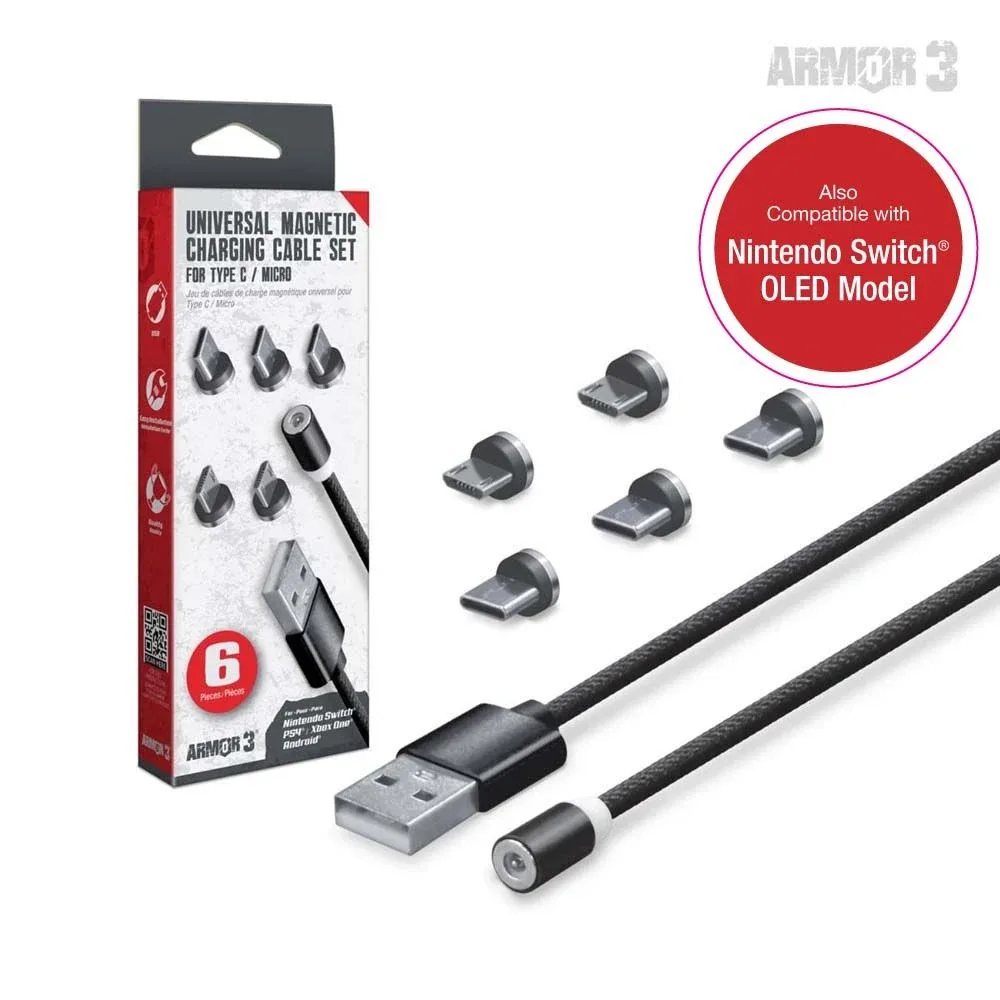
Magnetic USB C Charging Cable Set - Armor3
-
Magnetic USB C Charging Cable Set - Armor3: Insert the appropriate magnetic head into your chargeable USB device. The head stays in the device and the cable snaps to it, so the head must match your device's port.
-
Magnetic USB C Charging Cable Set - Armor3: Compatible with Nintendo Switch, PS4, Xbox One, Android and more. These are the systems the listing names; treat other devices as unconfirmed until you check the port.
The silver color note matters more than it sounds
The listing carries a clear note: the cable is silver, even though the product image shows black. If you are matching a cable to a black console, a dark controller or a visible charging setup, plan for silver. This is a small detail, but it is the kind of mismatch that leads to returns when the photo and the shipped item disagree.
Where a magnetic USB-C cable earns its place
Magnetic charging is most useful when the charging port is awkward to reach or when you plug and unplug the same device often. It is less useful when the device lives on a shelf and is charged once a month.
- Controllers you rotate in and out: If you swap between a Switch Pro-style pad, a PS4 controller and an Android gamepad, a magnetic head left in each device can reduce wear on the ports. The listing names those systems, so they are the strongest candidates.
- Handhelds with exposed USB-C ports: A magnetic connection can be convenient on a handheld that is charged frequently, provided the port is USB-C and the head seats without strain. The listing does not document fit by handheld model, so check clearance around the port before relying on it.
- Shared charging cables in a household: One cable with several magnetic heads is easier to hand around than a drawer of separate cables, as long as every device in the rotation uses a compatible head.
Where it is the wrong tool
The supplied information does not confirm data transfer, fast-charging standards, power ratings or compatibility with docks and charging stands. Treat those as open questions rather than features.
- Devices with non-USB-C ports: Retro handhelds and controllers with micro-USB, Mini-USB or proprietary ports are not covered by the listed compatibility. A USB-C magnetic head will not fit them.
- Docks and stands that enclose the port: A magnetic head adds a small plug at the port. If your dock or charging stand expects a bare connector, the head may interfere. The listing does not describe dock compatibility, so test the fit before committing.
- Charging while playing with a cable that must stay put: Magnetic connections are designed to detach easily. If you need a cable that resists being pulled out during play, a standard USB-C cable is the more predictable choice.
A quick pre-purchase check
Confirm three things: your device charges over USB-C, you are comfortable leaving a magnetic head in the port, and you are happy with a silver cable. If all three are true, the Armor3 set is a low-cost way to try magnetic charging. If any one is false, a plain USB-C cable is the safer buy.
The catalog price is USD 5.35 against a comparison price of USD 7.99, so the risk is small, but the compatibility limits are the same either way. The listing does not include care instructions or operating steps beyond inserting the head and connecting the cable, so follow the device manufacturer's charging guidance rather than assuming the cable changes what your device can accept.