Quick Answer
To make AIoT teaching more engaging, focus on hands-on projects, real-world connections, and collaborative learning. Start with clear objectives and choose tools that let students see immediate results.
Why Hands-On AIoT Learning Works
AIoT (Artificial Intelligence of Things) combines AI and IoT, making it a rich area for STEM education. However, abstract concepts can lose students quickly. Hands-on projects that involve sensors, data, and smart devices keep students engaged because they can see and touch what they're learning.
In a workshop setting, this engagement is even more critical. You have limited time, so every activity should be purposeful. By structuring your workshop around a central project, you give students a clear goal and a sense of accomplishment when they complete it.
Trade-Offs: Time vs. Depth
One common trade-off in AIoT workshops is time versus depth. You might want to cover many concepts, but deep learning requires time for experimentation and troubleshooting. Prioritize a few key concepts and allow ample time for hands-on work.
Another trade-off is between guided instruction and open exploration. While guided steps ensure everyone finishes, open exploration fosters creativity and problem-solving. A balanced approach—structured milestones with room for experimentation—works best.
Steps to Plan an Engaging AIoT Workshop
- Define Clear Learning Objectives: Start by deciding what students should know or be able to do by the end. For example, 'Students will build a smart environment monitor that sends data to a dashboard.' This gives focus and a measurable outcome. Checkpoint: Are your objectives specific, measurable, and achievable within the workshop time?
- Choose the Right Tools and Platform: Select hardware and software that are age-appropriate and reliable. For AIoT, a platform like CyberPi offers integrated sensors, Wi-Fi, and a simple coding interface, making it ideal for beginners. Ensure you have enough units for small groups. Checkpoint: Test all equipment beforehand to avoid technical glitches during the workshop.
- Design a Central Project with Real-World Relevance: Create a project that solves a real problem, like a smart classroom that adjusts lighting based on occupancy. This makes learning meaningful and demonstrates AIoT's practical applications. Checkpoint: Does the project connect to students' lives or future careers?
- Structure the Workshop with Milestones: Break the project into small, achievable steps. For example, first set up the hardware, then code a basic sensor reading, then add Wi-Fi data transmission, and finally create a simple AI feature like pattern recognition. Checkpoint: Have you built in time for troubleshooting and questions at each milestone?
- Incorporate Collaboration and Peer Learning: Have students work in pairs or small groups. Encourage them to share solutions and help each other. This fosters communication and problem-solving skills, and reduces the pressure on you to answer every question. Checkpoint: Are roles within groups clear (e.g., coder, builder, tester) to ensure everyone participates?
- End with Reflection and Showcase: Dedicate the last 15-20 minutes to having each group present their project, explain their process, and discuss challenges. This reinforces learning and gives you feedback for future workshops. Checkpoint: Have you prepared guiding questions to prompt discussion during presentations?
Workshop Resource
-
[Workshop] 讓 AIoT 教學更具吸引力 - 香港專場培訓: This training is a live workshop using CyberPi, held in Hong Kong (Kowloon, Kwun Tong) in Cantonese, specifically for current primary and secondary school teachers. If you're a teacher in Hong Kong, this workshop offers a practical, local opportunity to see AIoT teaching methods in action and network with peers.
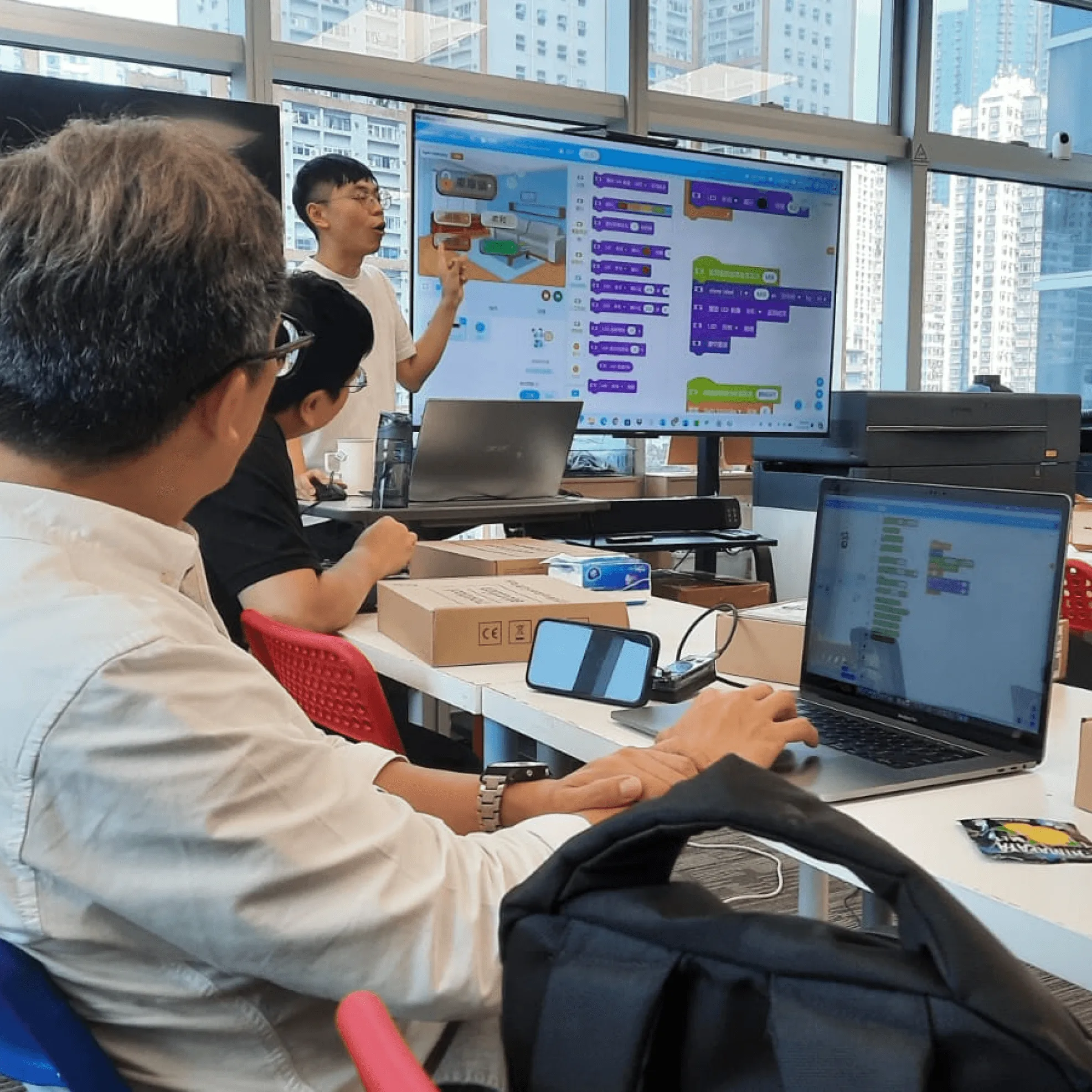
[Workshop] 讓 AIoT 教學更具吸引力 - 香港專場培訓