Quick answer
Most mandoline injuries are not caused by a dull blade or a cheap slicer. They happen when your hand pushes the last few millimeters of a vegetable because the finger guard was never used, did not fit, or was set aside. Use the guard on every stroke, stop slicing when the food gets short, and switch to a hand slicer like the Dreamfarm Flapple for small or soft items.
Why the last slice is the dangerous one
A mandoline holds a fixed blade in a runway. Your hand controls the food, and the blade never moves. That design is fast and consistent, but it also means protection depends entirely on what sits between your fingers and the edge. The first 80 percent of a cucumber or potato is easy. The risk climbs as the food shrinks, because your fingertips naturally move closer to the blade to keep the food flat and stable.
The fix is not a sharper blade or a slower hand. It is deciding in advance when the food becomes too small to push by hand and what you will do at that point. For most home cooks, that point is roughly the last 2 to 3 centimeters of a vegetable, or any piece that will not sit flat on the runway.
Set up the mandoline before the first slice
Place the mandoline on a damp towel or a non-slip mat so it cannot slide. Set the thickness you actually need, then lock it. A mandoline that shifts mid-stroke is the second most common cause of cuts, because your hand follows the food when the runway moves.
Fit the finger guard to the food, not the other way around. If the guard will not grip a small onion or a soft tomato, that food is not a mandoline job. Cut it in half so it sits flat, or use a knife. Check that the guard's pins or prongs are seated in the food before you start, and keep your thumb on top of the guard, not on the food.
The stroke that keeps your fingers safe
Push with the palm of your hand on the guard, not with your fingertips. Keep your wrist straight and let your arm do the work. Slide the food down and back in one smooth pass, then lift the guard slightly before the return stroke so it does not drag the food back over the blade.
When the guard reaches the end of its travel, stop. Do not add a second push to get one more slice. Lift the guard, remove the remaining piece, and either discard it or finish it with a knife on a cutting board. That small leftover is exactly where most mandoline cuts happen, and no guard design can fully protect a piece that is too small to hold.
When a mandoline is the wrong tool
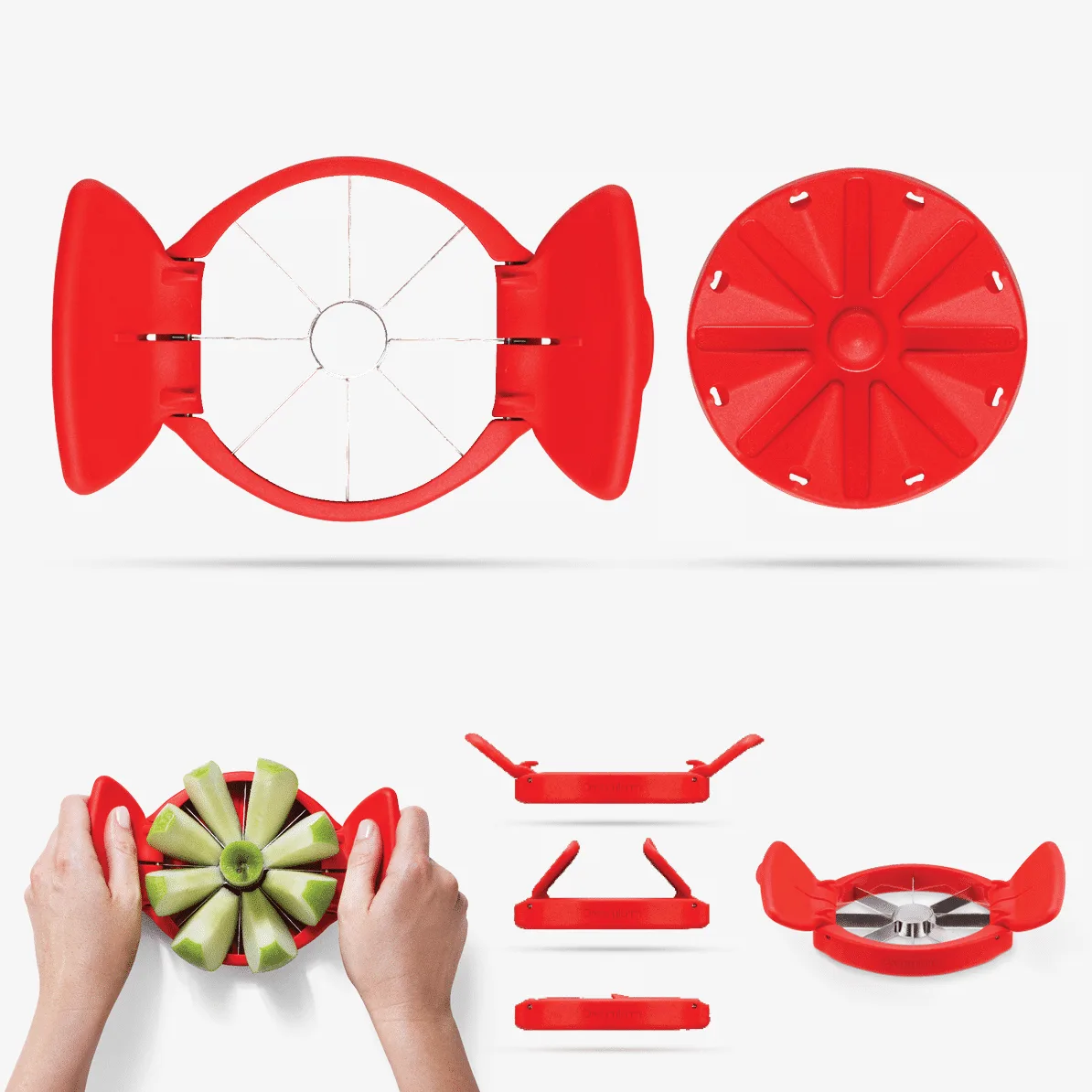
Not every slicing job needs a blade runway. Apples, for example, are usually sliced and cored in one motion, and a fold-flat slicer does that without exposing your hand to an open blade. The Dreamfarm Flapple is an ultra-sharp apple slicer and corer that slices and cores in one simple motion and folds flat for storage. It is not a mandoline and does not offer adjustable thickness, but for everyday apple prep it removes the hand-near-blade problem entirely.
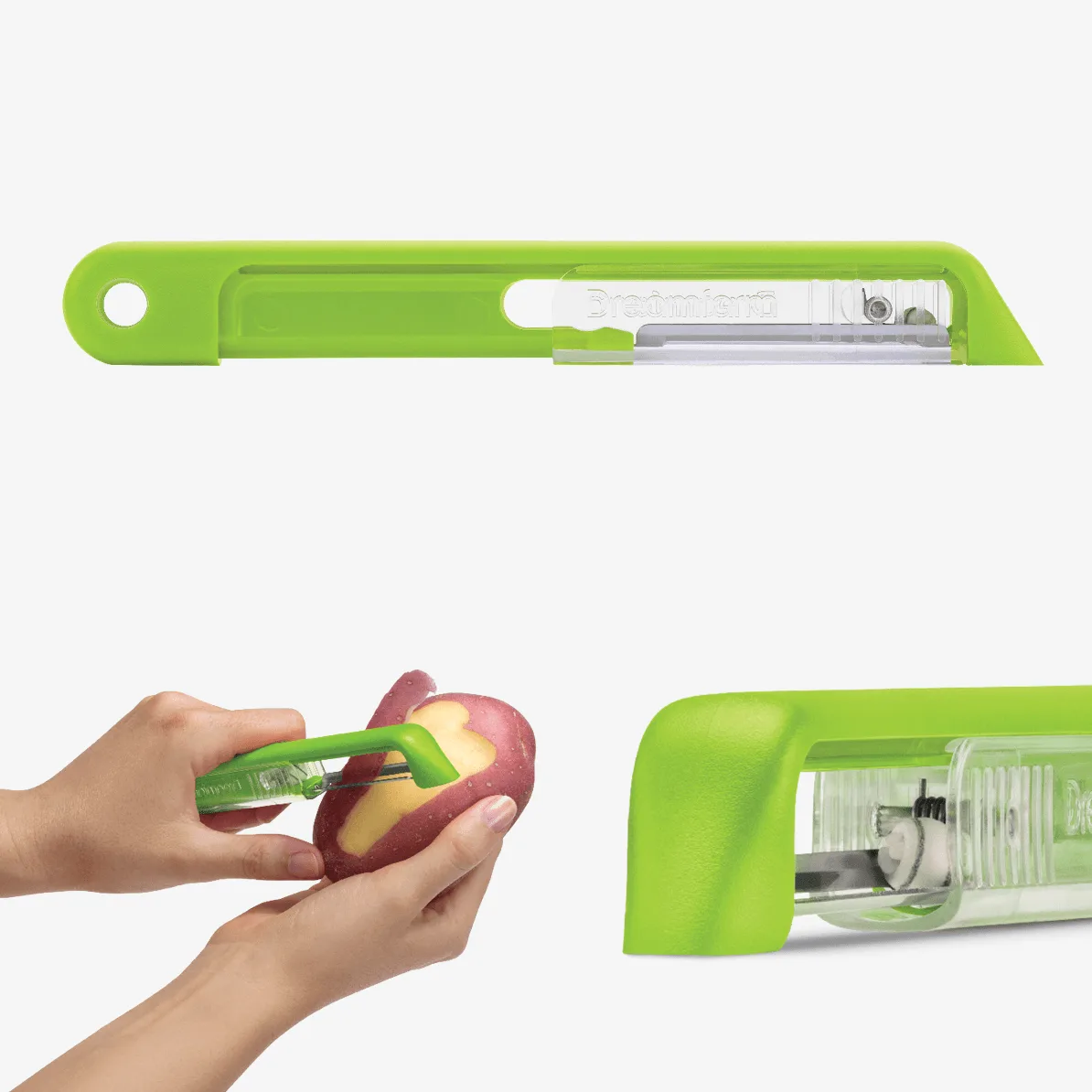
If you peel vegetables before slicing them, a self-sharpening peeler reduces another source of hand strain. The Dreamfarm Sharple sharpens its blade each time the cover is opened or closed, so you are not pressing harder to compensate for a dull edge. That matters for mandoline safety because a dull peeler encourages the same bad habit as a dull slicer: more pressure, less control.
Diagnose your mandoline cuts
- Symptom: you cut yourself on the last few slices: Likely cause: the food became too short to hold safely and you kept pushing by hand instead of stopping. Corrective action: stop when the food is about 2 to 3 centimeters long, remove it, and finish with a knife. If you keep doing this, choose a hand slicer for small items.
- Symptom: the guard slips off the food mid-stroke: Likely cause: the food is too soft, too round, or too small for the guard's prongs to grip. Corrective action: cut the food so it sits flat, or use a knife. A guard that does not grip is not protection.
- Symptom: the mandoline slides or the thickness setting moves: Likely cause: the slicer is not on a non-slip surface, or the thickness lock was not tightened. Corrective action: set it on a damp towel, lock the thickness, and test one slice before committing. If it still moves, stop and use another tool.
- Symptom: you press harder because the blade drags: Likely cause: the blade is dull or the food is too dense for the setting. Corrective action: stop pushing harder. Replace or resharpen the blade, or switch to a tool designed for that food. Stop entirely if the blade cannot be serviced.
Tools that reduce hand-near-blade risk
- Flapple: The Dreamfarm Flapple is an ultra-sharp apple slicer and corer that slices and cores apples in one simple motion and folds flat for space-saving storage. For apples and similar round fruit, it removes the need to push food past an exposed blade by hand, which is where most mandoline cuts occur.
- Sharple: The Dreamfarm Sharple is a vegetable and potato peeler with a self-sharpening mechanism that hones the blade each time the cover is opened or closed. A peeler that stays sharp means less pressure and better control during prep, so you are less likely to rush the slicing step that follows.
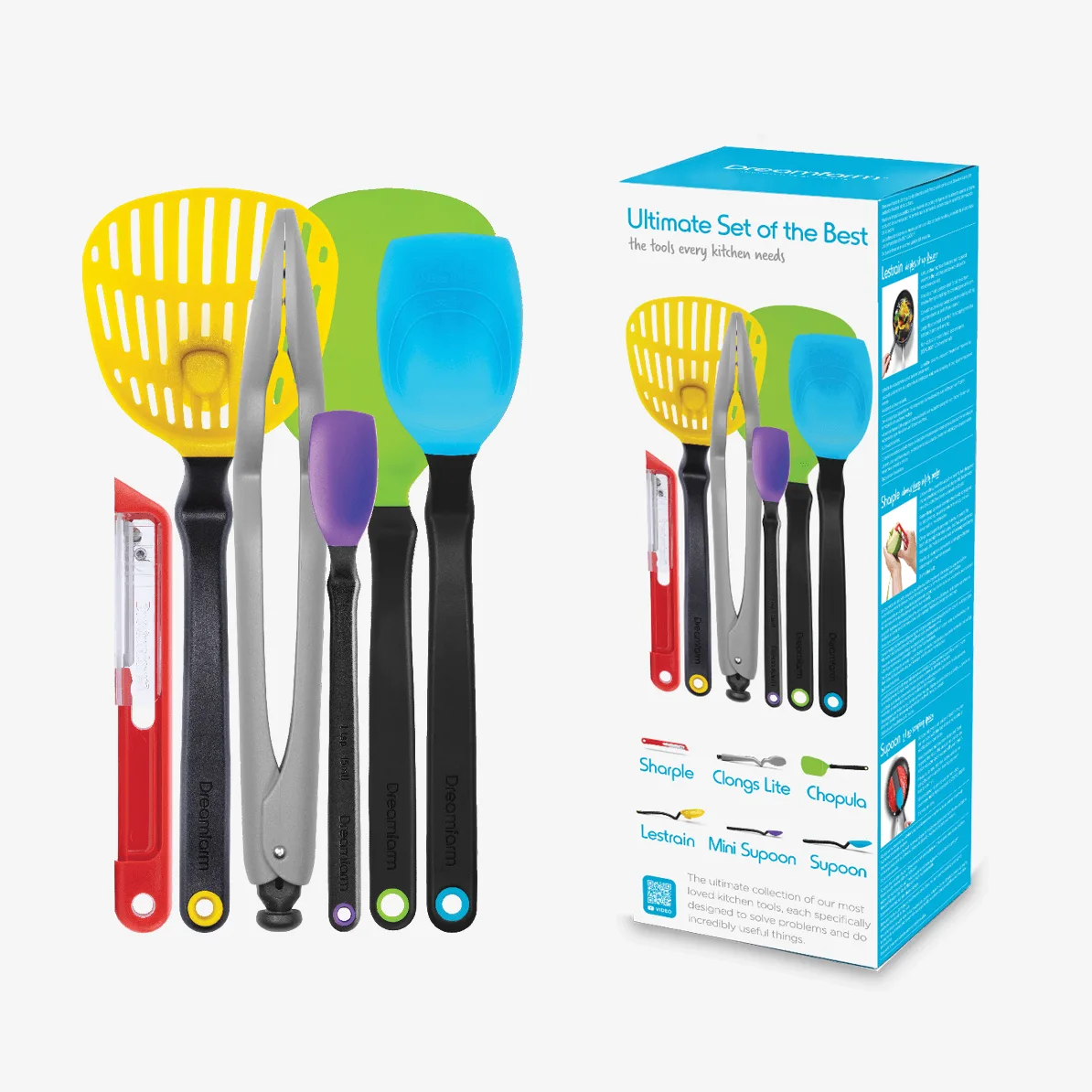
- Ultimate Set of the Best: The Ultimate Set of the Best brings together a curated selection of Dreamfarm's most popular kitchen tools in one collection for everyday prep, cooking, and serving. If you are replacing a mandoline with safer prep tools, a set covers the common slicing, peeling, and serving jobs without buying each piece separately.