Quick answer
Dust the tambour slats weekly with a dry microfiber cloth, clean the maple case only with a damp cloth and mild soap when needed, and keep indoor humidity steady around 40–50%. If the doors start to stick, stop forcing them and check the tracks for debris or swelling before doing anything else.
Why tambour doors need a different routine than flat cabinet doors
Tambour doors are made of many narrow slats that slide along a curved track. Dust and grit collect in the gaps between slats and in the track itself, so a quick wipe of the cabinet face is not enough. The slats also move independently, which means a small obstruction can make the whole door feel stiff.
Solid maple responds to humidity by expanding and contracting. In a dry room the slats can shrink slightly and rattle; in a damp room they can swell and bind in the track. That is why humidity control matters more for a tambour cabinet than for a painted or veneered piece.
What to avoid on solid maple
Skip silicone polishes, oil soaps, and abrasive cleaners on maple. They can leave a residue that dulls the finish or make future touch-ups difficult. Avoid soaking the wood or letting water sit in the track, and do not use a steamer or wet vacuum near the slats.
If you live in a very dry climate, a whole-home humidifier is more effective than placing a small humidifier right next to the cabinet. Direct moisture can warp the slats.
Step-by-step care routine
- Dust the slats and track weekly: Use a dry microfiber cloth or a soft brush vacuum attachment. Run the cloth along the direction of the slats, then vacuum the top and bottom tracks with a crevice tool on low suction. Common mistake: spraying furniture polish directly onto the tambour, which leaves sticky residue in the gaps. Check the track for grit every time you dust; grit is the most common cause of a stiff door.
- Clean the maple case only when needed: Wipe the flat maple surfaces with a cloth wrung out in a solution of a few drops of mild dish soap and warm water. Dry immediately with a clean cloth. Common mistake: using the same damp cloth on the tambour slats, which can push water into the track. Keep the tambour itself dry; clean slats with a barely damp cloth and dry them right away.
- Control indoor humidity: Aim for 40–50% relative humidity year-round. In dry winter months, use a humidifier in the room but keep it at least a few feet from the cabinet. In humid months, run a dehumidifier or air conditioning. Common mistake: placing the cabinet directly over a heating vent or in a damp basement. A cheap hygrometer near the cabinet tells you more than guessing by feel.
- Fix a sticking tambour door without forcing it: Stop sliding the door as soon as it resists. Inspect the track with a flashlight for debris, a slipped item, or a bent slat. Vacuum out loose debris and try the door again gently. If it still sticks, check the room humidity; if the air is very damp, dry the room and wait 24 hours before trying again. Common mistake: pulling hard on the door, which can crack a slat or pull the door off its track. If the door is still stuck after cleaning and humidity adjustment, do not oil the track; contact a furniture restorer.
- Exercise the doors and tray monthly: Open and close both tambour doors fully, and pull the interior tray in and out a few times. This keeps the tracks and glides from seizing up. Common mistake: leaving the doors closed for months in a humid room, which encourages swelling and sticking. A monthly open-and-close routine is the simplest way to catch a problem early.
Product note
-
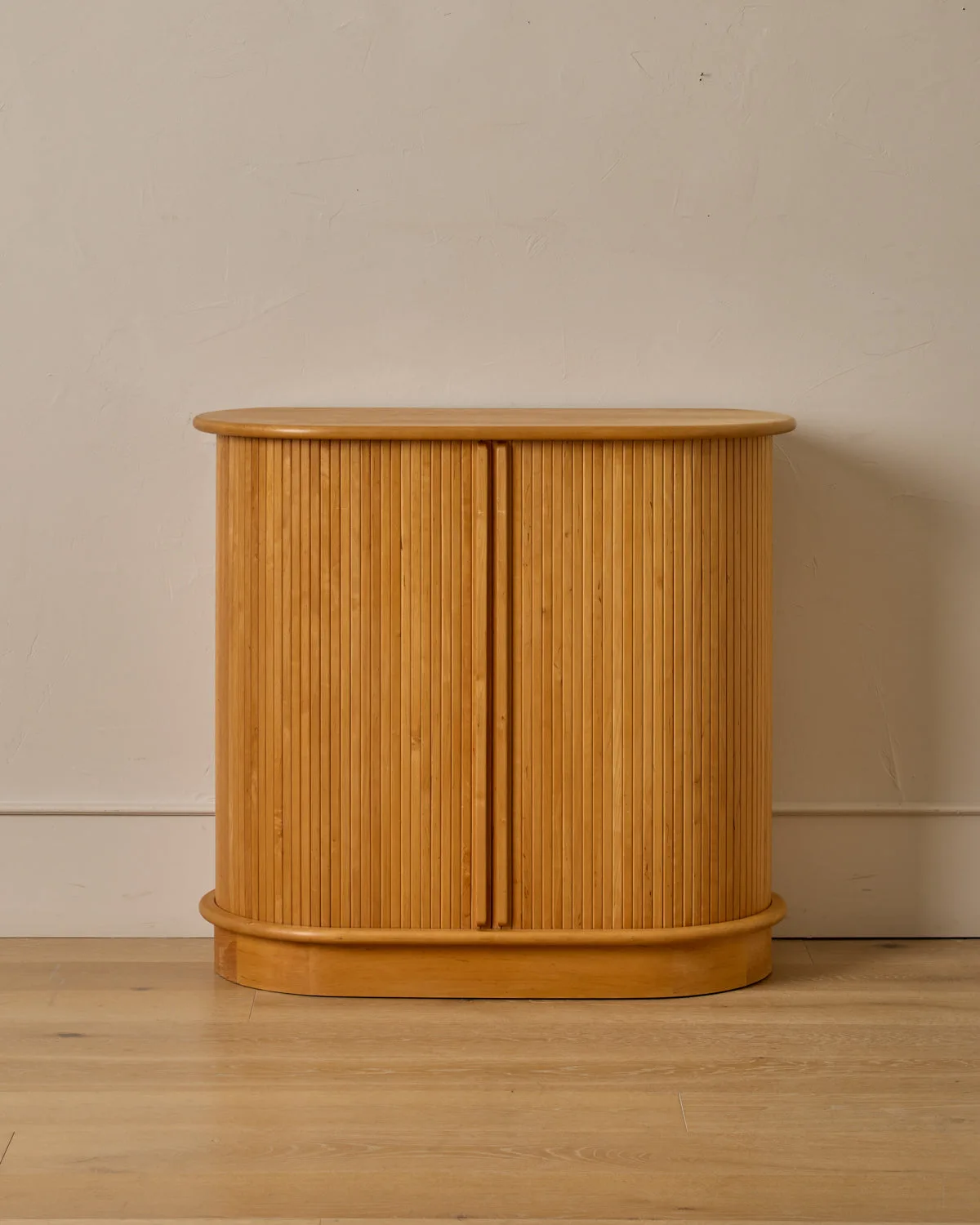
Maple Cabinet with Tambour Doors: This Dyrlund maple cabinet has two tambour doors that slide into the sides, plus an interior pullout tray and fixed shelf. The pullout tray and fixed shelf make the interior easy to organize, but they also mean you should check that the tray glides freely before closing the doors.
Maple Cabinet with Tambour Doors