Quick answer
Place the Market Loft against a low-traffic wall to define the dramatic play zone, then introduce the Wedgies Career Set in small batches tied to the loft's counter and awning areas. Rotate figures weekly so the space stays fresh without overwhelming young children.
Why the loft and figures work better together than alone
The Market Loft already combines gross motor play, dramatic play, and open-ended exploration in a footprint built for smaller preschool classrooms. Adding the Wedgies Career Set gives children concrete roles to act out at the counter and under the awning, which turns a climbing structure into a story-driven market. Without figures, the loft can become a purely physical play space; with too many figures out at once, children may sort and scatter them instead of playing. The sweet spot is a small, themed selection that matches the market setting.
Plan for the loft's footprint, not an ideal classroom
The Market Loft is designed to fit a variety of smaller preschool classrooms, but it still needs clearance for children to move around the counter and awning. Measure your available wall length and leave a clear path on at least two sides. If your room is tight, the loft can anchor a corner rather than a full wall. Avoid placing it next to a quiet reading area, because dramatic play generates noise and traffic.
Step-by-step setup
- Choose and clear the zone: Pick a low-traffic wall or corner with at least two open sides for entry and exit. Remove other furniture from the immediate area so children can approach the counter and awning without squeezing past shelves. Check that a child can walk around the loft while another child plays at the counter.
- Position the loft for visibility: Place the Market Loft so an adult standing anywhere in the room can see the counter and the lower play area. If the loft blocks a sightline, rotate it or shift it along the wall. If you cannot see a child standing at the counter from the main teaching spot, reposition the loft.
- Set up the market counter: Use the counter space and awning as the focal point. Add a few open-ended props such as empty baskets or play money only if they support the market theme; avoid filling every surface on day one. Leave at least half the counter clear so children have room to arrange their own props.
- Introduce a small figure set: From the Wedgies Career Set, pull only four to six figures that fit a market scenario, such as the chef, gardener, and architect. Keep the rest stored and out of sight. If children are scattering figures rather than using them in play, reduce the number to three.
- Model one short role-play scene: Demonstrate a simple exchange at the counter, such as a gardener delivering produce to a chef. Narrate the roles briefly, then step back and let children take over. Stop modeling as soon as a child begins to direct the scene; continued adult narration can take over the play.
- Rotate figures weekly: Swap two or three figures each week to introduce new careers and keep the market scenario evolving. Store unused figures in a labeled container near the loft so children can request them. Rotate after a weekend or long break, not mid-session, to avoid interrupting established play.
Product facts
-
Market Loft: The Market Loft combines gross motor play, dramatic play, and open-ended exploration in a footprint designed for smaller preschool classrooms. You can justify dedicating a corner to one multi-purpose structure instead of separate climber and playhouse zones.
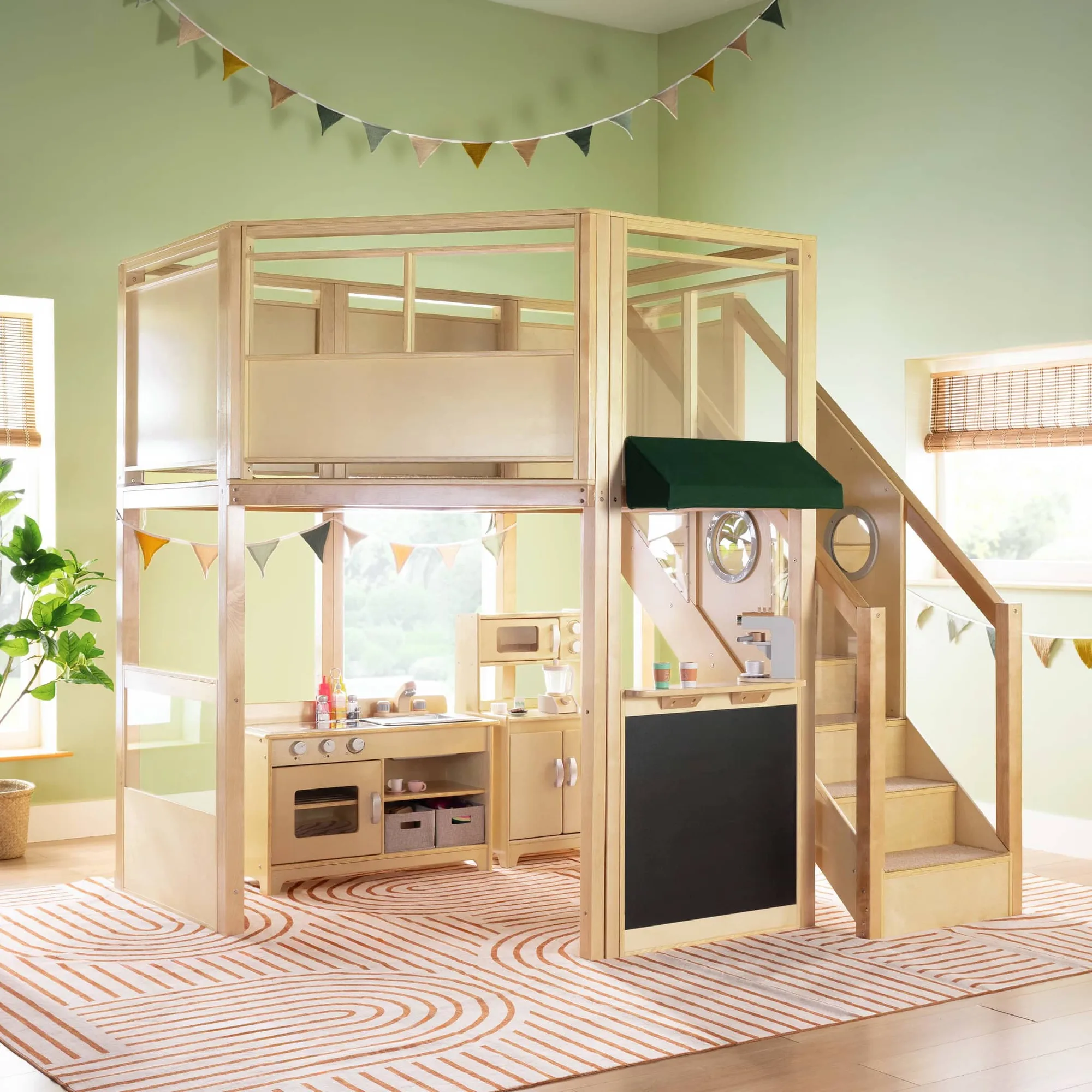
Market Loft
-
Wedgies Career Set: The Wedgies Career Set includes 30 multi-cultural wooden figures representing roles such as pilot, chef, teacher, architect, and gardener. A broad career mix lets you rotate a small market-themed subset while keeping the rest stored for later weeks.
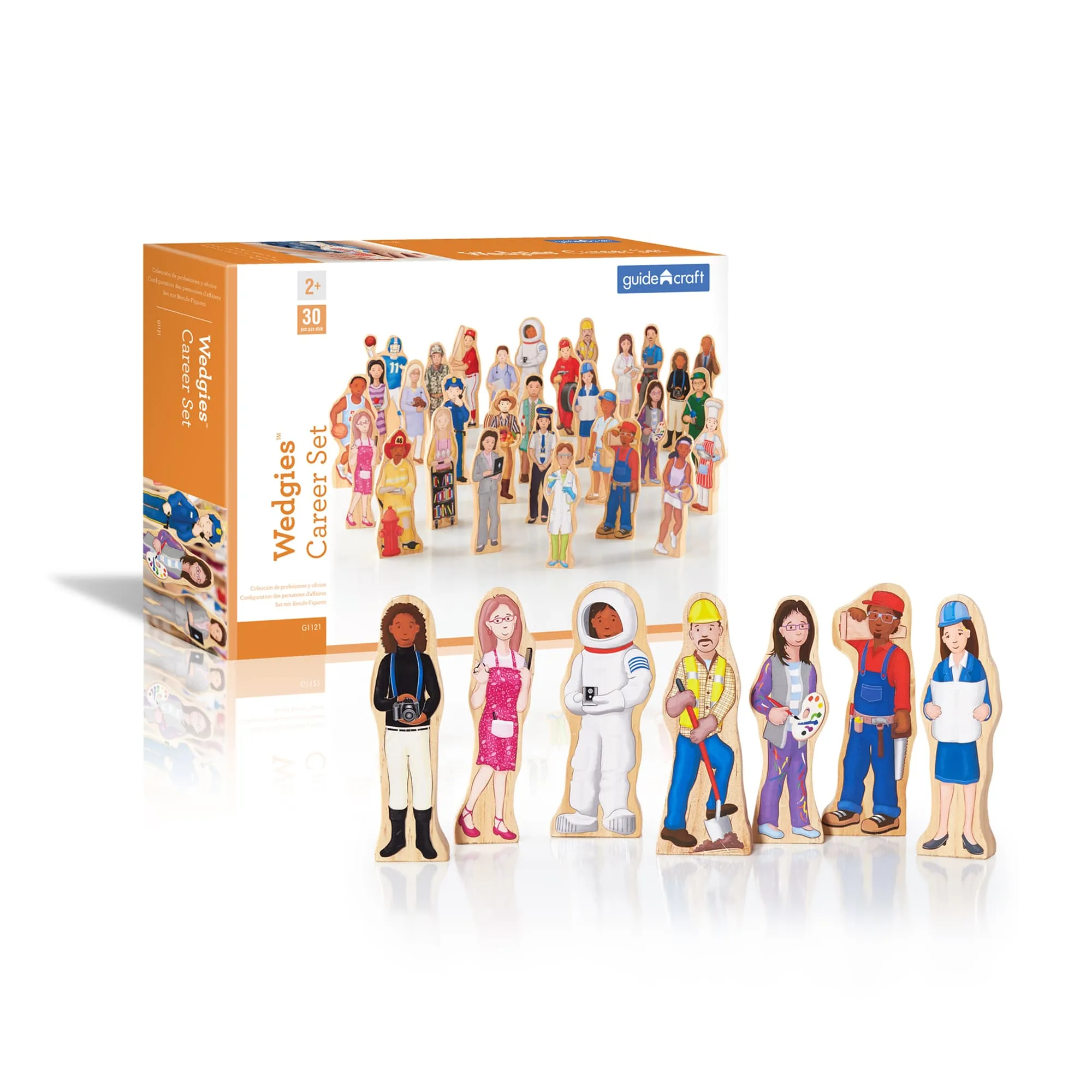
Wedgies Career Set