Quick answer
Match the contact point length to your dog's coat by starting with the shortest points that reliably touch skin, then moving up one size for thick or double coats. For most short-haired dogs, standard or micro probe contact points work; for thick fur, use longer points like 3/4-inch thick fur contact points.
Why coat type dictates contact point length
Contact points must reach through the fur to make consistent skin contact. If they are too short, the e-collar may deliver inconsistent stimulation; if too long, they can cause discomfort or skin irritation. Coat density, not just hair length, matters: a dense double coat can require longer points than a single coat of similar length.
Micro probe contact points are designed for very short or thin coats, while standard points suit most medium coats. For thick fur, longer points such as 3/4-inch thick fur contact points help maintain contact without pressing too hard.
When to size up or down
If your dog reacts inconsistently or you need to increase stimulation levels frequently, the points may be too short. Conversely, if your dog shows discomfort or you notice skin redness after sessions, the points may be too long or too tight. Always check fit before each session and adjust as needed.
Remember that contact points are just one part of the equation: proper collar fit and receiver placement also affect performance. This guide focuses on length selection, but always follow your e-collar manufacturer's guidelines for safe use.
Step-by-step: matching contact point length to your dog's coat
- Assess your dog's coat type: Determine whether your dog has short, medium, or thick/double fur. Run your fingers through the coat to gauge density and length. Common mistake: assuming hair length alone indicates needed point length; dense undercoat can require longer points even if topcoat is short. Check for a dense undercoat, not just visible hair length.
- Start with the shortest points that work: Begin with standard or micro probe contact points if your dog has a short coat. Test the fit by placing the collar on your dog and checking that the points touch skin without pressing deeply. Common mistake: starting with overly long points, which can cause discomfort. Use the shortest points that reliably contact skin.
- Size up for thick or double coats: If your dog has a thick or double coat, switch to longer points such as 3/4-inch thick fur contact points. Ensure the points reach through the fur to the skin without needing excessive collar tightness. Common mistake: over-tightening the collar to compensate for short points, which can lead to skin irritation. Choose points that reach skin without over-tightening the collar.
- Verify fit and comfort: With the collar on, check that the points are making consistent contact and that your dog shows no signs of discomfort. You should be able to fit one finger under the strap. Common mistake: ignoring subtle signs of discomfort, such as scratching or head shaking. Perform a comfort check before every training session.
- Monitor and adjust as needed: During training, watch for inconsistent responses or the need to increase stimulation levels, which may indicate the points are too short. If you see skin redness or your dog seems sore, the points may be too long. Adjust length accordingly. Common mistake: continuing with ill-fitting points because the dog 'seems fine'. Re-evaluate point length if your dog's response changes.
Product facts
-
Thick Fur Contact Points 3/4″: 3/4-inch length suited for thick-coated breeds These longer points help reach through dense fur to maintain consistent skin contact during training.
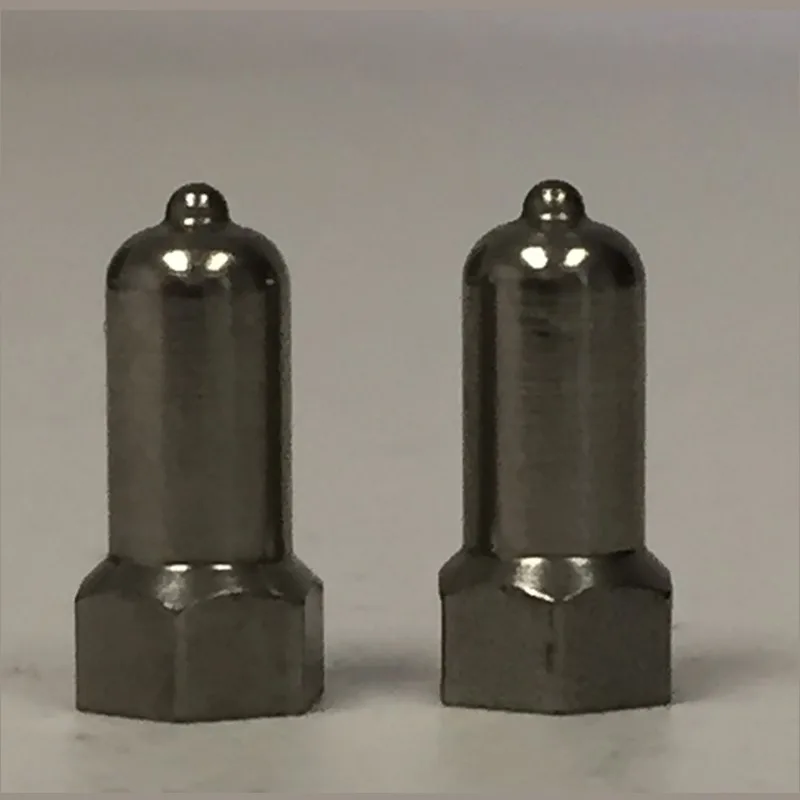
Thick Fur Contact Points 3/4″