One Rug, Two Color Stories
The Rumi Mauve & Olive Rug doesn't force you to choose between mauve and olive — it includes both, along with cream, lilac, rust, burgundy, brown, and grey. The real question is how those two leading colors interact in your room and whether the rug reads as a neutral or a statement piece.
This comparison explains what the catalog confirms about the rug's palette, what that means for your space, and the practical trade-offs you should weigh before buying.
What the Catalog Confirms About the Palette
-
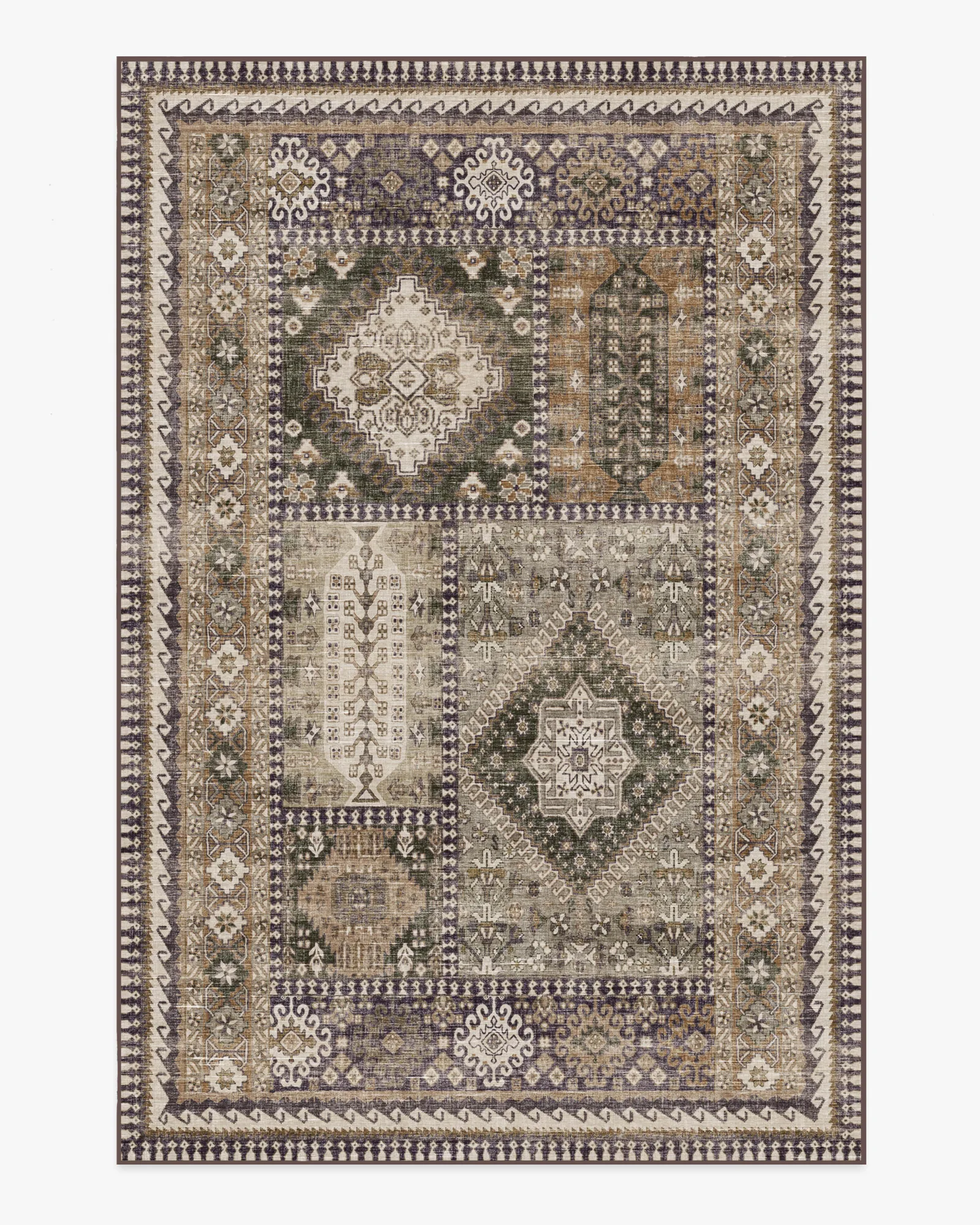
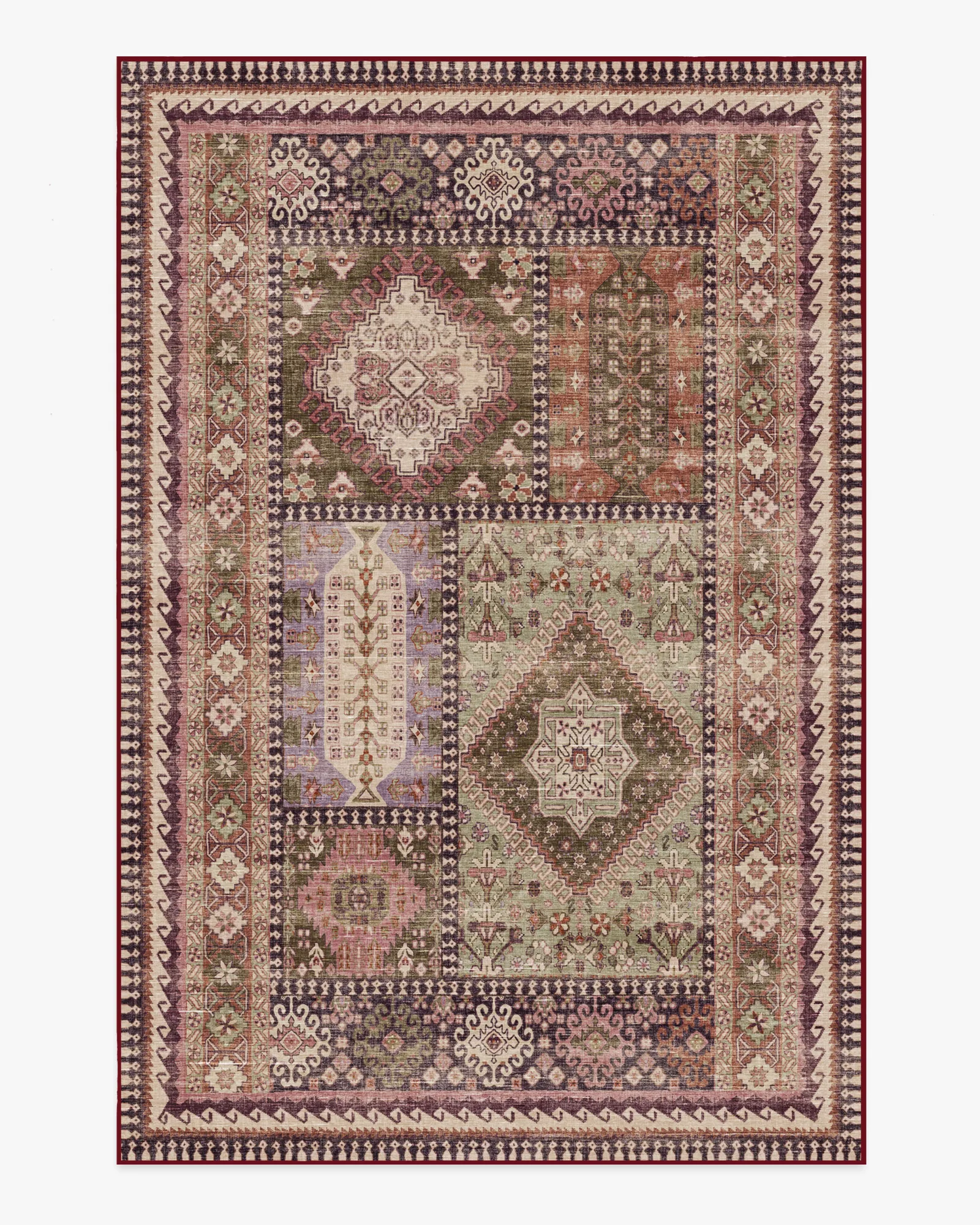
Rumi Mauve & Olive Rug: The Rumi Mauve & Olive Rug features a paneled layout in cream, mauve, lilac, rust, olive greens, burgundy, brown, and grey. The paneled layout means these colors appear in distinct blocks, not blended. Mauve and olive sit in separate panels, so each color zone reads clearly rather than mixing into a muddy tone.
Rumi Mauve & Olive Rug
-
Rumi Mauve & Olive Rug: Layered borders and motifs inspired by traditional kilim rugs create a rhythmic, dynamic composition with rich, layered depth. The kilim-inspired borders add visual texture that can make the rug feel more traditional or more eclectic depending on your furniture. The rhythm of the pattern helps the mauve and olive coexist without clashing.
-
Rumi Mauve & Olive Rug: Water-resistant, stain-resistant, and fully machine-washable. Because mauve and olive are both medium-value colors, they hide everyday dirt better than a cream or white rug. The washable construction also means you can clean the rug without worrying about color bleeding between panels.
Mauve as a Neutral
Mauve sits between pink and purple with a muted, dusty quality. In the Rumi rug, it appears alongside cream and lilac, which softens its saturation. If your room has warm neutrals — beige, taupe, warm grey — the mauve panels will blend more than pop. The rug can then read as a subtle accent rather than a pink statement.
That said, mauve is not a true neutral. In a room with cool greys or stark whites, the mauve panels will stand out noticeably. If you want a rug that fades into the background, a beige or grey rug would be more predictable.
Olive as an Accent
The olive greens in the rug are earthy and muted, closer to sage or khaki than to bright lime or forest green. Because olive appears in multiple panels and borders, it provides a grounding counterweight to the softer mauve and lilac tones.
Olive works well with natural materials — wood, rattan, linen — and with warm metallics like brass or copper. If your room already has green plants or olive-toned upholstery, the rug will tie those elements together. If your room has no green at all, the olive panels will become a deliberate accent, which may or may not suit your goal.
Mauve vs Olive: Which Dominates?
- Mauve panels: Larger, more central panels in the layout. Mauve is the first color most people notice, especially when the rug is viewed from a distance.
- Olive panels: Appear in borders and secondary panels. Olive recedes compared to mauve but adds depth and prevents the rug from feeling too pink.
- Overall impression: The rug reads as a mauve-dominant piece with olive support. If you want an olive-dominant rug, this is not that rug.
Trade-Offs to Weigh
The Rumi rug's multicolor palette gives you flexibility, but it also means you can't treat it as a solid-color rug. If your room already has strong competing patterns or colors, the rug could feel busy. The catalog notes that colors may vary by device and lighting, so the mauve may look more pink or more purple depending on your screen and room light.
The rug is available in sizes from 2'x3' to 10'x14', all as All-In-One Rug units (no separate rug pad system is mentioned in the supplied evidence). The water-resistant and stain-resistant construction is a practical advantage for high-traffic areas or homes with kids and pets, but the kilim-inspired pattern may not suit every decor style.
If you're torn between mauve and olive as a color direction, this rug lets you test both without committing to a single hue. Just be aware that the rug's overall personality is eclectic and layered, not minimal or monochromatic.