What the Medela Softfeeder is designed to do
The Medela Softfeeder is a short-term feeding option for premature babies or babies with sucking difficulties. Its soft, spoon-shaped mouthpiece is made of pliable pure silicone, and the 80ml capacity lets you track and control how much milk your baby takes. It is an alternative to cup feeding and is designed to help prevent flooding while giving you more control than a traditional cup.
The Softfeeder is not a supplemental nursing system (SNS) that delivers milk through a tube at the breast. It is a standalone feeder that lets you feed expressed milk or formula without a bottle nipple, which may help avoid nipple preference. If you are looking for supplemental nursing system feeding at the breast, the Softfeeder is a different tool.
Key features that shape how you use it
-
Medela Softfeeder: Soft, spoon-shaped mouthpiece made of soft, pliable pure silicone The gentle shape is intended for babies who need a slower, more controlled feed than a bottle or cup.
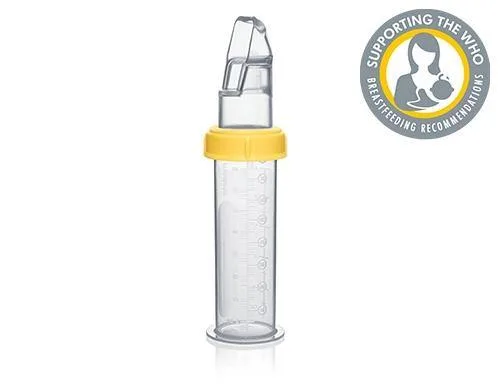
Medela Softfeeder
-
Medela Softfeeder: 80ml capacity with easy tracking and control of milk intake You can see and manage the amount your baby takes, which is helpful for short-term supplemental feeding.
-
Medela Softfeeder: Helps prevent flooding and offers more control than traditional cups This makes it a useful alternative feeding method for babies who struggle with cup feeding.
-
Medela Softfeeder: Sterile packaging The feeder arrives sterile, so you can use it right away for its intended short-term purpose.
How to use the Medela Softfeeder step by step
The catalog does not include detailed operating instructions, so the steps below focus on general safe handling and the features the Softfeeder provides. Always follow the guidance of your baby's healthcare provider for feeding amounts, frequency, and technique.
- Wash your hands and prepare a clean space: Use a clean surface and wash your hands thoroughly before handling the feeder and milk.
- Check the sterile packaging: The Softfeeder comes in sterile packaging. Inspect the packaging before use and follow your provider's advice on when to open it.
- Fill the feeder with the amount your provider recommends: The 80ml capacity lets you measure and track milk. Do not fill beyond the capacity, and use only the amount advised for your baby.
- Position your baby upright and comfortable: Hold your baby in a semi-upright position, supporting the head and neck. This is a general feeding posture, not a specific instruction from the catalog.
- Offer the soft spoon-shaped mouthpiece gently: Let your baby take milk from the soft silicone mouthpiece at their own pace. The design helps prevent flooding and gives you more control than a cup.
- Pause and watch for cues: Stop frequently to let your baby breathe and swallow. Watch for signs of comfort or distress, and stop if your baby is not actively feeding.
- Track the amount taken: Note how much milk was consumed so you can report it to your healthcare provider if needed.
Softfeeder cleaning steps: what to do after each feed
The supplied product information does not include specific cleaning or sterilization instructions beyond the fact that the feeder arrives in sterile packaging. For cleaning, follow the general guidance from your healthcare provider or the manufacturer's full instructions, which are not included here. As a practical routine, rinse the feeder promptly after use to prevent milk residue from drying, then wash it thoroughly with warm soapy water and a bottle brush, and rinse well. Check with your provider about how often to replace the feeder, especially for premature or medically fragile babies.
Where the Softfeeder fits among alternative feeding methods
Alternative feeding methods for babies include cup feeding, bottle feeding, syringe feeding, and finger feeding with a soft feeder. The Softfeeder is specifically described as an excellent alternative to cup feeding. It offers more control than a traditional cup and helps prevent flooding, which can be a concern with cup feeding.
Finger feeding with the Softfeeder is not described in the supplied information. If you are interested in finger feeding, ask your lactation consultant or healthcare provider whether the Softfeeder is appropriate for that technique. The Softfeeder is not a supplemental nursing system; it does not deliver milk through a tube at the breast. For supplemental nursing system feeding, you would need a different product.
When the Softfeeder is a good fit
The catalog describes the Softfeeder as ideal for short-term feeding of premature babies or babies with sucking difficulties. It is not intended as a long-term feeding solution, and the supplied information does not confirm suitability for newborns without sucking difficulties or for safe-sleep or car-seat use.
- Short-term supplemental feeding: Useful when a baby needs temporary help with feeding due to prematurity or sucking difficulties.
- Babies who need a slower, controlled flow: The soft spoon-shaped mouthpiece and controlled intake can help babies who have trouble with faster flows.
- As an alternative to cup feeding: The Softfeeder is designed to offer more control and less flooding than a traditional cup.
- When avoiding nipple preference is a goal: The Softfeeder allows feeding without a bottle nipple, which may help support breastfeeding goals.
What to confirm with your baby's healthcare provider
Because the supplied information does not include preparation, operating, or care instructions beyond the features listed, always confirm feeding amounts, frequency, and cleaning procedures with your baby's healthcare provider or a lactation consultant. They can advise on whether the Softfeeder is appropriate for your baby's specific needs and how to use it safely.