Quick answer
Pack a medium hard suitcase for a week by rolling clothes, using packing cubes, and keeping heavy items near the wheels. Check the weight before you close the shell, because hard cases have no give.
Why a medium hard shell changes your packing approach
A hard shell medium suitcase protects your belongings but does not stretch. Unlike soft luggage, you cannot overpack and rely on the fabric to expand. That means every item needs a planned spot, and you should leave a little breathing room for the shell to close without force.
The Single Stripe Medium is made with a polypropylene shell, which keeps it light while protecting your things. Because the shell is rigid, packing cubes and compression bags help you organize and compress soft items without bulging the case.
When this guide does not apply
If you are packing for more than a week or need to bring bulky gear, a medium hard suitcase may be too small. Similarly, if you plan to bring back fragile souvenirs, the rigid shell helps, but you will still need to wrap them. This guide assumes a typical one-week trip with a mix of clothing and toiletries.
Step-by-step packing for a medium hard suitcase
- Check the airline's size and weight limits: Before packing, confirm the maximum dimensions and weight for your ticket. Weigh your empty case and subtract that from the limit to know how much you can pack. Mistake: assuming a medium case is always accepted; some budget airlines have stricter limits. Write your weight allowance on a sticky note and keep it visible while packing.
- Lay out everything and edit: Put all clothes and toiletries on the bed. Remove duplicates and items you can re-wear. Aim for a capsule wardrobe that mixes and matches. Mistake: packing 'just in case' items that take up space and add weight. If you have not worn an item in the last month, leave it out.
- Roll soft clothes and use packing cubes: Roll t-shirts, trousers, and dresses to save space and reduce wrinkles. Group small items in packing cubes so they stay organized. Mistake: folding bulky items flat, which wastes space around the edges. Place rolled clothes in the main compartment, filling gaps around the edges first.
- Place heavy items near the wheels: Put shoes, toiletry bags, and other heavy items at the bottom of the case (near the wheels) to keep the center of gravity low. Mistake: putting heavy items on top, which makes the case tip when upright. Check that the case stands stable when packed; adjust if it feels top-heavy.
- Use the lid compartment for light, flat items: The lid of a hard shell case is ideal for socks, underwear, chargers, and other small flat items. Distribute them evenly to avoid bulging. Mistake: overfilling the lid, which can prevent the shell from closing properly. Leave a finger-width gap around the lid's edge so the shell seals without force.
- Weigh the packed case before closing: Use a luggage scale to check the total weight. If you are over, remove items or wear your heaviest shoes and jacket on travel day. Mistake: guessing the weight and discovering at the airport that you are over the limit. If the case is over weight, move heavy items to your personal item.
- Close the case without forcing it: If the shell does not close easily, remove items rather than pressing down. A hard shell has no give, and forcing it can damage the zip or shell. Mistake: sitting on the case to close it, which stresses the hinges and corners. If it does not close with gentle pressure, repack and remove one or two bulky items.
Product facts
-
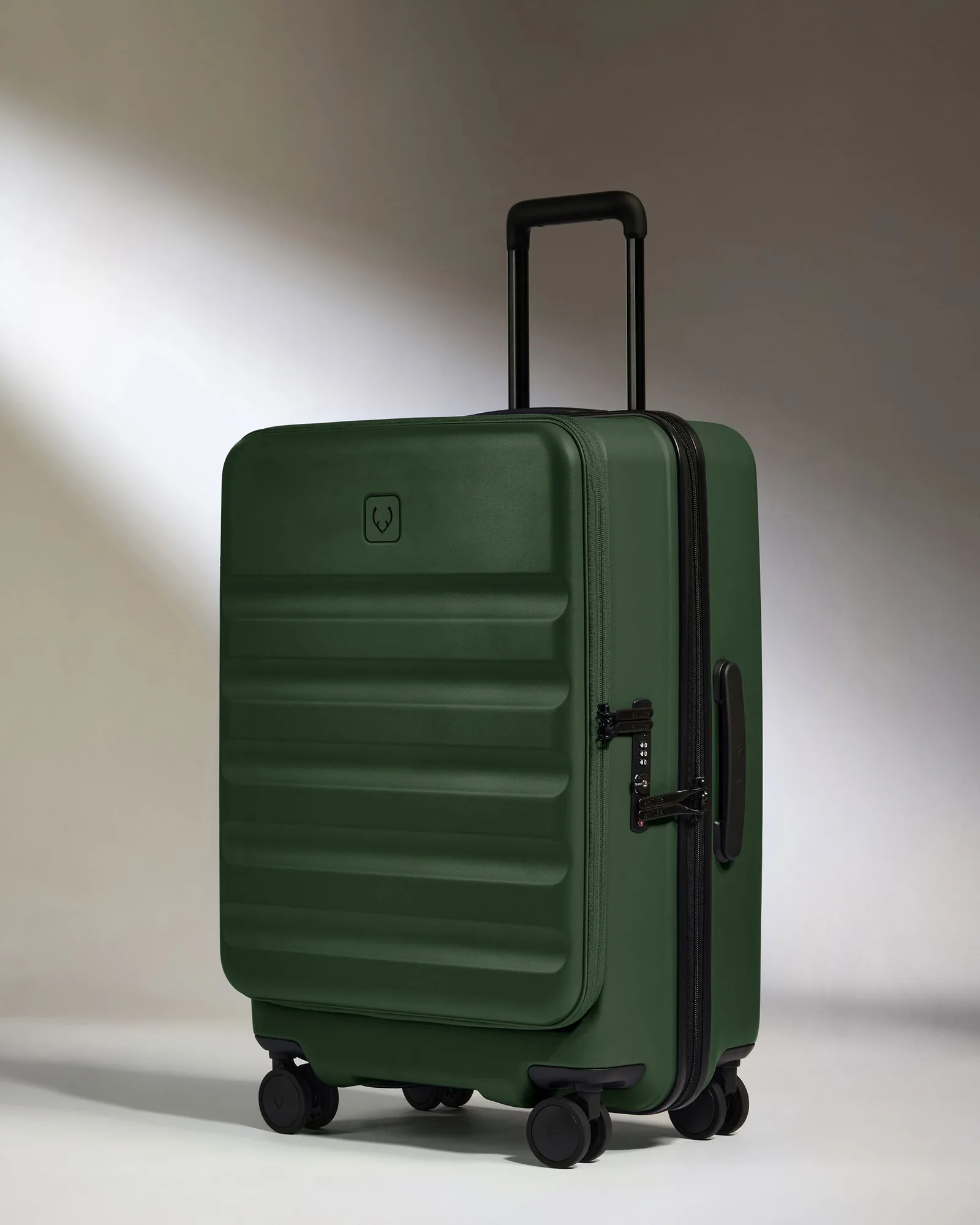
Medium Luggage in Reed Green - Single Stripe: Polypropylene shell makes it the lightest hardside case in the Single Stripe range. A lighter case leaves more of your baggage allowance for actual belongings, which matters when packing for a week.
Medium Luggage in Reed Green - Single Stripe
Medium Luggage in Reed Green - Single Stripe