Quick answer
Choose Medline Spunbonded Polypropylene Non-Skid Shoe Covers for light-duty, low-splash indoor areas where staff need breathable slip-on protection. Choose Medline Non-Skid Multilayer/Poly Boot Covers when you need higher fluid resistance and heat-sealed seams for demanding, wet, or contamination-sensitive floors.
Shoe covers vs boot covers: the real difference is coverage and closure
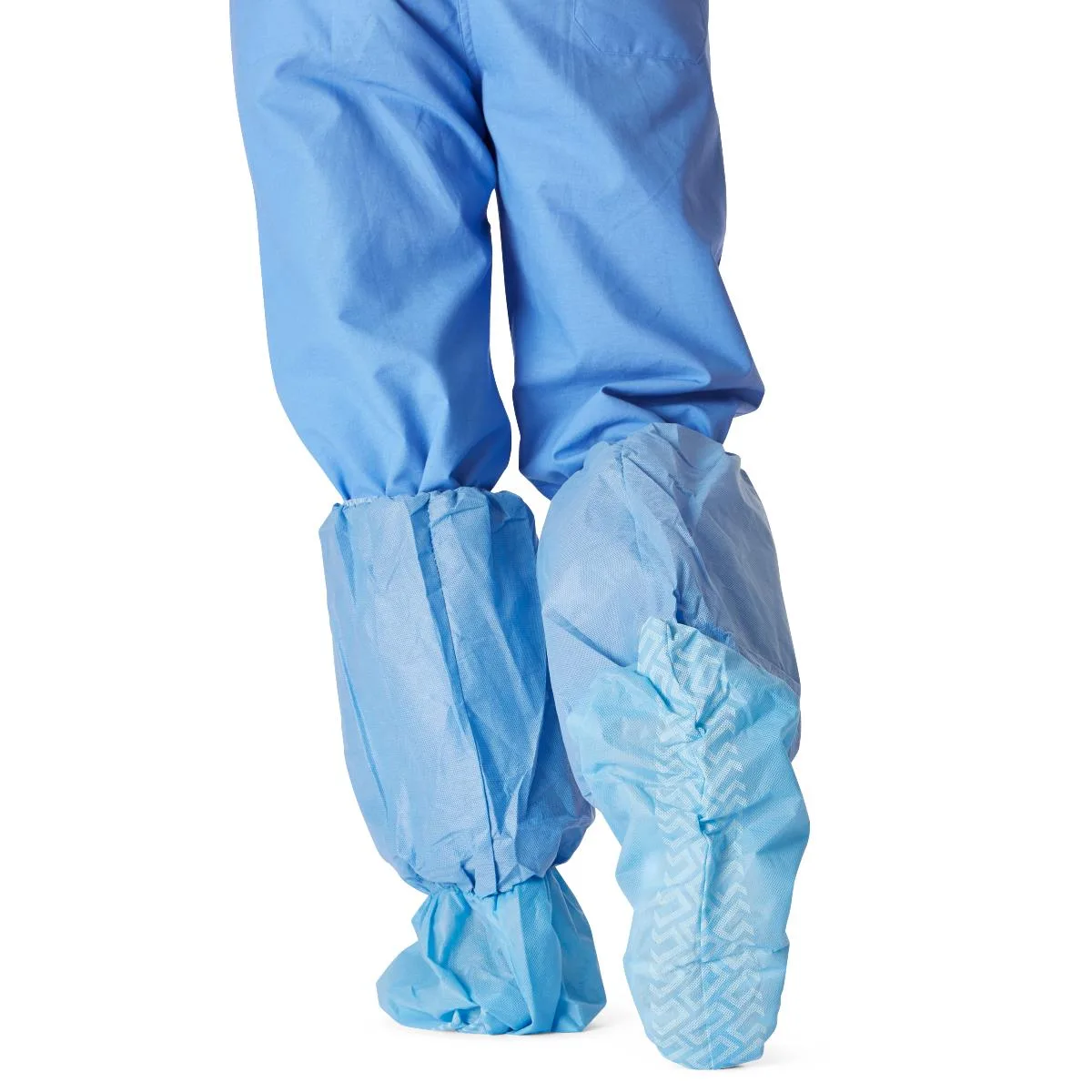
Shoe covers are slip-on protectors that cover the shoe and ankle area. Boot covers extend higher and use a closure system to stay put. The Medline Non-Skid Fluid-Resistant Boot Covers use a hook-and-loop closure heat-sealed to the boot, which gives a customizable fit and helps keep the cover from shifting during movement. If your staff walk long distances or step in and out of areas with splash risk, that closure and height matter more than the cover's material alone.
Shoe covers like the Medline Spunbonded Polypropylene Non-Skid Shoe Covers are simpler to don and doff, which speeds up entry and exit at thresholds. The trade-off is less coverage above the ankle and no adjustable closure. For short visits or clean indoor zones, that is usually enough. For wet floors or tasks with splashing, the boot cover's design is the safer choice.
Material and seam choices change fluid resistance
The Medline Spunbonded Polypropylene Non-Skid Shoe Covers use breathable, fluid-repellent spunbonded polypropylene. That material resists spills and splashes while letting air move, so feet stay less clammy during long shifts. It is a good fit for dry or lightly wet environments where comfort and quick changes matter.
The Medline Non-Skid Multilayer/Poly Boot Covers use a breathable multilayer material with heat-sealed seams. Heat-sealed seams reduce the chance of fluid wicking through stitch holes, which is why this style suits demanding environments better. The Medline Non-Skid Fluid-Resistant Boot Covers are also fluid-resistant, but the catalog does not list a specific seam construction, so treat that as a decision limitation if seam integrity is your top concern.
Non-skid bottoms are not all the same
All three Medline options have non-skid bottoms, but the tread design differs. The Multilayer/Poly Boot Covers list a special tread on the bottom for excellent grip, reducing slips and falls. The Spunbonded Polypropylene Shoe Covers list nonskid bottoms for a secure grip on various surfaces. The Fluid-Resistant Boot Covers are described as non-skid, but the catalog does not detail the tread pattern.
If your floor is smooth and dry, any of the three will help. If your floor is often wet, polished, or transition-heavy, prioritize the style with the most explicit tread description and test a small batch on your actual floor before rolling out to all staff.
Trade-offs that decide your pick
- Shoe covers: speed vs coverage: Spunbonded polypropylene shoe covers are fast to put on and breathable, but they stop at the ankle and have no adjustable closure. Choose them for visitor areas, showings, and short clean-room entries where speed and comfort win. If staff change covers more than a few times per shift, slip-on shoe covers reduce donning time.
- Boot covers: protection vs cost per pair: Boot covers cost more per pair at catalog price and take longer to secure, but they cover more of the leg and stay put. The Fluid-Resistant Boot Cover's hook-and-loop closure is the main reason to step up from shoe covers when staff walk long routes. Match the cover height to the tallest splash risk in the area, not to the whole facility.
- Multilayer vs single-layer: seam integrity vs breathability: The Multilayer/Poly Boot Cover adds heat-sealed seams and a listed special tread, which matters on wet or polished floors. Single-layer spunbonded shoe covers are lighter and more breathable but rely on material repellency rather than sealed seams. If your floor is frequently wet, prioritize heat-sealed seams over breathability.
Product facts at a glance
-
Medline Spunbonded Polypropylene Non-Skid Shoe Covers: Breathable, fluid-repellent spunbonded polypropylene with nonskid bottoms and slip-on design. Best for quick changes and dry-to-lightly-wet indoor areas where comfort and speed matter more than high splash protection.
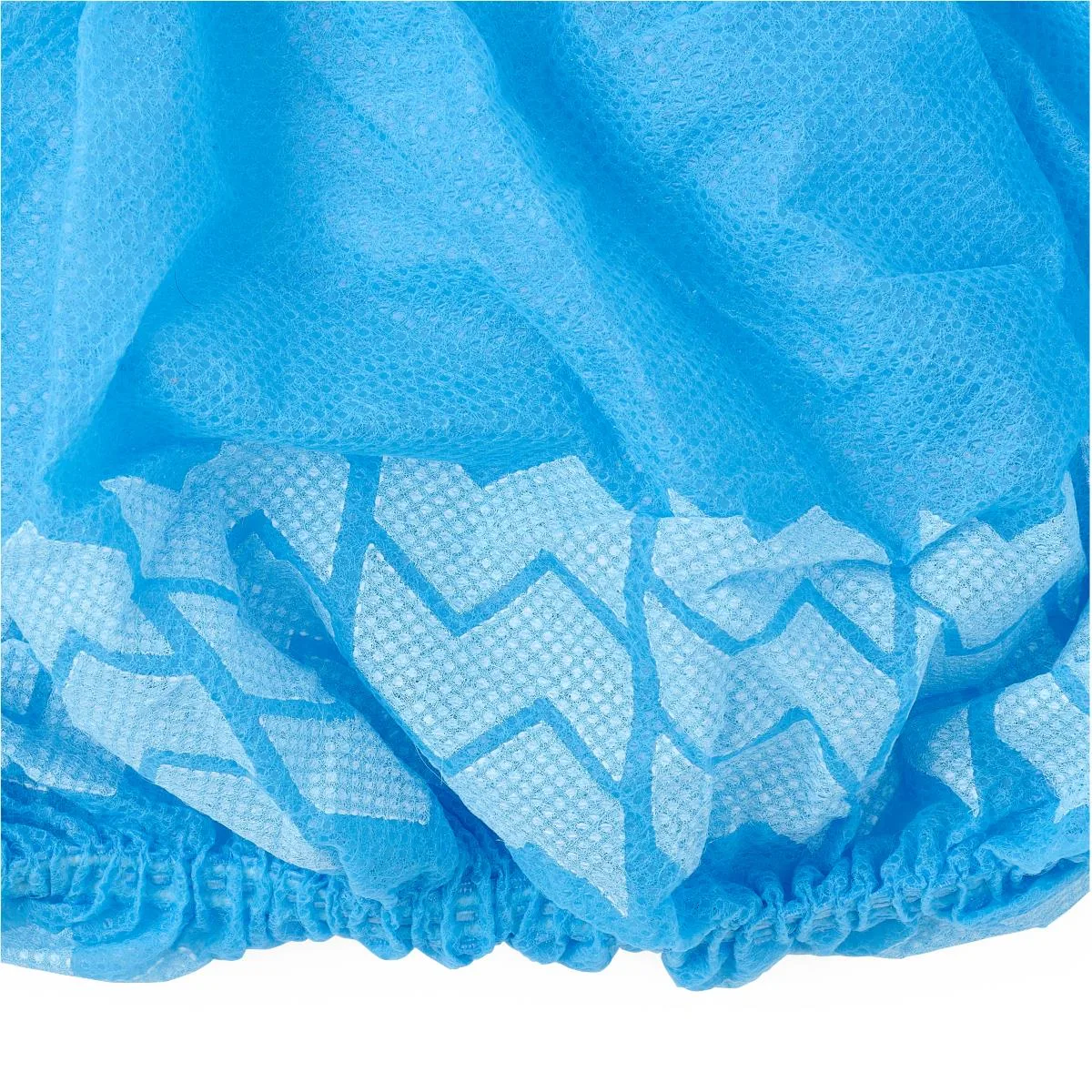
Medline Spunbonded Polypropylene Non-Skid Shoe Covers
-
Medline Non-Skid Fluid-Resistant Boot Covers: Fluid-resistant boot cover with a hook-and-loop closure heat-sealed to the boot for a customizable fit. The adjustable closure helps the cover stay in place during longer wear, making it a better fit for staff who move between areas.
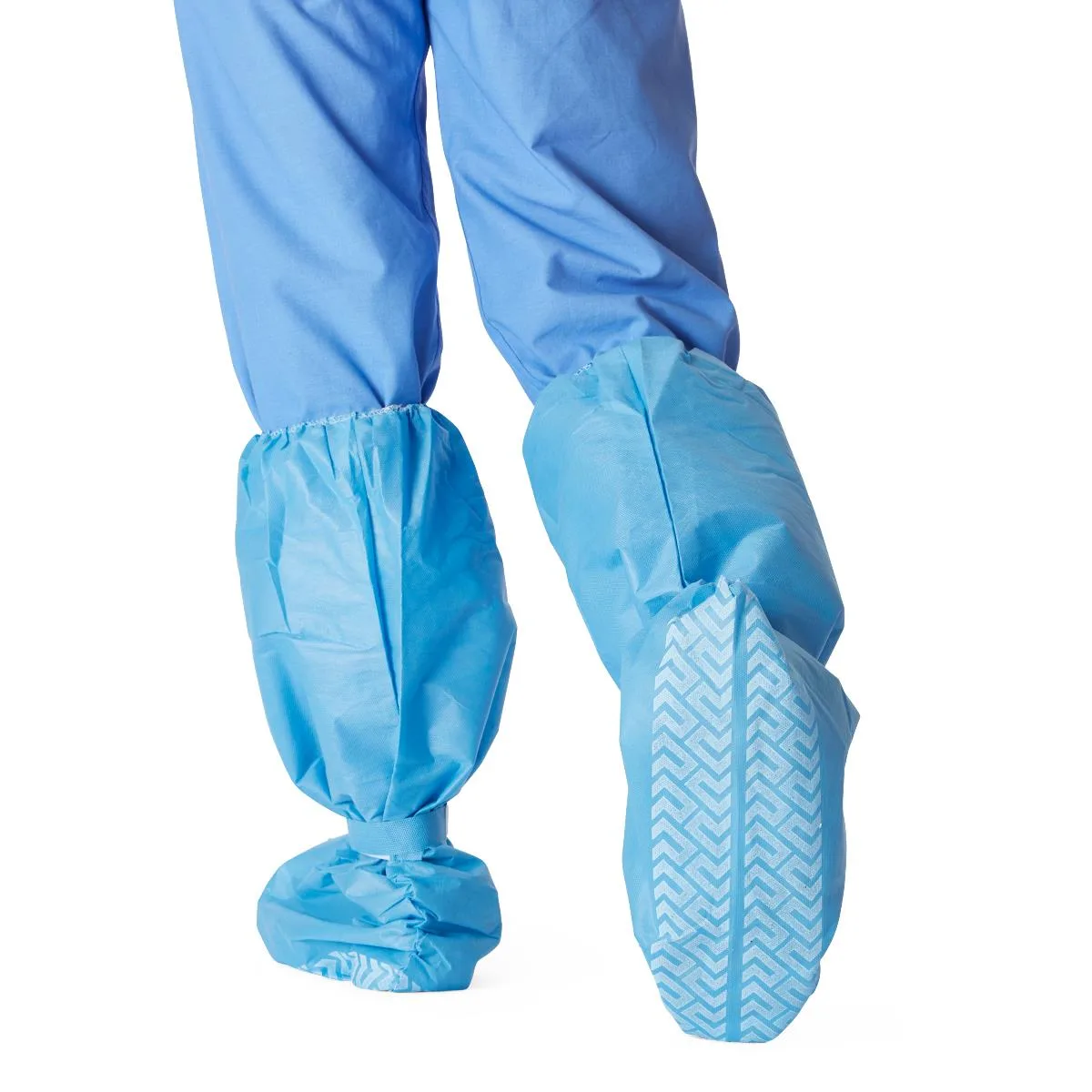
Medline Non-Skid Fluid-Resistant Boot Covers
-
Medline Non-Skid Multilayer/Poly Boot Covers: Breathable multilayer material with heat-sealed seams and a special tread on the bottom. Heat-sealed seams and aggressive tread make this the strongest choice for wet, slippery, or contamination-sensitive floors.
Which Medline cover fits your floor?
Best for
- Staff and visitors in dry or lightly wet indoor areas who need fast, breathable slip-on protection
- Facilities that want a low-cost disposable shoe cover for short entries and showings
- Wet, slippery, or contamination-sensitive work areas that need heat-sealed seams and a defined tread
Not for
- High-splash or heavily wet environments where ankle coverage and sealed seams are required
- Long shifts on polished floors where an adjustable closure and aggressive tread are needed
- Areas where the catalog does not list seam construction and you need documented seam integrity