Start with what Mega Watt already promises
Mega Watt Thinking Putty is a neon purple putty built for stretching, sculpting, and fidgeting. The catalog describes it as non-toxic, formulated not to dry out, and made to leave no sticky or slippery residue on your fingers. Those traits do most of the work in keeping the putty usable, so your care routine mainly needs to support them rather than fight them.
That matters because electric-colored putty like Mega Watt is often bought for its look. You want the purple to stay vivid and the texture to stay workable, not just for the first session but for the life of the tin. The steps below stick to what the supplied information supports.
Mega Watt at a glance
-
Mega Watt | MINI: Mega Watt Thinking Putty is a neon purple putty for stretching, sculpting, and fidgeting. Knowing the intended activities helps you choose play that suits the putty rather than stressing it with unrelated tasks.
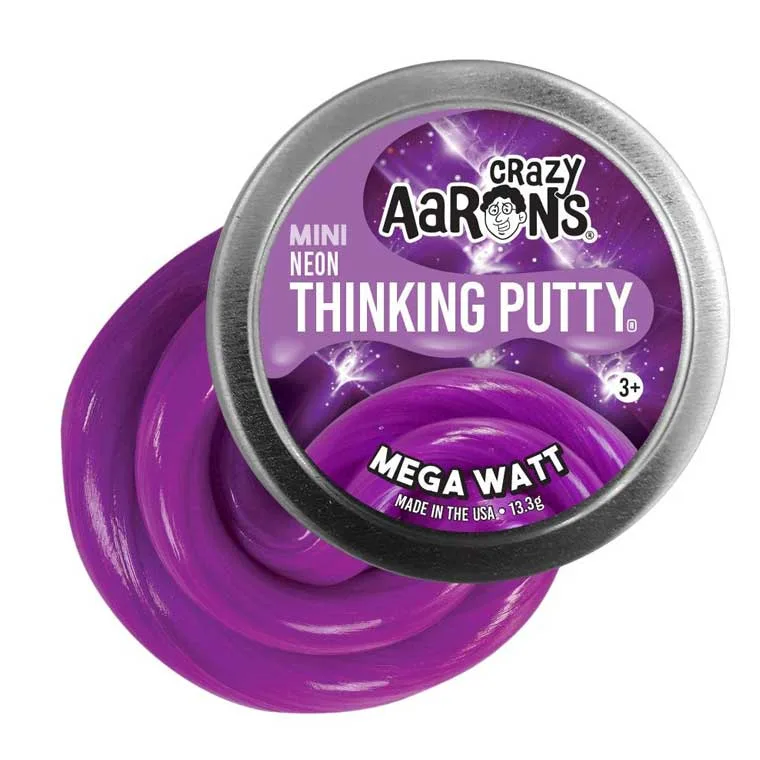
Mega Watt | MINI
-
Mega Watt | MINI: The catalog states Thinking Putty is non-toxic, won't dry out, and won't leave a sticky or slippery residue on your fingers. These are the properties your care routine should preserve, so you don't need to add improvised fixes.
-
Mega Watt | MINI: Mega Watt is available in a Standard variant and is part of a line with over 100 varieties and 30 effects. If you collect several tins, consistent handling and storage keep your whole set in comparable condition.
A simple play-and-store routine for Mega Watt
- Play with clean, dry hands: The catalog says the putty won't leave sticky or slippery residue on your fingers. Starting with clean hands helps you enjoy that clean feel and keeps outside grit from working into the neon purple surface.
- Stretch, sculpt, and fidget as intended: Mega Watt is described for stretching, sculpting, and fidgeting, plus bouncing, tearing, and popping. Keep sessions to those activities so you're using the putty the way the catalog presents it.
- Return it to the tin after play: The catalog confirms the putty won't dry out, so you don't need a special revival step. Putting it back in its mini tin after each session is the simplest way to keep it contained and ready for next time.
- Store the closed tin away from mess and moisture: No specific storage temperature or container is supplied for Mega Watt. A closed mini tin kept with your other putty is the routine the product's own packaging supports.
Keeping the electric color looking its best
Mega Watt's appeal is its eye-popping neon purple, so treat the color as part of the care job. Playing on clean surfaces and with clean hands reduces the chance of picking up dust or crumbs that dull the surface. Because the catalog does not supply a cleaning method for this putty, avoid improvising with water, solvents, or household cleaners; those steps are not confirmed for Mega Watt.
The catalog also does not list a specific age range, component list, or safety warnings for this tin. If you're buying for a child, check the packaging or product page for those details before play rather than assuming suitability from the product description alone.
What the supplied information does not cover
- No confirmed cleaning instructions: The catalog does not provide a method for cleaning Mega Watt if it picks up debris. Do not assume water or solvents are safe for this putty.
- No confirmed age range or warnings: The supplied record does not state an age range or safety warnings. Check the physical packaging or listing for those details.
- No confirmed storage temperature: The catalog does not specify a temperature range for storage. Keeping the tin closed and away from obvious heat or moisture is a reasonable default, not a manufacturer instruction.
When to replace a mini tin
Because Thinking Putty is formulated not to dry out, the catalog gives no signal that Mega Watt needs regular replacement. If your putty stops behaving like the stretchy, non-sticky product described, check whether the tin was left open or exposed to something that changed its texture. The supplied information does not include a revival or repair process, so treat a change in texture as a reason to review how the tin was stored rather than to add unverified fixes.