Quick answer
The MegaWorld activity book is part of the Counting on Each Other collection, designed to teach financial literacy and citizenship to children aged 9-12 through a relatable story about saving for a day at an amusement park.
What makes MegaWorld different
Unlike many activity books that focus solely on math or reading, MegaWorld weaves financial literacy and citizenship education into a narrative. Children follow Lisa and Theo as they try to save for a trip to an amusement park, encountering everyday temptations and decisions that test their resolve.
Age and content considerations
The book targets ages 9 to 12, a critical period for developing money habits and understanding community responsibility. The story's four-month savings timeline gives children a concrete sense of delayed gratification. However, the financial concepts are introductory; if your child already understands budgeting, they may find the scenarios basic.
Decision rules for choosing MegaWorld
- Learning goal: If you want to teach saving money, setting goals, and resisting impulse spending, MegaWorld uses a narrative approach rather than worksheets.
- Age fit: The story is designed for ages 9-12. If your child is younger or older, the financial concepts or reading level may not match. Check your child's reading comfort with chapter-style books before buying.
- Usage setting: MegaWorld works for independent reading, guided discussion, or classroom group work. The story prompts conversations about trade-offs and priorities. Consider pairing it with another book from the Counting on Each Other collection for a fuller unit.
Product details
-
MegaWorld: MegaWorld is part of the Counting on Each Other collection, a set of 12 books for youth ages 9 to 12 addressing financial literacy and citizenship education. This means the book is part of a larger curriculum-aligned series, making it suitable for classroom or home use alongside other titles.
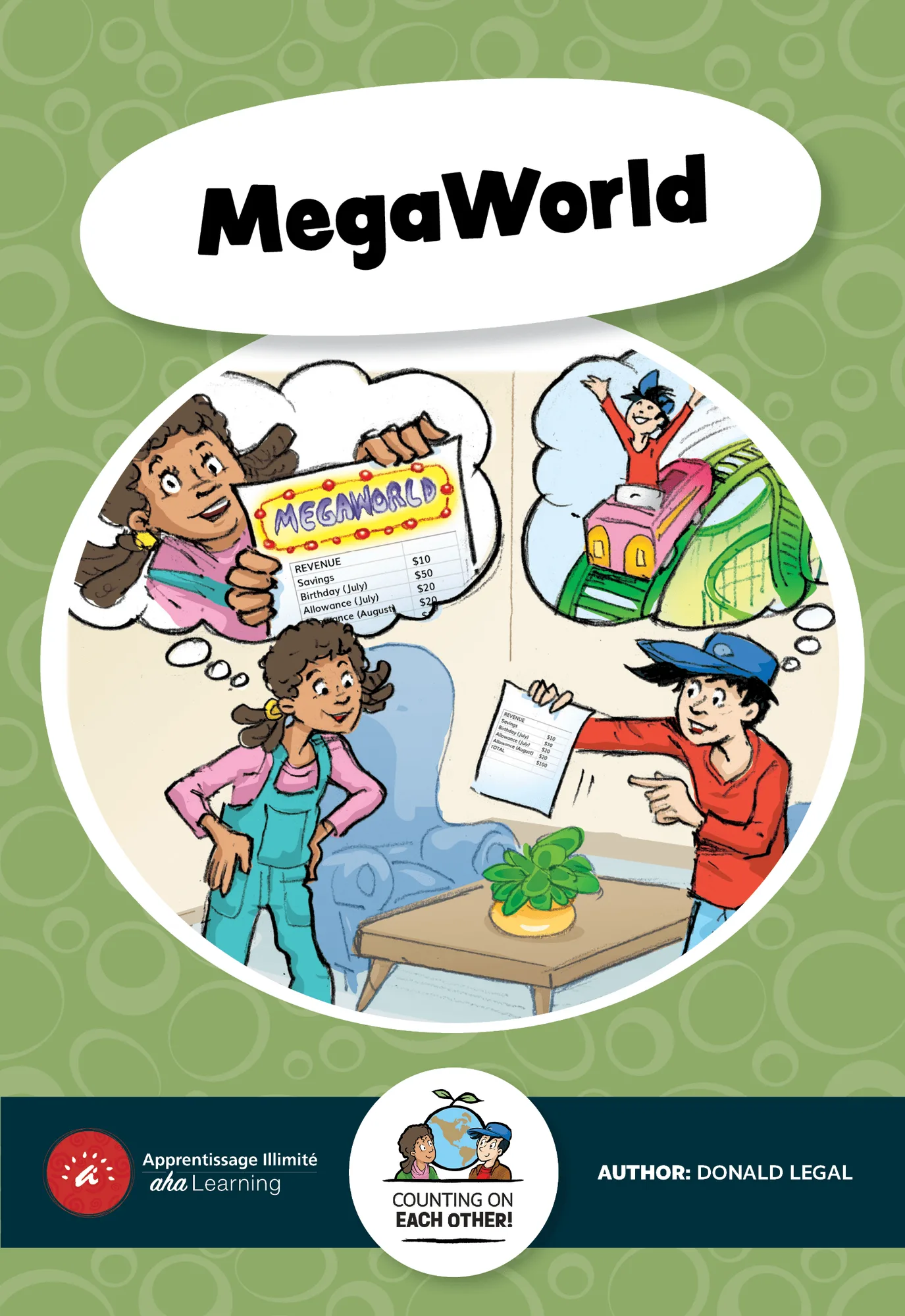
MegaWorld
Who should buy MegaWorld?
Best for
- Parents or teachers introducing financial literacy concepts to children ages 9-12
- Homeschoolers wanting a story-based resource for money and citizenship lessons
Not for
- Children who already have a strong grasp of budgeting and delayed gratification—the scenarios may feel too simple