Quick Answer
Use a memory card game for kids ages 4-8 in short, playful sessions—start with fewer cards, add gentle challenges, and keep it fun to build focus and concentration.
Why Memory Games Work for Young Kids
Memory card games are more than just matching pictures. For kids ages 4-8, they train attention, visual recognition, and working memory—skills that support learning and everyday tasks. The key is to keep sessions short and positive, because a child's attention span grows with practice, not pressure.
A compact travel-size box makes it easy to play anywhere, from the kitchen table to a waiting room. The portability helps you turn spare minutes into focused brain training without extra setup.
Adapting the Game to Your Child's Level
Start with just a few pairs—maybe 4 or 6 cards—so your child experiences success early. As they get better, gradually add more pairs. This builds confidence and stamina, which directly supports longer focus.
If your child gets frustrated or loses interest, don't force it. Take a break and come back later. The goal is consistent, enjoyable practice, not a perfect game every time.
10 Steps to Boost Focus with a Memory Card Game
- Start with a small set of pairs: Choose 4 to 6 matching pairs (8–12 cards) from the deck. Lay them face down in a neat grid. This keeps the challenge manageable and helps your child focus on the task without feeling overwhelmed. Checkpoint: If your child finishes quickly, add one more pair next round.
- Set a calm, distraction-free space: Play at a table or on the floor away from TV or loud noises. A quiet environment helps kids concentrate on the cards and builds the habit of focused play. Checkpoint: Put away phones or other toys before starting.
- Use a gentle timer for short rounds: Set a timer for 5–10 minutes and play until it rings. Short, focused sessions are more effective than long, tiring ones for young children. Checkpoint: Stop while it's still fun—this keeps them wanting more.
- Encourage verbalizing each move: Ask your child to say the card name and its location as they flip, like 'apple, top left.' This reinforces visual recognition and memory through language. Checkpoint: Model the phrasing first, then let them lead.
- Take turns and model patience: Play with 2–4 players and wait for your turn. This teaches turn-taking and self-control, which are part of focus and social skills. Checkpoint: Praise waiting quietly, not just correct matches.
- Gradually increase the number of pairs: When your child masters 6 pairs, add more—up to the full deck for 2–6 players. Increasing difficulty slowly stretches their memory and concentration. Checkpoint: If errors spike, drop back a pair or two for a session.
- Introduce a 'match race' variation: For a more active challenge, have players race to grab a matching card when a pair is revealed. This adds physical movement and keeps engagement high. Checkpoint: Use this only after basic matching is solid.
A Good Memory Card Game to Try
-
Memory Card Game for Kids Ages 4–8 Educational & Engaging Fun Game: This set includes a colorful deck of matching cards with adorable fruits and vegetables, plus easy-to-follow instructions for 2–6 players. The familiar, cheerful images keep kids engaged while they practice memory and attention, and the simple rules make it easy to adapt for different ages.
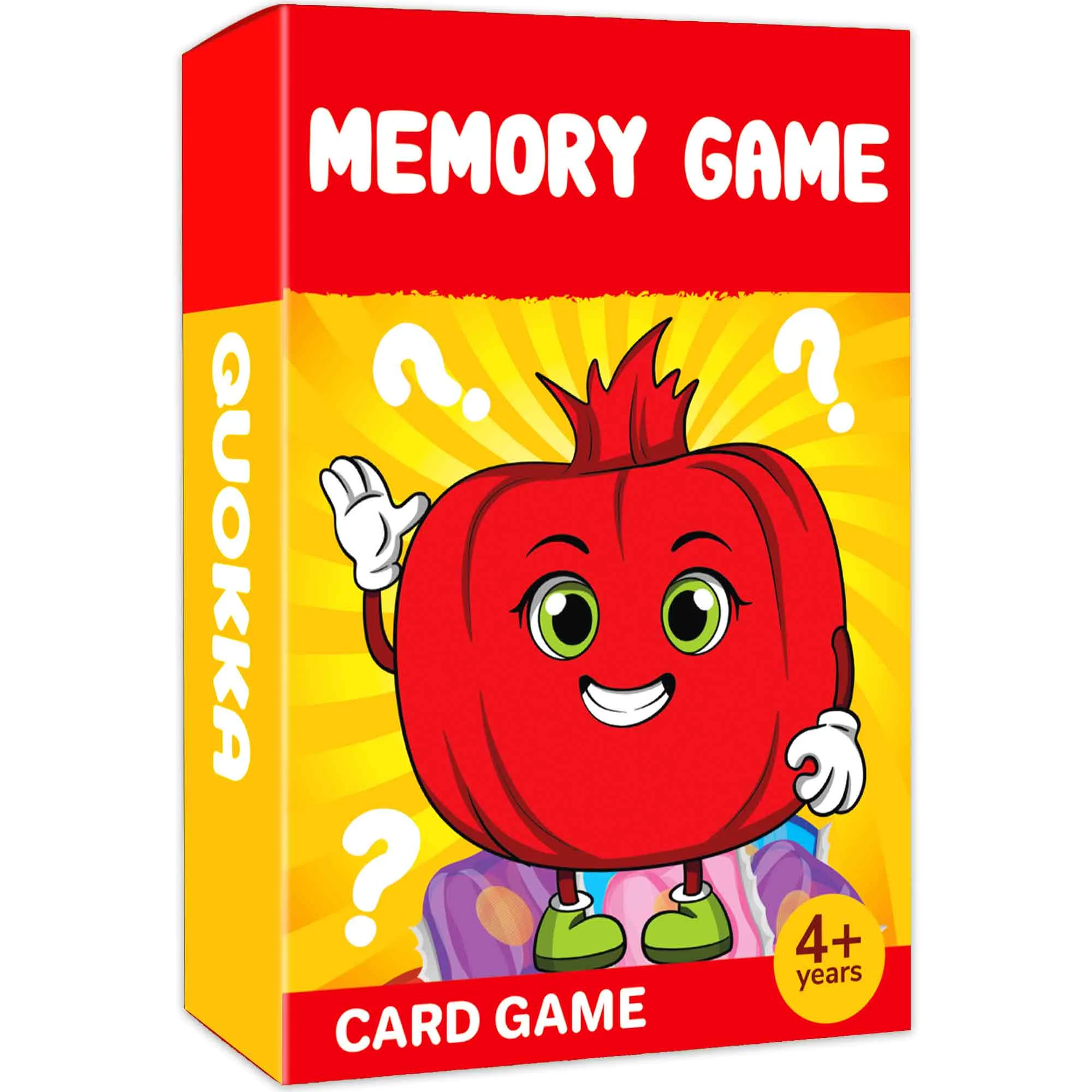
Memory Card Game for Kids Ages 4–8 Educational & Engaging Fun Game