Quick Answer
To get the right fit in a memory foam push-up underwire bustier bra, focus on band snugness, cup fill, and underwire placement—adjust straps last for comfort.
Why Memory Foam Changes the Fit Game
Memory foam cups mold to your shape, which means they can hide fit issues that a traditional padded bra would reveal. The foam adapts to your contours, so a slightly too-large cup might still look smooth. That's why you need to check the fit more carefully: run your fingers over the cup to feel for empty space, and move your arms to see if the foam shifts or gaps.
The push-up padding in this style gives a high lift and rounded look, so the cups sit higher on your chest than a standard bra. You'll want to ensure the center gore lies flat against your sternum and the underwire follows your natural breast root without digging in.
Bustier vs. Regular Bra: What to Expect
A bustier bra has a longer torso than a regular bra, which means it covers more of your ribcage. This adds smoothing coverage and extra support, but it also means the band has more fabric to anchor. You might need to adjust how you put it on—bending forward and scooping from the sides helps the cups fill properly.
The wide back made of double-layered fabric (soft microfiber inside) provides a smooth silhouette, but it also means the band can feel tighter than a standard bra. Don't immediately size up; instead, use an extender if you're between sizes, and allow a break-in period of a few wears.
Step-by-Step Fit Guide
- Start with the band: Fasten the bra on the loosest hook and check that the band sits horizontally across your back. You should be able to slide two fingers under the band, but not more. If the band rides up, go down a band size. If it digs in painfully, go up a band size or use an extender. The band should stay level and snug—it provides about 80% of your support.
- Scoop and fill the cups: Lean forward slightly and use your opposite hand to scoop breast tissue from under your arm into the cup. The memory foam should feel like it's hugging you, not pressing or leaving empty space at the top or sides. If you see wrinkling or gaps, the cup is too large; if your breast spills over the top or sides, the cup is too small. Check for spillage after you've been moving for a few minutes—memory foam can shift.
- Align the underwire: The underwire should sit flat against your ribcage, encircling your breast root without poking or resting on breast tissue. The center gore (the bridge between cups) should lie flat against your sternum. If the wire lifts away, the band is too loose or the cup is too small. After a few hours, the underwire should not leave red marks or feel painful.
- Adjust the straps: Tighten or loosen the straps so they sit comfortably on your shoulders without digging in or slipping off. The straps should not carry the weight—the band should. If you need to tighten the straps a lot to get lift, the band is likely too loose. Straps should stay in place without leaving deep indentations.
- Move and test: Raise your arms overhead, twist side to side, and bend forward. The bra should stay in place without riding up or shifting. The memory foam should return to its shape after movement. If the bra feels restrictive in the torso, consider if the longer line is too long for your torso—some petite frames may need a shorter style. The bra should feel supportive but not constricting during movement.
Product Spotlight
-
Memory Foam Push-Up Underwire Bustier Bra with Strappy Front: The cups are made of memory foam for a perfect fit without gapping and feature underwire for support. Memory foam adapts to your unique shape, reducing the risk of gapping, while the underwire ensures the lift stays put all day.
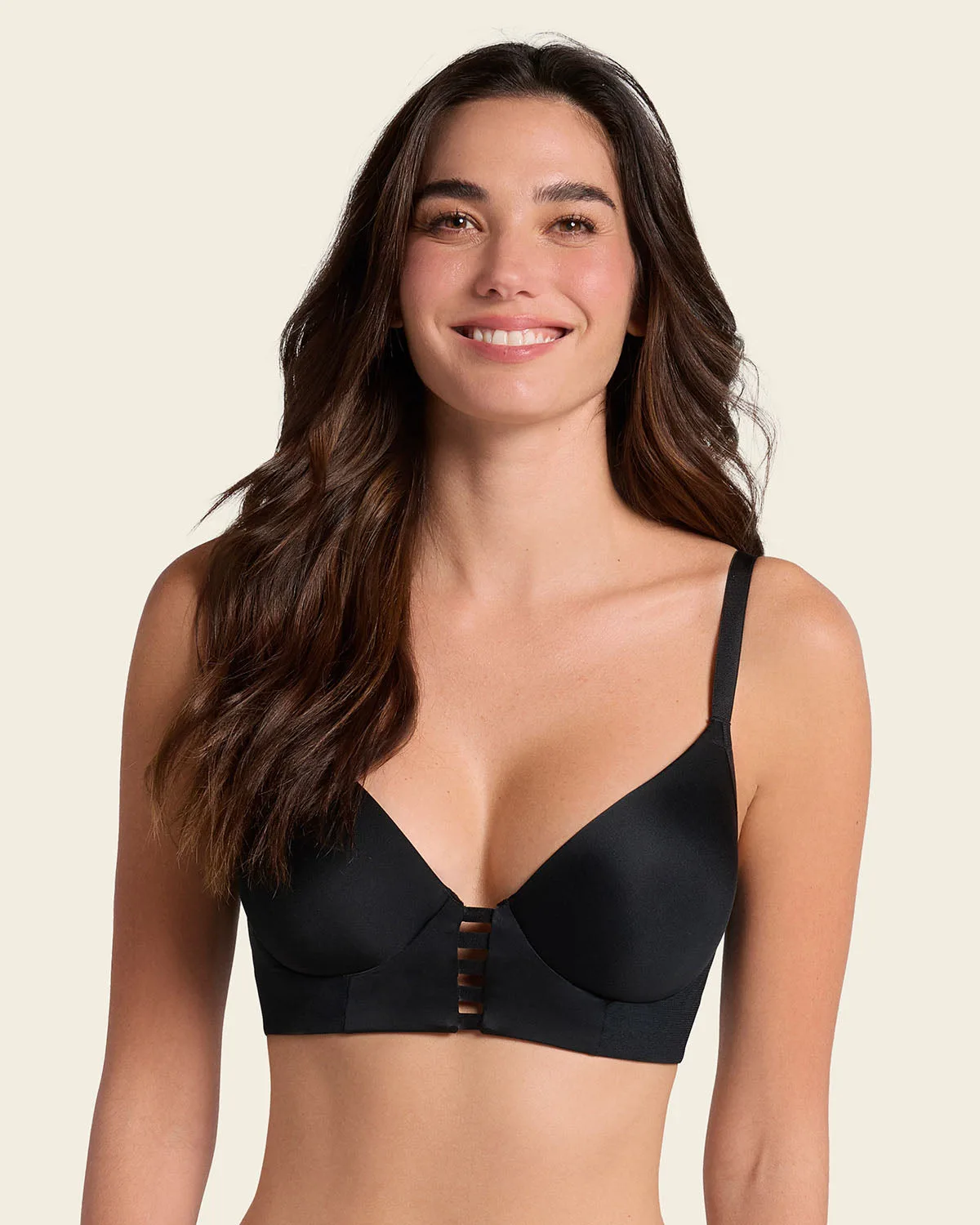
Memory Foam Push-Up Underwire Bustier Bra with Strappy Front