Quick Answer
For babies around 19–24 months, start with the Animal Puzzle (product ID 858535) because its shape-matching and hand-eye coordination demands match that developmental window. Introduce the Memory Touch Game (product ID 858558) closer to age two or when your child already enjoys texture exploration, as its matching-by-touch mechanic requires more working memory. If you want a single toy that grows with your child, the Memory Touch Game offers longer play value, but the Animal Puzzle is the easier first step.
What Each Toy Actually Asks Your Baby to Do
The Animal Puzzle is a wooden board with colorful animal pieces. Your baby lifts a piece, sees the shape underneath, and tries to fit it back. That simple loop builds shape recognition and hand-eye coordination through trial and error. The Memory Touch Game asks for a different kind of thinking: kids match textures by touch, which means they must hold a texture in mind and find its pair without seeing the match. That's a working-memory task, and it's why the Memory Touch Game tends to click later than a basic puzzle.
When to Introduce Each Toy: A Simple Timeline
If your baby is 19–24 months, the Animal Puzzle fits right away. The pieces are chunky enough for small hands, and the error is self-correcting—a piece either fits or it doesn't, so you don't need to coach much. The Memory Touch Game works best when your child can already follow a two-step instruction and sit through a short turn-taking game, usually closer to 24 months or beyond. You can still offer the Memory Touch Game earlier as a free-exploration toy; just don't expect matching. For a Montessori memory game comparison, the key difference is that the puzzle teaches through vision and shape, while the Memory Touch Game teaches through touch and recall.
How They Fit Into a Montessori Toy Rotation
In a Montessori-aligned rotation, you'd typically place the Animal Puzzle on a low shelf first because it's self-correcting and needs no adult demonstration. The Memory Touch Game belongs on the shelf once your baby shows interest in texture or has mastered simple puzzles. If you're building a collection for Montessori toys 19–24 months, the Animal Puzzle covers fine motor and problem-solving; the Memory Touch Game adds a sensory and memory layer. Rotating them in and out every week or two keeps both fresh and prevents frustration.
What About the Montessori Educational Boxes?
If you're deciding between these two toys and a full box, note that the Montessori Educational Box (34-36 Months) includes a Spelling Game, Animal Jeep, Color Paddies, Stacking Rocks, Play Book, and Vegetable Board—six products aimed at older toddlers. The Montessori Educational Box (0-2 Months) includes Black & White Sensory Cards, Soft Grip Ball, Sensory Mobile, and Wooden items for newborns. Neither box contains the Animal Puzzle or Memory Touch Game, so they're separate purchases. For a first memory toy for babies, the standalone Animal Puzzle or Memory Touch Game gives you a more focused introduction than a mixed box.
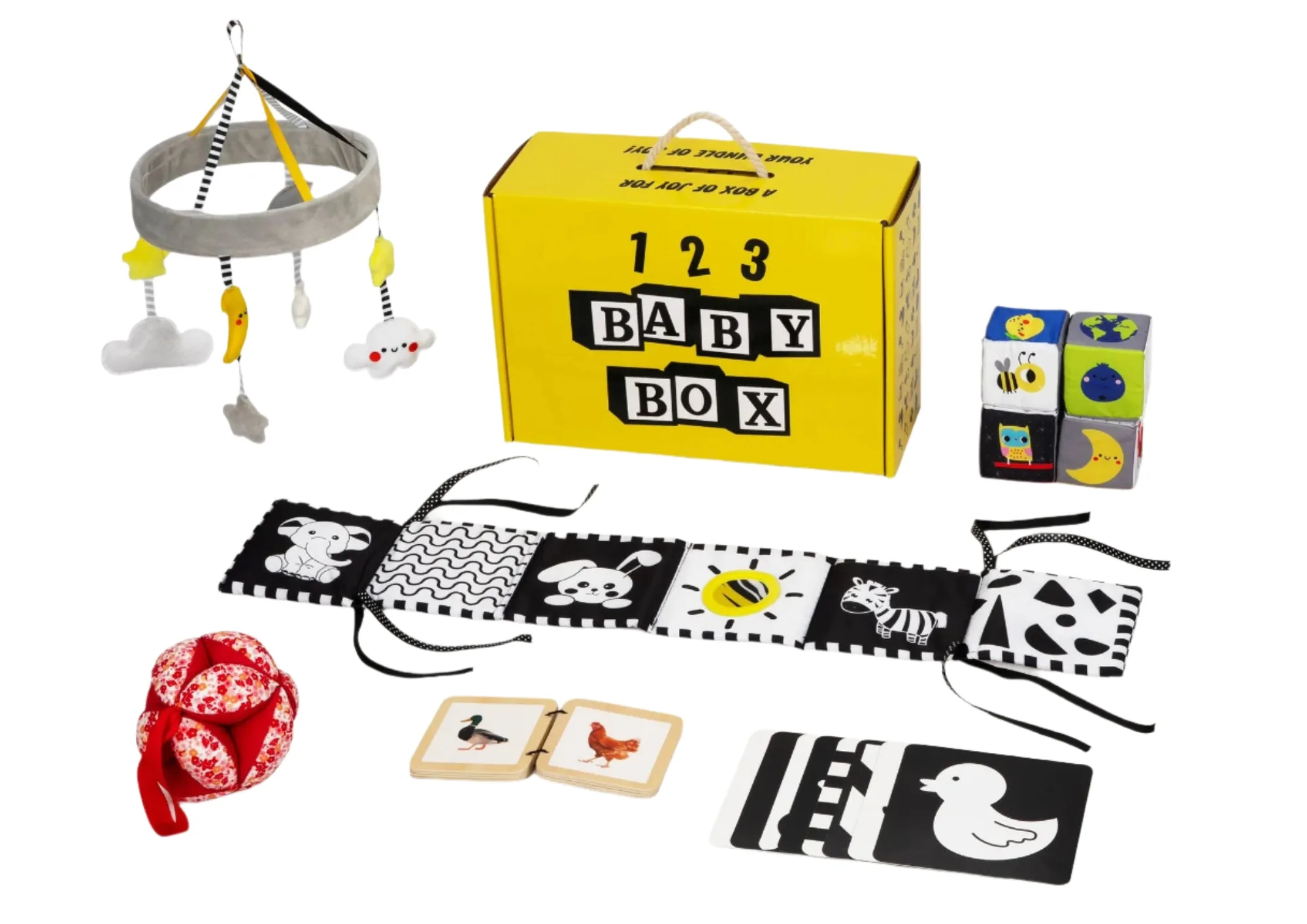
Montessori Educational Box (0-2 Months)
Trade-offs at a Glance
- Memory Touch Game: higher memory demand: Matching textures by touch alone requires your child to remember a texture and find its pair without visual cues. This is a bigger cognitive leap than fitting a puzzle piece. Choose it if your child already enjoys sensory activities and you want to stretch working memory.
- Animal Puzzle: easier entry point: The puzzle gives immediate visual feedback—a piece either fits or it doesn't—so babies can self-correct without adult help. That makes it less frustrating for beginners. Choose it if you want a first toy that builds confidence and fine motor control with minimal coaching.
- Longevity vs. immediate fit: The Memory Touch Game can be used as a free-exploration toy before your child is ready for matching, then later as a memory game. The Animal Puzzle is more immediately usable but may be outgrown sooner. If you want one toy that lasts longer, the Memory Touch Game offers more stages; if you want the right fit today, start with the Animal Puzzle.
Product Facts
- Memory Touch Game: The wooden Memory Touch Game enhances sensory exploration and memory skills through tactile play. Kids match textures by touch, strengthening focus, concentration, and cognitive development while having fun with this engaging, screen-free learning activity. Size: 22.3 × 22.3 × 4.5 cm (8.78 × 8.78 × 1.77 in). The tactile matching format builds working memory and focus, but it requires your child to hold a texture in mind—so it's better suited to toddlers who already enjoy sensory play and can follow simple game rules.
- Animal Puzzle: This wooden Animal Puzzle helps little ones learn about animals while developing problem-solving and fine motor skills. Each colorful piece encourages shape recognition, hand-eye coordination, and early learning through playful, hands-on exploration. Size: 30 × 22.5 × 1.5 cm (11.81 × 8.86 × 0.59 in). The puzzle's self-correcting design and chunky pieces make it an easier first challenge for babies around 19–24 months, and the animal theme adds early vocabulary opportunities.
Which Toy Fits Your Baby?
Best for
- Babies 19–24 months who are new to puzzles and need a self-correcting challenge
- Parents looking for a first memory toy that builds shape recognition and hand-eye coordination
- Families who want a screen-free activity that requires little adult instruction
Not for
- Babies under 18 months who still mouth objects—both toys have small parts
- Children who already master shape puzzles easily and need a bigger cognitive stretch
- Parents seeking a single toy that covers both sensory and memory skills in one purchase