Start with what the fabric is made of
The CDLP Merino Blend Set pairs a Long Sleeve T-Shirt and Long Johns in a 47% wool, 47% Tencel lyocell and 6% elastane blend. That mix is why the set feels soft, breathes well and resists odors, but it also means you should treat it more like a fine knit than a basic cotton tee. The elastane gives the Long Johns their snug fit and the tee its regular fit, so heat and harsh handling are the two things to avoid if you want those shapes to last.
The set is made in Portugal with no-tag construction, so there are no care symbols printed on a label to guide you. The routine below sticks to what the supplied product information supports and avoids guessing at machine settings or temperatures that are not confirmed.
The specs that shape your care routine
-
Merino Blend Set: 47% wool, 47% Tencel lyocell, 6% elastane Wool and lyocell are sensitive to heat and agitation, while elastane loses stretch when exposed to high temperatures. A gentle, cool routine protects all three fibers.
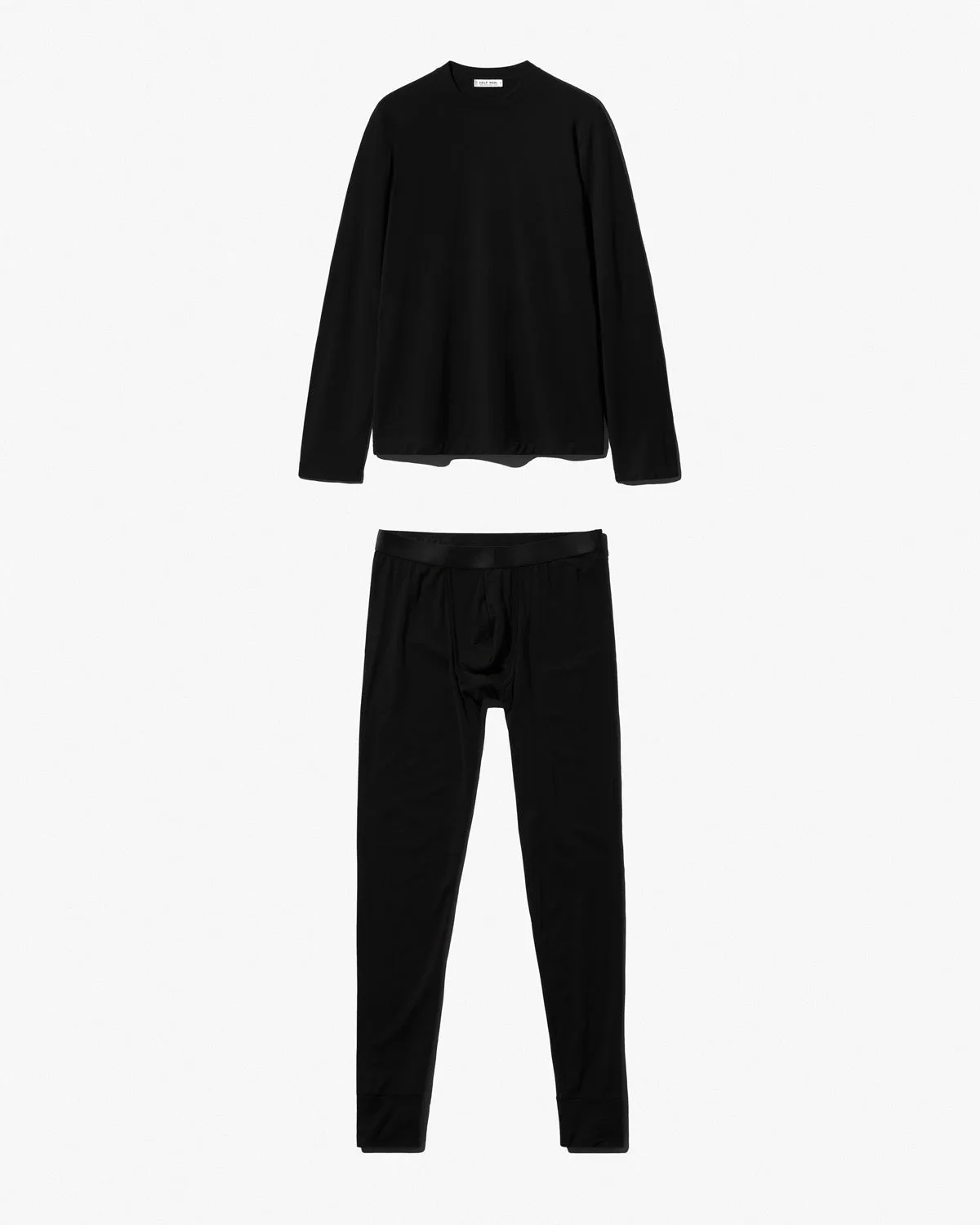
Merino Blend Set
-
Merino Blend Set: No-tag construction There is no sewn-in care label to reference, so you need a consistent routine you can repeat rather than relying on printed instructions.
-
Merino Blend Set: Long Sleeve T-Shirt: 220 gsm, regular fit, crew neck A midweight knit holds its shape well but can stretch if hung wet, so drying flat matters more than it would for a thin cotton tee.
-
Merino Blend Set: Long Johns: regular waist, snug fit, signature waistband, enhanced pouch The snug fit and waistband depend on elastane recovery, which heat and rough washing break down over time.
How to wash the Merino Blend Set
The supplied information does not specify a wash temperature or cycle, so use the gentlest method you have and keep the two pieces together to avoid mixing them with heavier items.
- Turn both pieces inside out: This protects the outer surface of the tee and the waistband of the Long Johns from friction against other garments.
- Wash separately from heavy or abrasive items: Denim, towels and zippers roughen the surface of fine knits. A mesh laundry bag adds another layer of protection if you machine wash.
- Use a gentle, cool setting: The exact temperature is not confirmed in the supplied information, but cool water and a delicate cycle are the safe default for wool-lyocell blends with elastane.
- Choose a mild detergent: Avoid bleach and harsh enzymes. A wool-safe or gentle detergent keeps the fibers soft and the colors even.
- Skip the fabric softener: Softener coats the fibers and reduces the moisture-wicking and breathability that make this set useful as a base layer.
Drying without losing shape
The quick-drying nature of the wool-Tencel blend works in your favor here: both fibers move moisture away and release it faster than cotton, so the set does not need heat to dry. Lay the Long Sleeve T-Shirt flat on a clean towel or drying rack, reshaping the body and sleeves as you go. Do the same for the Long Johns, smoothing the waistband so it dries without a crease. Hanging either piece wet pulls the weight of the water downward and can stretch the knit, especially the 220 gsm tee.
Keep the set out of direct sun and away from radiators. High heat is the main risk to the elastane in the waistband and pouch, and it can also make the wool feel rougher. If you are short on space, a fan on low speed near the drying rack speeds things up without adding heat.
Merino wool drying tips for this set
- Lay flat, never hang wet: The regular-fit tee and snug Long Johns both rely on their knit structure for shape; hanging wet distorts it.
- Reshape while damp: Smooth the sleeves, body and waistband into their intended shape before the fabric dries, when it is most pliable.
- Avoid the tumble dryer: The supplied information does not confirm dryer suitability, and heat is the biggest threat to elastane recovery and wool softness.
- Dry fully before storing: Even slightly damp wool can develop a musty smell and lose its fresh, anti-odor quality in the drawer.
Storing merino clothing so it stays ready
Fold both pieces rather than hanging them. Hangers stretch the shoulders of the Long Sleeve T-Shirt and pull at the waistband of the Long Johns over time. Store the set clean and completely dry in a drawer or on a shelf, away from damp. Because wool is naturally odor-resistant, you can often air the set between wears instead of washing it after every use, which extends the life of the fibers and the elastane.
If you store the set for a season, keep it in a breathable cotton bag rather than a sealed plastic bin. A small cedar block or lavender sachet is a traditional way to deter moths, though the supplied information does not make a specific claim about moth protection for this product.
Merino pilling prevention in daily wear
Pilling happens when short fibers work loose and tangle, and friction is the main cause. The blend's smooth Tencel content helps, but a few habits make a real difference.
- Rotate the set between wears: Giving the fibers a day to recover reduces the friction that leads to pilling and helps the elastane bounce back.
- Watch what you layer over it: Rough wool coats, Velcro and heavy straps rub against the tee. Smooth layers reduce the abrasion that causes pills.
- De-pill gently if needed: A fabric comb or sweater stone used lightly on a flat surface removes pills without pulling more fibers loose. The supplied information does not specify a de-pilling method, so start gently.
- Wash less, air more: Fewer wash cycles mean less agitation, which is the main mechanical cause of pilling in the machine.
What the supplied information does not settle
The product record confirms the fiber blend, the 220 gsm weight, the fits and the no-tag construction, but it does not list a wash temperature, a spin speed, a dryer setting or a specific detergent recommendation. Treat the routine above as a conservative default for a wool-lyocell-elastane blend rather than a manufacturer instruction. If you are unsure about a particular washing machine cycle, hand washing in cool water with a mild detergent is the lowest-risk option for both pieces.