Quick answer
For most hikers, merino wool hiking socks are the better all-round choice for comfort and odor resistance, but synthetic hiking socks win when you need fast drying and maximum durability. Your decision depends on trip length, weather, and how much you prioritize blister prevention.
Warmth and moisture management
Merino wool naturally regulates temperature, keeping your feet warm in cold conditions and cooler in mild weather. It also absorbs moisture vapor, which helps reduce the clammy feeling during high-output hikes.
Synthetic fibers like polyester and nylon are hydrophobic, meaning they repel water and dry much faster. This makes them ideal for wet conditions or multi-day trips where you need to wash and dry socks quickly.
Durability and blister protection
Synthetic socks are generally more abrasion-resistant and hold their shape better over many wears. They are a solid choice for rugged terrain or long-distance hikes where durability is a priority.
Merino wool is softer and provides excellent cushioning, but it can wear out faster, especially in high-friction areas like the heel and toe. Look for socks with reinforced zones to extend their lifespan.
Odor control and comfort
Merino wool has natural antimicrobial properties that reduce odor even after multiple wears. This is a major advantage on multi-day trips where you can't wash socks daily.
Synthetic socks often require odor-fighting treatments to achieve similar results. For example, the VOJO SOCK CL uses MICROBAN technology to keep feet fresh, making it a strong synthetic contender.
Merino vs synthetic: trade-offs at a glance
- Warmth: Merino provides natural insulation and temperature regulation. Synthetic dries faster but doesn't insulate when wet. Choose merino for cold, dry conditions; synthetic for wet or high-sweat activities.
- Odor control: Merino naturally resists odor, while synthetic needs treatments like MICROBAN to stay fresh. If you're on a multi-day trip, merino or treated synthetics are your best bet.
- Durability: Synthetic fibers are more abrasion-resistant and hold shape longer. Merino is softer but wears faster. For rugged trails, prioritize synthetic or reinforced merino blends.
- Price: Merino is typically more expensive. Synthetic socks like the VOJO SOCK CL offer a budget-friendly alternative. If cost is a concern, synthetic is a smart choice.
Product facts
-
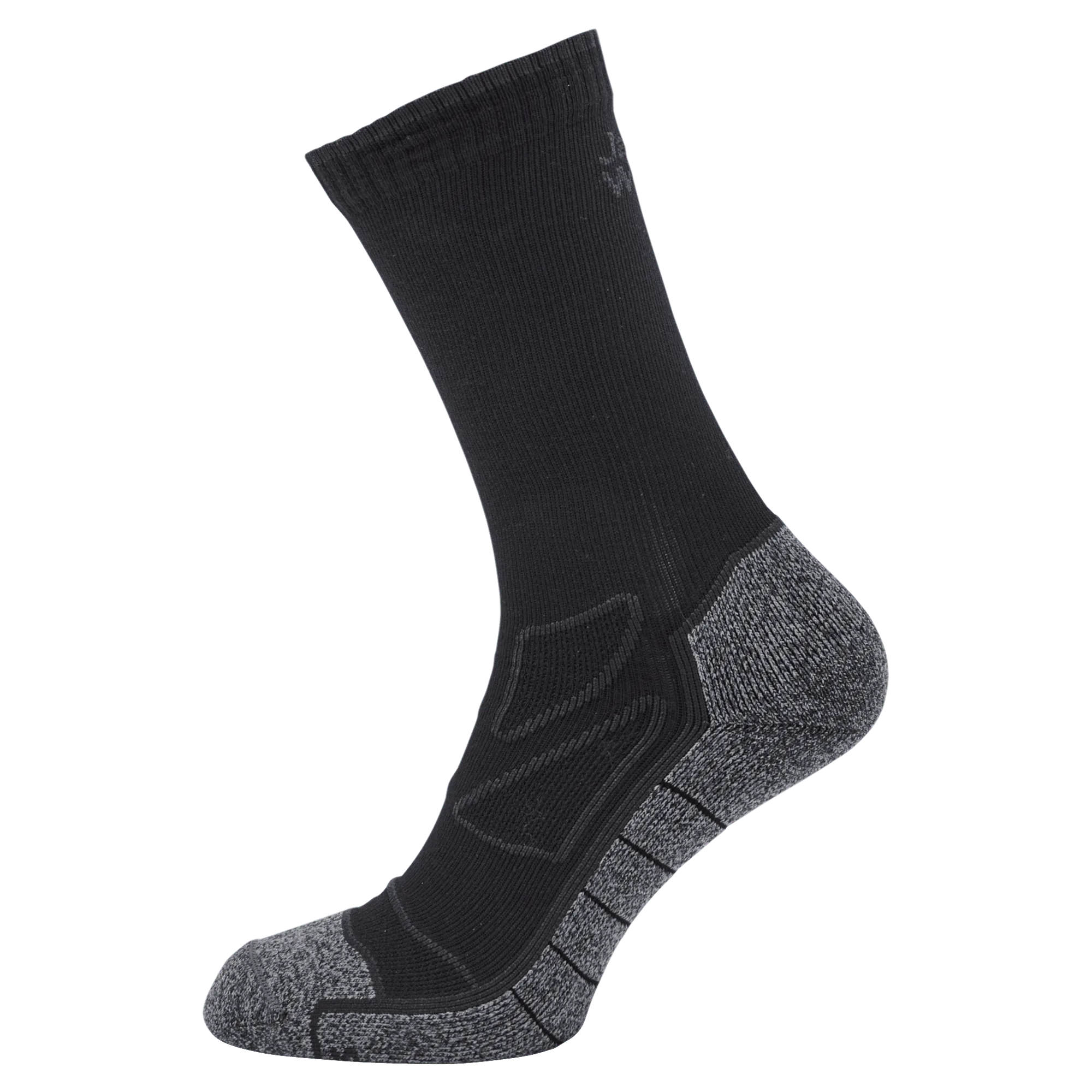
VOJO SOCK CL C: The VOJO SOCK CL is a versatile, cushioned, odor-fighting partner for all your hikes below treeline, with MICROBAN odor-fighting treatment. This synthetic sock offers odor control and cushioning, making it a practical choice for day hikes where you want freshness without the premium cost of merino.
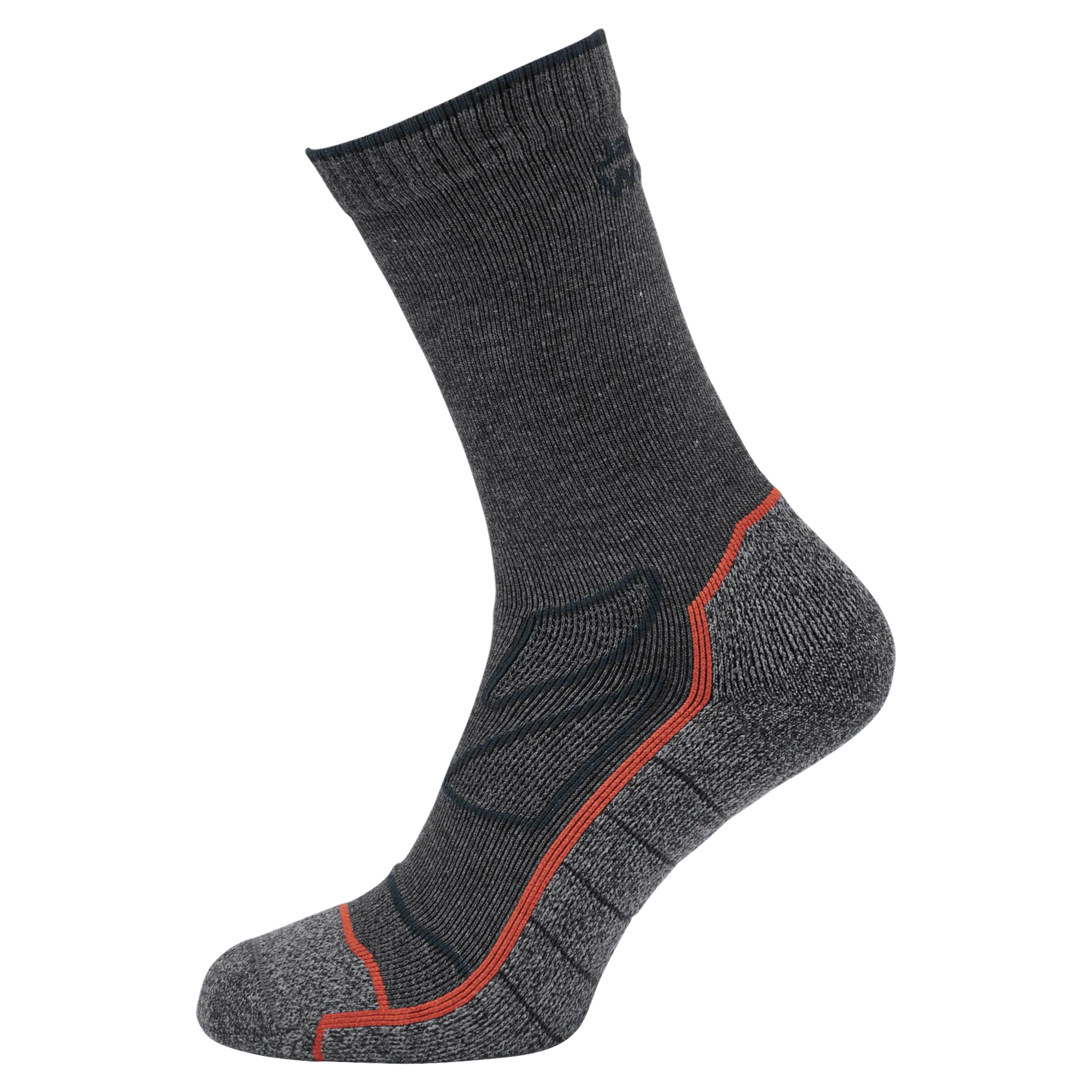
VOJO SOCK CL C
-
VOJO SOCK CL C: The VOJO SOCK CL is a versatile, cushioned, odor-fighting partner for all your hikes below treeline, with MICROBAN odor-fighting treatment. Available at a lower price point, this version provides the same performance benefits for budget-conscious hikers.
VOJO SOCK CL C
Which should you choose?
Best for
- Hikers who prioritize odor control and comfort on multi-day trips
- Cold-weather hikers who need natural insulation
Not for
- Wet or rainy conditions where fast drying is critical
- High-abrasion trails where maximum durability is needed