Quick answer
Choose the Mermaid Tail Pendant if you want a discreet, FDA-approved silicone chew necklace for a child who needs oral sensory input and will accept a pendant on a cord. Skip it if the chewer needs a different shape, a firmer texture, or a clip-on attachment, because the catalog lists none of those options.
What the catalog does and does not tell you
The listing confirms three things that matter for a buying decision: the pendant is shaped like a mermaid tail, it is made from FDA-approved silicone, and it is described as recommended by occupational therapists. It also lists a colour option. Everything else a parent usually wants to compare, such as firmness, thickness, cord type, clasp style, and age grading, is not stated in the supplied catalog facts.
That absence is not a reason to avoid the pendant, but it is a reason to ask before you buy. A chew necklace that is too soft gets chewed through quickly; one that is too firm gets rejected. Because the listing does not publish a firmness level, treat the first purchase as a fit test rather than a final commitment.
Why a pendant shape changes the decision
A pendant hangs at chest height and is easy to reach without unclipping anything, which makes it a practical option for a child who chews during reading, car rides, or waiting. The trade-off is that a pendant is visible. Some children like the mermaid tail design and wear it willingly; others refuse anything that looks like jewelry or draws attention.
Discreetness is also a safety consideration. A pendant on a cord should be chosen with a breakaway or otherwise release-safe fastening, and the catalog does not specify the cord or clasp. Confirm that detail with the seller before use, especially for younger children.
Where this pendant fits into a chew-jewelry collection
If your child already owns a bite band or a firmer pendant, the Mermaid Tail Pendant works best as a second option for quiet settings rather than as the only chew tool. Rotating between textures reduces wear on any single item and gives the chewer a choice, which matters when oral sensory needs shift through the day.
For adults who chew, the same logic applies: a pendant is the least conspicuous format, but it is not a substitute for a dedicated chew tool during heavy chewing. Keep a sturdier option available for intense moments.
Decision rules for the Mermaid Tail Pendant
- Match the chewer's preferred shape: If the child already reaches for pendant-style chews, this shape is a natural fit. If they prefer bite bands or handheld tools, buy one of those first and treat this as a trial. Watch which chew tool your child picks up unprompted for a week before ordering.
- Confirm the fastening before first use: The catalog does not state the cord or clasp type. Ask the seller whether the necklace has a breakaway or release-safe fastening, and do not put it on a child until you know. No confirmed release-safe fastening means no unsupervised wear.
- Test firmness with a short first session: Because firmness is not published, introduce the pendant for a short, supervised period. If the child chews hard enough to mark the silicone quickly, move to a firmer tool for heavy chewing and keep this one for light oral input. Inspect the pendant after each session for tears, cracks, or thinning.
- Set a replacement rule: Silicone chews wear out. Retire the pendant at the first sign of a nick, tear, or change in texture, and do not pass a worn chew to a younger child. Note the purchase date so you can judge wear against time in use.
Catalog facts that affect your choice
-
Mermaid Tail Pendant: Made from FDA-approved silicone and shaped as a mermaid tail, with a colour option. The material claim is the main safety anchor in the listing, and the colour choice lets you match a child's preference, which often decides whether the pendant gets worn at all.
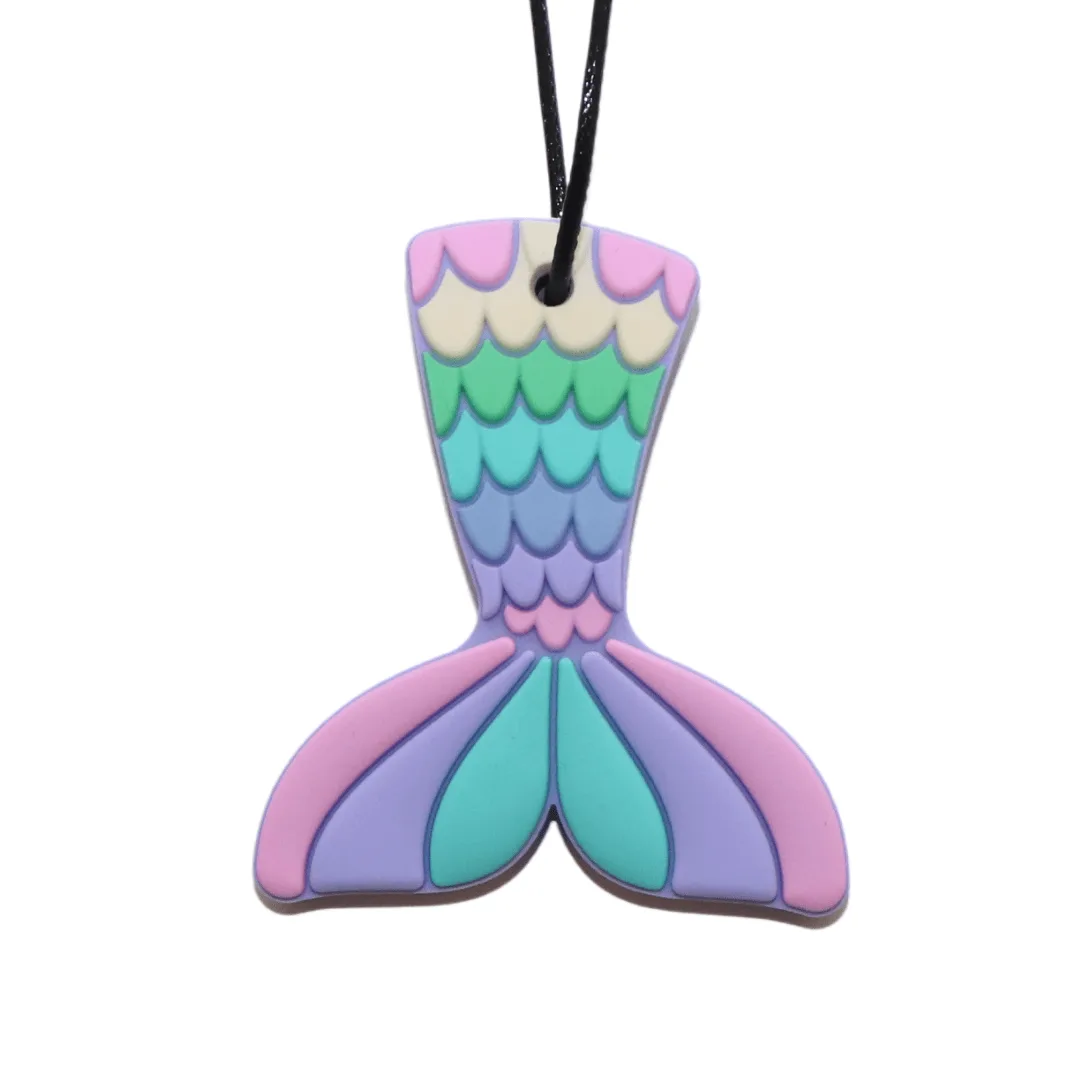
Mermaid Tail Pendant
Who should choose this pendant
Best for
- Children who already accept pendant-style chews and need a discreet option for school, reading, or travel
- Adults who want a low-profile oral sensory necklace for light chewing
- Families adding a second chew tool to rotate with bite bands or firmer pendants
Not for
- Chewers who need a documented firmness level, since the catalog does not publish one
- Children who refuse jewelry or anything worn around the neck
- Heavy chewers who need a dedicated, sturdier chew tool rather than a pendant