Mesa 10' vs 14': Start with Your Group Size
Choosing between the TETON Sports Mesa 10' and Mesa 14' canvas tents comes down to one question: how many people will sleep inside, and how much gear do you need to keep dry? Both tents share the same cabin-style canvas design, the Flex Bar Bracket System for fast pitching, and a stove jack for cold-weather comfort. The 10' model suits smaller groups, while the 14' version gives larger parties extra floor space and headroom. Consider your typical camping party and whether you prefer a cozier setup or room to spread out.
What the Mesa 10' and 14' Share
-
Mesa 10' Canvas Tent with Stove Jack: The Mesa Series delivers the classic comfort of a cabin style canvas tent with a setup process that is refreshingly simple. The Flex Bar Bracket System makes pitching intuitive and fast, while waterproof 100 percent cotton canvas and an ultra thick bathtub floor create a dependable barrier against rain and ground moisture. This shared construction means both sizes offer the same dependable weather protection and quick setup, so your choice can focus on space rather than durability.
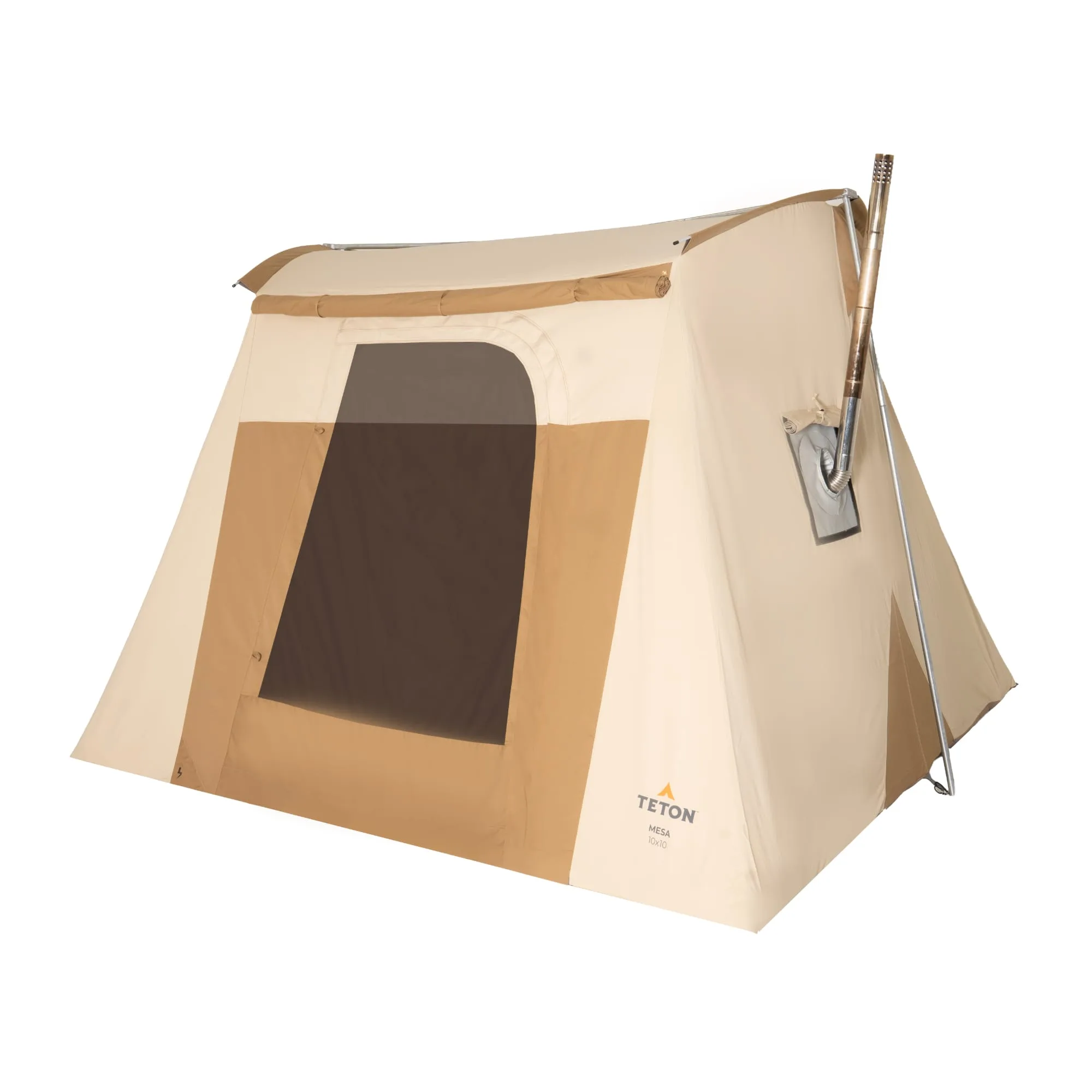
Mesa 10' Canvas Tent with Stove Jack
-
Mesa 14' Canvas Tent with Stove Jack: A built in stove jack allows safe use with a compatible wood stove so you can add warmth and comfort during cold weather camping. Both tents support a wood stove, making them viable for shoulder-season and winter trips when you need supplemental heat.
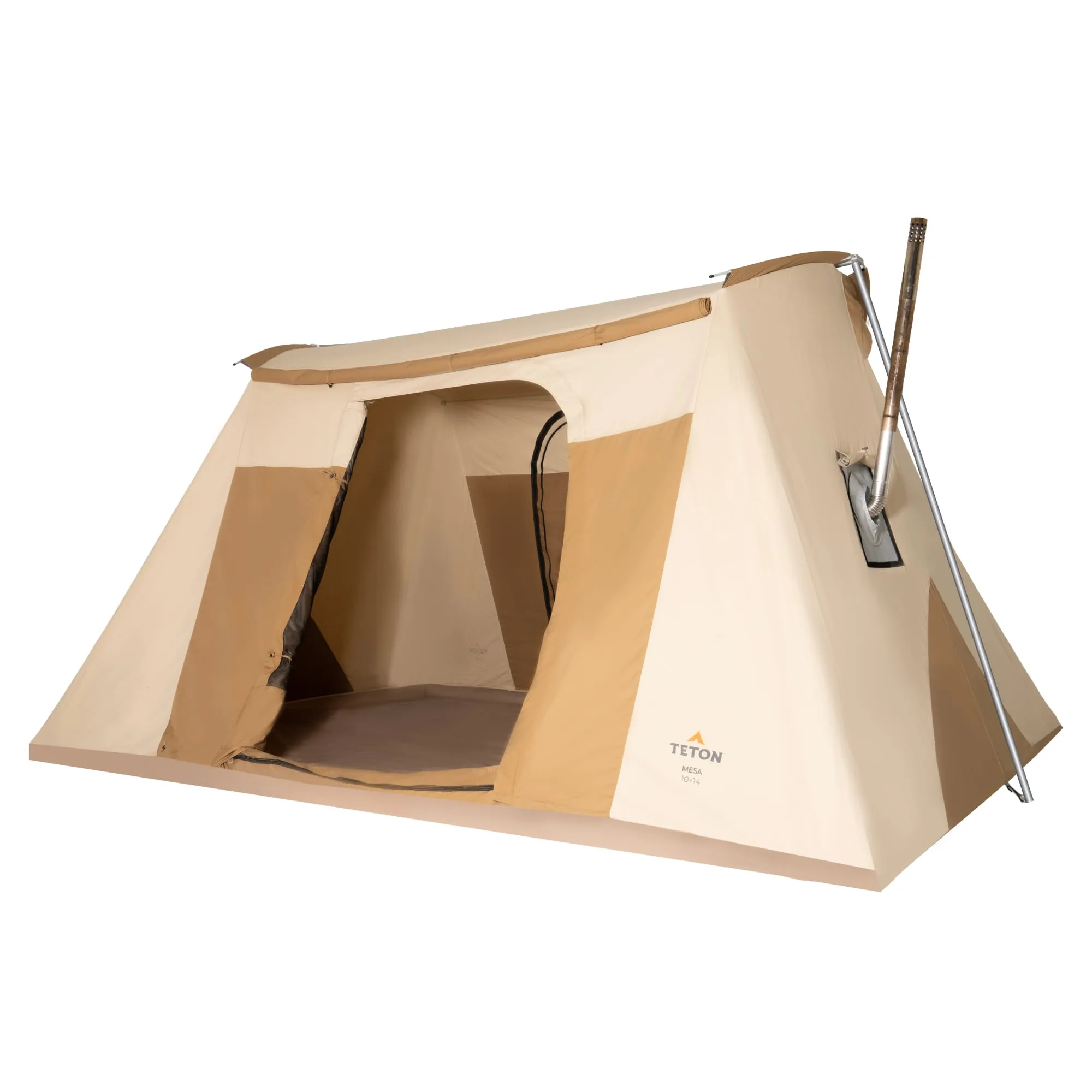
Mesa 14' Canvas Tent with Stove Jack
Mesa 10' vs 14': Key Differences at a Glance
The primary difference is floor area. The 10' tent offers a more compact footprint, ideal for 2-3 campers or solo adventurers who want extra space. The 14' tent provides significantly more room, comfortably accommodating larger groups or families. Both share the same organization features, but the 14' model gives you more wall space for gear lofts and organizers, and extra-wide doors on both ends make entry easier with more people.
- Capacity: The 10' fits smaller groups, while the 14' handles larger parties. Exact capacity is not confirmed in the supplied information, so consider your own sleeping arrangements and gear.
- Footprint: The 14' takes up more campsite space, which matters in tight or designated sites. The 10' is easier to fit in smaller clearings.
- Stove Jack: Both include a stove jack, so you can use a compatible wood stove in either size for cold-weather camping.
- Organization: Both feature overhead gear lofts, wall organizers, and heavy duty hang loops. The 14' offers more wall area, potentially more storage, though specifics are not provided.
Features That Matter for Group Camping
Both Mesa tents include extra wide front and back doors, which are a real advantage when several people are coming and going or when you're moving gear in and out. Two zippered e ports let you route power cords neatly into the tent, so you can charge devices without leaving a door open. Durable SBS zippers with cold finger pulls operate reliably in all conditions, a detail you'll appreciate on chilly mornings. These features are identical across sizes, so your decision hinges on space.
What the Supplied Information Does Not Cover
The supplied records do not include exact sleeping capacities, floor dimensions, peak height, or packed weight for either tent. If you're deciding based on precise measurements, check the product pages for those details. Also, while the stove jack is confirmed, compatibility with specific wood stove models is not listed; verify your stove fits before relying on it for heat.
How to Choose: 10' vs 14'
If you typically camp with one or two other people and prefer a smaller footprint that's easier to pitch in tight spots, the Mesa 10' is a practical choice. If you often have a larger group, need more floor space for cots or air mattresses, or want extra room for gear and changing, the Mesa 14' is worth the extra cost. Both are built with the same canvas durability and setup ease, so you can focus on the space your group needs.