Why the coating sets the care rules
A metallic neutral density filter works by reflecting part of the beam rather than absorbing it, which is why Esco's Inconel-coated fused silica filters can sit in front of higher-intensity sources. That same thin metallic film is the surface you are protecting every time you pick up, inspect, or clean the filter. The fused silica substrate underneath is robust, but the coating is where handling mistakes show up first.
The catalog describes the film as a very hard alloy material that resists aging under normal conditions. Hard is not the same as indestructible: abrasion, repeated wiping, and the wrong solvent can still degrade a coated surface. Treat every step below as a way to keep the coating intact rather than to fix damage after it happens.
Handling habits that keep the coating out of trouble
- Hold the edges, never the clear aperture: The 50.0mm x 50.0mm format gives you plenty of edge to grip. Fine-ground and beveled edges are designed to be handled; the coated face is not.
- Keep bare fingers off the surface: Skin oils and salts are the most common reason a filter needs cleaning in the first place. Every unnecessary wipe is another chance to scratch the coating.
- Work over a clean, soft surface: A dropped filter lands on its edge or face. A lint-free pad under your work area reduces the consequences of a slip.
- Separate handling from alignment: Mount the filter first, then adjust the beam path. Handling a filter while it is being positioned invites fingerprints on the coated face.
Inspect before you clean
Not every mark on a filter needs a wipe. Dust that sits loosely on the surface can often be blown off with clean, dry air. A smudge or fingerprint that has been there a while is a different problem and needs a proper cleaning step.
Look at the filter under good light at an angle before deciding. If the surface looks uniformly coated with no visible film or residue, leave it alone. Cleaning a clean filter adds risk without benefit.
A conservative cleaning sequence for coated ND filters
The catalog does not supply a manufacturer cleaning procedure, so the steps below are general good practice for coated optics rather than an Esco instruction. Stop at any point if the surface shows a change you cannot explain.
- Remove loose dust first: Use clean, dry air or a soft lens blower. Do not wipe a dry surface that still has grit on it; that is how scratches start.
- Use a fresh, lint-free wipe: Fold the wipe so a clean section contacts the coating. Never reuse a wipe that has already touched the surface.
- Apply solvent to the wipe, not the filter: A small amount of an appropriate optical solvent on the wipe is easier to control than solvent on the filter, where it can pool at the edge.
- Wipe in one direction with light pressure: A single pass with minimal pressure is gentler on the metallic film than a circular scrub. If the mark remains, replace the wipe and try again rather than pressing harder.
- Let the surface dry and re-inspect: Check at an angle. If residue remains after two gentle passes, stop and seek manufacturer guidance instead of escalating the cleaning.
Specs that shape how you handle the filter
-
Filters, Metallic, Coated, Neutral Density, Fused Silica: Fused silica substrate with a precision Inconel metallic coating. The coating is the vulnerable layer; the fused silica underneath is what makes the filter useful from 200-700nm.
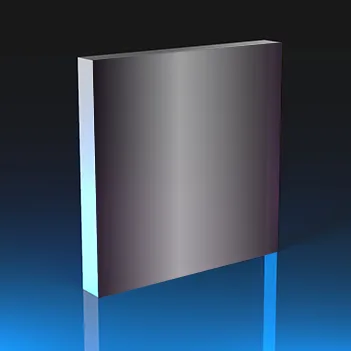
Filters, Metallic, Coated, Neutral Density, Fused Silica
-
Filters, Metallic, Coated, Neutral Density, Fused Silica: Size 50.0mm x 50.0mm, thickness 2.0mm, dimensional tolerance +/-0.25mm square. A square format with a defined edge gives you a safe place to grip and a clear boundary between edge and coated aperture.
-
Filters, Metallic, Coated, Neutral Density, Fused Silica: Surface quality 60-40 scratch-dig and surface accuracy <5λ per inch. These are the specifications a careless wipe can degrade; the care routine exists to preserve them.
-
Filters, Metallic, Coated, Neutral Density, Fused Silica: Edges are fine ground and beveled. The bevel is a handling feature; use it as your grip point rather than the coated face.
Storage that protects the coating between uses
Store the filter in a clean, dry container that keeps the coated face away from other surfaces. A dedicated optical case or a clean lens tissue wrap is better than a shared drawer where the filter can slide against metal or glass.
Keep the filter out of direct sunlight and away from temperature swings when it is not in use. The catalog notes the film resists aging under normal conditions; stable, dry storage is the practical way to keep conditions normal.
When to stop cleaning and ask for guidance
- A mark does not lift after two gentle passes: More pressure or stronger solvents risk the coating. Stop and ask Esco for advice rather than experimenting.
- The surface looks hazy or discolored: A change in appearance can indicate coating damage. Further wiping will not restore it.
- You are unsure which solvent is compatible: The supplied record does not list approved solvents. Confirm with the manufacturer before using anything beyond a standard optical cleaning fluid.
- The filter needs a density outside the standard range: Esco manufactures custom neutral density filters for orders outside the standard lines; the online quote tool is the route for that conversation.
Matching the care routine to the density you ordered
The Metallic Coated Filters, Fused Silica line covers nominal densities from 0.1 to 4, with density tolerance of +/-10% for values below 0.5 and +/-5% for values above 0.5. The care routine does not change with density, but the tolerance does: a high-density filter has less margin for surface damage that scatters light, so inspect it more carefully before each use.
If you are choosing between densities or between fused silica and N-BK7 for a visible-light setup, the selection question comes first. Once the filter is in hand, the handling and cleaning habits above are what keep it performing to its published specifications.